


Shearing Machine Hydraulic Oil Contamination is a common issue that can affect hydraulic system stability, cutting accuracy, and overall machine reliability. When operating hydraulic shearing machines, maintaining clean hydraulic oil is essential for preventing valve failures, pump damage, unstable pressure, and reduced machine lifespan. If you are experiencing abnormal machine movements, reduced cutting force, or frequent hydraulic system problems, you are in the right place. In this article, I’ll explain the main causes of hydraulic oil contamination, how to troubleshoot the problem step by step, and the best practices to keep your shearing machine hydraulic system operating efficiently.
Understanding Shearing Machine Hydraulic Oil Contamination
What Is Hydraulic Oil Contamination?
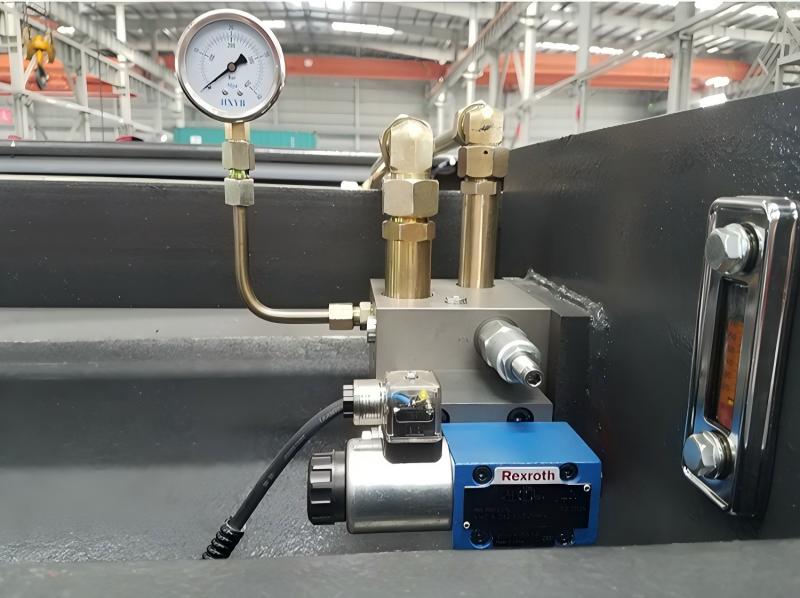
Hydraulic oil contamination occurs when unwanted particles, moisture, air, or chemical degradation products enter the hydraulic system. These contaminants can affect the performance of critical components such as hydraulic pumps, valves, cylinders, and seals.
In a shearing machine, hydraulic oil is responsible for transferring power and controlling blade movement. Even small amounts of contamination can reduce system efficiency and create long-term reliability problems.
Why Clean Hydraulic Oil Is Important
The hydraulic system of a shearing machine operates under high pressure. Contaminated oil increases friction, accelerates component wear, and reduces the accuracy of hydraulic control.
Maintaining clean oil helps ensure smooth blade movement, stable cutting force, and consistent cutting quality. It also reduces unexpected downtime and lowers maintenance costs.
Common Causes of Shearing Machine Hydraulic Oil Contamination
Dirty Hydraulic Oil During Filling
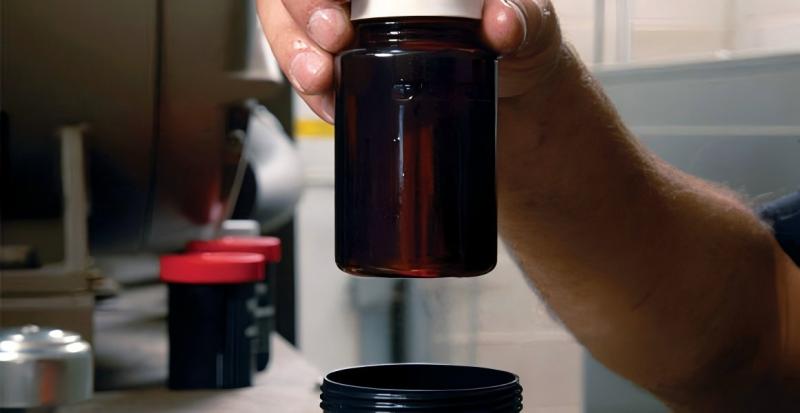
One common cause of contamination is introducing unclean oil during filling or replacement. New hydraulic oil may contain particles from storage containers or transportation processes.
I recommend always using filtered oil and proper filling equipment instead of directly pouring oil into the hydraulic tank.
Damaged or Ineffective Hydraulic Filters
Hydraulic filters remove particles from the oil, but they become less effective when clogged or damaged. A blocked filter can reduce oil flow and allow contaminants to circulate through the system.
Regular filter inspection and replacement are essential parts of hydraulic system maintenance.
Moisture and Water Contamination
Water contamination can occur due to condensation, poor storage conditions, or damaged seals. Water reduces lubrication performance and can cause corrosion inside hydraulic components.
If hydraulic oil appears cloudy or milky, moisture contamination should be investigated immediately.
Internal Component Wear
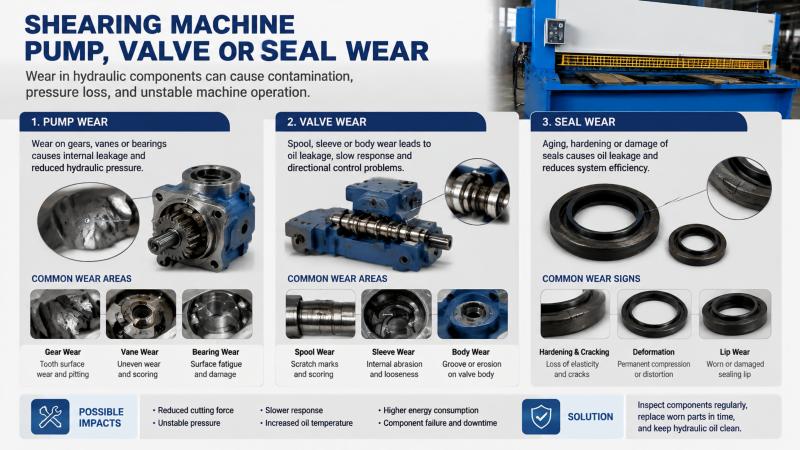
Worn pumps, valves, or seals can generate metal particles that circulate through the hydraulic system. These particles accelerate damage to other components and create a cycle of contamination.
Regular condition monitoring helps identify wear before serious failures occur.
How to Troubleshoot Shearing Machine Hydraulic Oil Contamination
Step 1: Check Hydraulic Oil Condition
The first step is inspecting the appearance and condition of the hydraulic oil. I recommend checking the oil color, transparency, viscosity, and any unusual smell.
Clean hydraulic oil should maintain a consistent appearance. Darkened oil, visible particles, or a burnt smell may indicate contamination or overheating.
Step 2: Inspect and Replace Hydraulic Filters
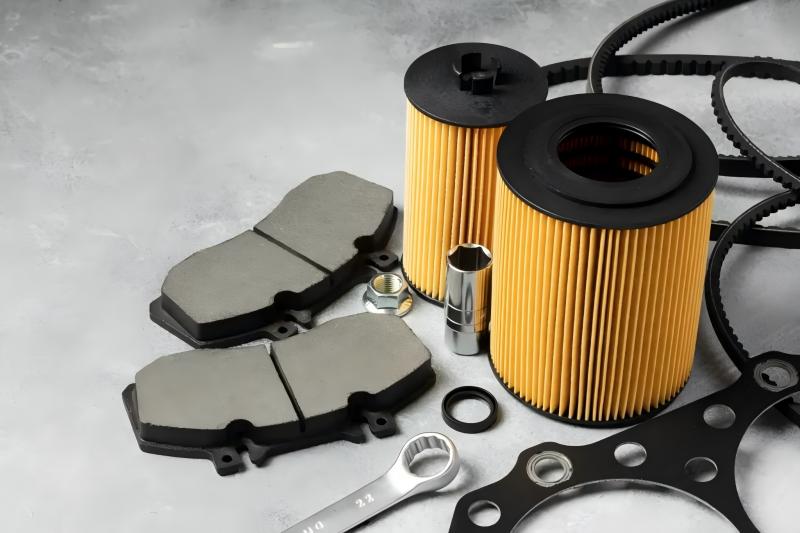
Check the condition of hydraulic filters and filter indicators. If the filter shows excessive pressure difference or blockage, replace it immediately.
Using high-quality filters with proper filtration accuracy helps protect hydraulic pumps and proportional valves from damage.
Step 3: Perform Hydraulic Oil Sampling Analysis
For machines operating in demanding production environments, oil analysis provides valuable information about system health.
Testing can identify particle levels, water content, oxidation, and contamination sources. This allows maintenance teams to take targeted actions instead of replacing oil unnecessarily.
Step 4: Clean the Hydraulic System
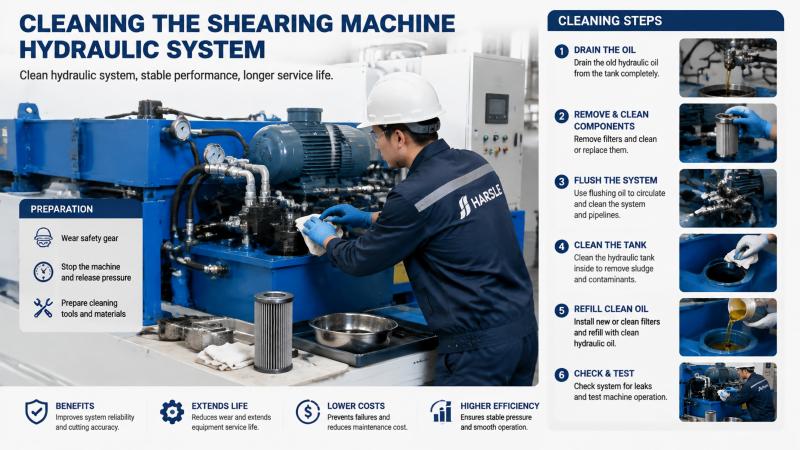
If contamination is severe, simply replacing the oil may not solve the problem. Remaining contaminants inside tanks, pipes, and components can quickly contaminate new oil.
I recommend cleaning the hydraulic reservoir, flushing pipelines, and inspecting important components before refilling with fresh hydraulic oil.
Step 5: Identify and Repair the Contamination Source
After cleaning the system, the next step is finding the original cause. Check hydraulic seals, cylinder conditions, filter performance, and oil storage methods.
Solving the source of contamination prevents repeated hydraulic problems and improves long-term machine reliability.
Best Practices to Prevent Hydraulic Oil Contamination
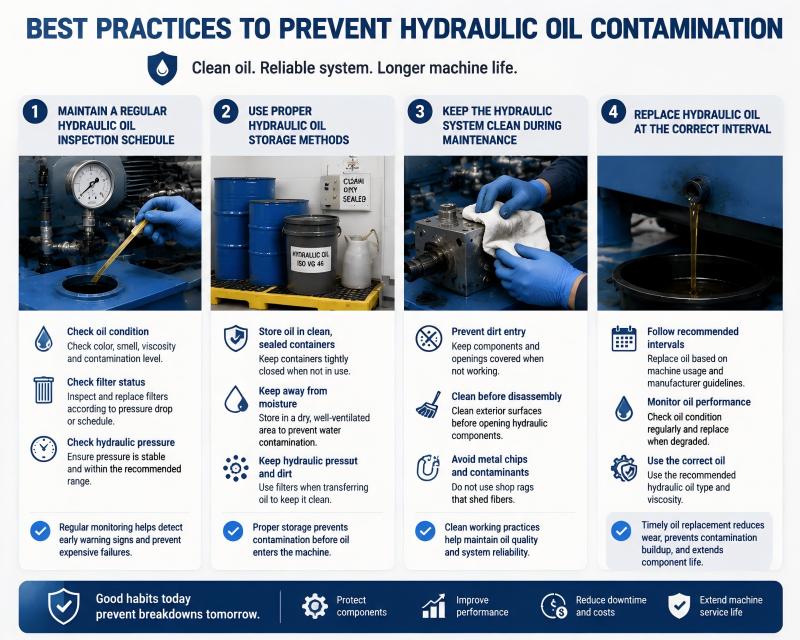
Maintain a Regular Hydraulic Oil Inspection Schedule
Routine inspection is one of the most effective ways to prevent contamination problems. Check oil condition, filter status, and hydraulic pressure according to machine usage.
Regular monitoring allows operators to detect early warning signs before they become expensive failures.
Use Proper Hydraulic Oil Storage Methods
Hydraulic oil should be stored in clean, sealed containers away from moisture and dust. Proper storage prevents contamination before oil enters the machine.
Keep the Hydraulic System Clean During Maintenance
During maintenance work, avoid exposing hydraulic components to dust, metal chips, or other pollutants. Clean working practices help maintain oil quality.
Replace Hydraulic Oil at the Correct Interval
Hydraulic oil performance decreases over time due to oxidation and contamination accumulation. Follow manufacturer recommendations for oil replacement intervals based on operating conditions.
FAQs
What are the signs of Shearing Machine Hydraulic Oil Contamination?
Common signs include unstable blade movement, abnormal hydraulic noise, reduced cutting force, overheating, and frequent hydraulic system alarms.
How often should hydraulic oil be replaced in a shearing machine?
Replacement intervals depend on operating conditions, oil quality, and machine workload. Regular oil analysis can help determine the correct replacement timing.
Can contaminated hydraulic oil damage a shearing machine pump?
Yes. Contaminated oil can cause pump wear, cavitation, and reduced pressure output, eventually leading to pump failure.
Conclusion
Proper management of Shearing Machine Hydraulic Oil Contamination is essential for maintaining machine accuracy, reliability, and service life. By checking oil condition, maintaining filters, cleaning hydraulic systems, and preventing contamination sources, operators can reduce failures and improve production efficiency.
A clean hydraulic system helps ensure stable cutting performance and reduces unexpected maintenance costs. For more technical guidance or professional support on shearing machine maintenance, feel free to contact our team.


