


Shearing Machine Pinch Points are hazardous areas where two machine components, or a moving component and a stationary surface, come together and can trap, crush, or injure an operator’s fingers or hands. On an industrial shearing machine, these hazards commonly occur around the blade area, hold-down cylinders, backgauge system, sheet supports, and moving mechanical components. In this guide, I’ll explain how to identify these dangerous areas, recognize potential pinch-point hazards, and take practical precautions to protect operators during daily shearing operations.
Where Are the Common Pinch Points on a Shearing Machine?
1. Upper and Lower Blade Area
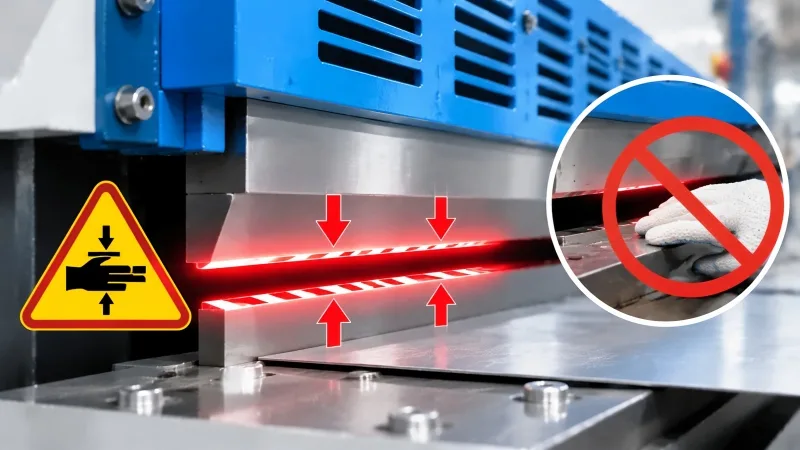
The space between the upper and lower blades is one of the most dangerous areas of a shearing machine. During the cutting stroke, the upper blade moves toward the stationary lower blade, creating a severe crushing and shearing hazard.
Operators should never place their hands near the blade opening, even when positioning small workpieces. Always use the designated material feeding method and ensure that the machine’s protective guards are correctly installed.
2. Hydraulic Hold-Down Cylinders
Hold-down cylinders secure the sheet metal against the worktable before cutting. As the cylinders move downward, gaps between the hold-down pads, workpiece, and table can become pinch points.
Keep fingers away from these contact areas during material positioning. Never attempt to adjust a sheet manually while the hold-down system is moving.
3. Backgauge and Rear Positioning System
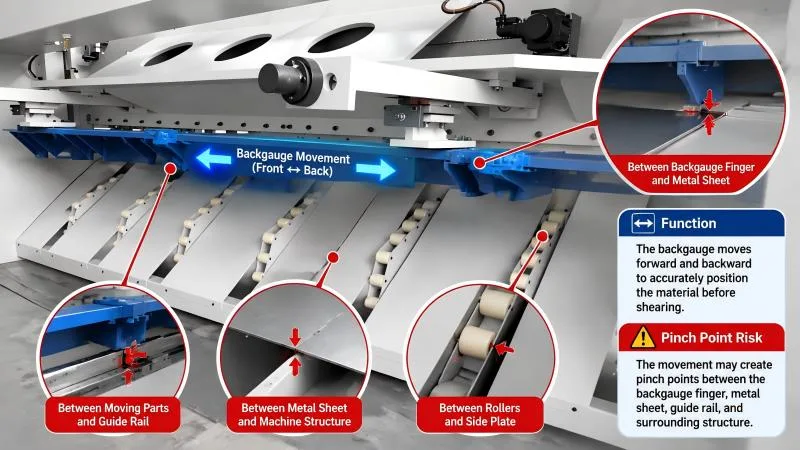
The backgauge moves forward and backward to position materials accurately before cutting. Its movement creates potential pinch points between the gauge fingers, sheet metal, guide rails, and surrounding machine structures.
Operators should keep their hands clear of the rear positioning mechanism and never reach behind the machine while it is operating.
4. Front Support Arms and Sheet Supports
Adjustable front support arms, rollers, and auxiliary tables help operators feed large metal sheets into the machine. However, gaps between moving supports and fixed structures may trap fingers.
Pay particular attention when adjusting support positions or handling sheets that may shift unexpectedly. Make sure the material is properly supported before feeding it toward the cutting area.
How to Identify Shearing Machine Pinch Points Safely
Step 1: Review the Machine Structure and Safety Documentation
Before inspecting the machine, review the manufacturer’s operating manual, safety instructions, and machine layout. Identify moving components, fixed structures, guarded areas, and designated operator positions.
I recommend paying particular attention to the blade assembly, hold-down cylinders, backgauge, and material support system. Different shearing machine configurations may have additional pinch points.
Step 2: Observe the Movement of Machine Components
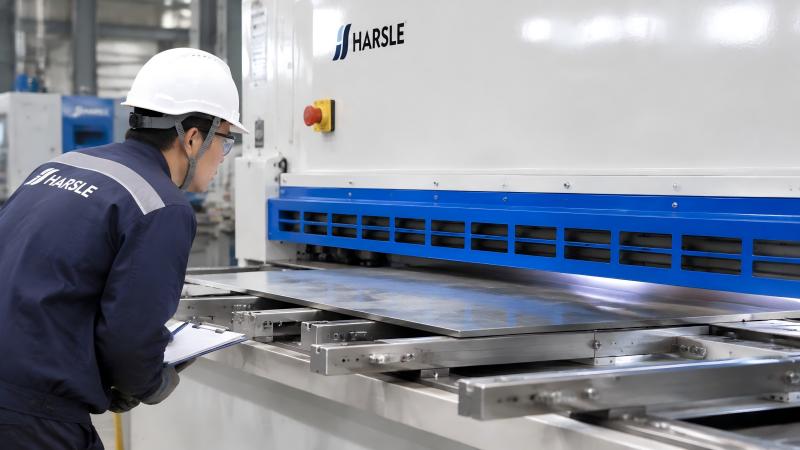
Understand how each component moves during normal operation. Identify where moving parts approach fixed structures or where two components create closing gaps.
Use manufacturer-approved observation methods, such as viewing windows or designated inspection positions. Never place your hands or tools into hazardous areas to locate a pinch point.
Step 3: Inspect Guards and Protective Devices
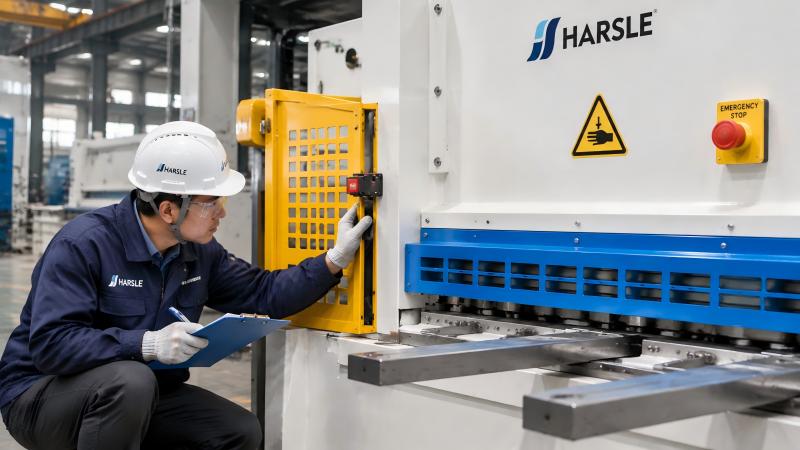
Check whether fixed guards, interlocked access doors, and other protective devices are correctly installed and functioning.
Look for missing fasteners, damaged protective covers, loose connections, or unauthorized modifications. If a guard is damaged or a safety device does not function correctly, stop using the machine and report the problem.
Step 4: Identify Material-Related Pinch Hazards
Sheet metal itself can create additional pinch points during feeding and unloading. A large sheet may slide, tilt, or become trapped between the worktable and support equipment.
Check material positioning, support stability, and feeding clearance before starting production. Use appropriate handling equipment for oversized or heavy sheets.
Step 5: Document and Mark Hazardous Areas
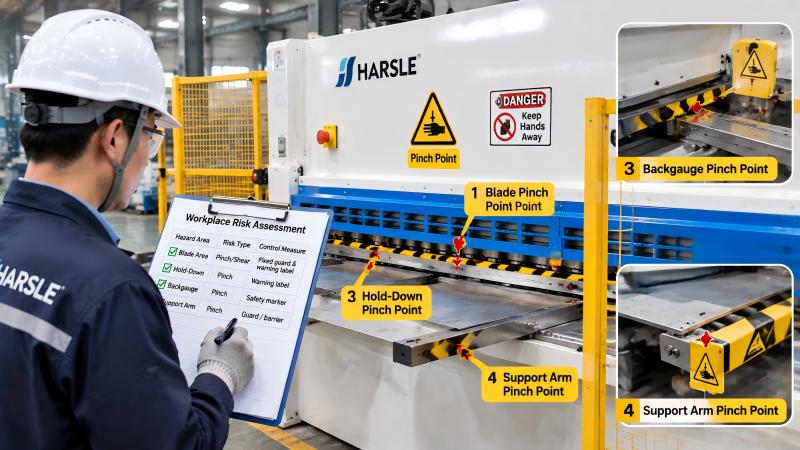
After identifying potential pinch points, record their locations in the workplace risk assessment. Use appropriate warning labels, safety signs, and protective barriers where required.
Make sure operators understand which areas must remain clear during operation and which tasks require machine isolation.
How to Prevent Pinch-Point Injuries During Shearing Operations
- Keep hands away from moving components: Never reach into the blade area, hold-down mechanism, or backgauge while the machine is operating.
- Use proper machine guards: Keep all protective devices installed and never bypass safety interlocks.
- Follow safe feeding procedures: Use suitable material-handling tools when positioning small or oversized workpieces.
- Inspect safety devices regularly: Check guards, emergency stops, and interlocks according to the maintenance schedule.
- Apply lockout/tagout procedures: Before maintenance, cleaning, or entering hazardous areas, isolate all relevant energy sources and verify the machine is in a safe state.
- Train machine operators: Ensure workers understand pinch-point locations, warning signs, and emergency procedures.
FAQs
What Is the Most Dangerous Pinch Point on a Shearing Machine?
The upper and lower blade area is one of the most hazardous locations because the moving blade generates substantial shearing and crushing forces. Hold-down cylinders and backgauge mechanisms also present serious risks.
Can Pinch Points Exist Outside the Blade Area?
Yes. Pinch points may exist around hold-down cylinders, support arms, rollers, backgauges, and other moving components. Operators should inspect the entire machine rather than focusing only on the cutting area.
How Often Should Shearing Machine Pinch Points Be Inspected?
Operators should check visible guards and safety devices before each shift. A more detailed inspection should follow the manufacturer’s maintenance schedule and workplace safety requirements.
Conclusion
Identifying Shearing Machine Pinch Points is an important part of preventing hand injuries, crushing accidents, and other workplace hazards. By understanding the movement of blades, hold-down cylinders, backgauges, and sheet supports, operators can recognize dangerous areas before accidents occur.


