


Lubrication Tips for Tube Bending Machines play a critical role in maintaining bending accuracy when results begin to vary. From my experience, many operators first adjust tooling, parameters, or machine alignment, while lubrication is often underestimated as a source of inconsistency. In reality, improper lubrication can lead to unstable repeatability, surface marks, and unpredictable bending angles. If you are looking for lubrication tips for tube bending machines, your goal is likely to improve accuracy, reduce friction-related defects, and extend component life. In this article, I’ll explain how lubrication affects bending precision, highlight key lubrication points, and share practical methods for applying lubrication correctly in daily NC and CNC tube bending operations.
Why Lubrication Matters for Tube Bending Accuracy
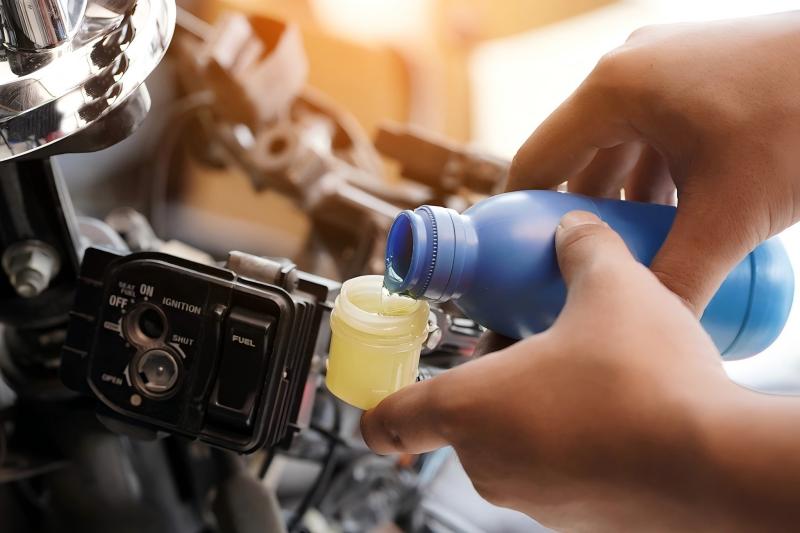
Accurate tube bending depends on controlled material flow and stable mechanical movement. Insufficient or incorrect lubrication increases friction between the tube, mandrel, and bending die, which can lead to wall thinning, wrinkling, springback variation, and angle deviation. Proper lubrication reduces resistance during bending, allowing the tube to follow the intended bending path more consistently. This is why lubrication tips for tube bending machines are not only about maintenance, but also about precision control.
How Friction Affects Bending Precision
During bending, excessive friction causes uneven stress distribution along the tube. This can result in unpredictable deformation, especially when working with stainless steel, aluminum, or thin-wall tubes. By reducing friction through proper lubrication, the tube material flows more smoothly, improving dimensional accuracy and surface quality.
Key Lubrication Points on Tube Bending Machines
To improve accuracy, lubrication must be applied to the right components. Random or excessive lubrication can be just as harmful as insufficient lubrication.
Mandrel and Mandrel Rod Lubrication
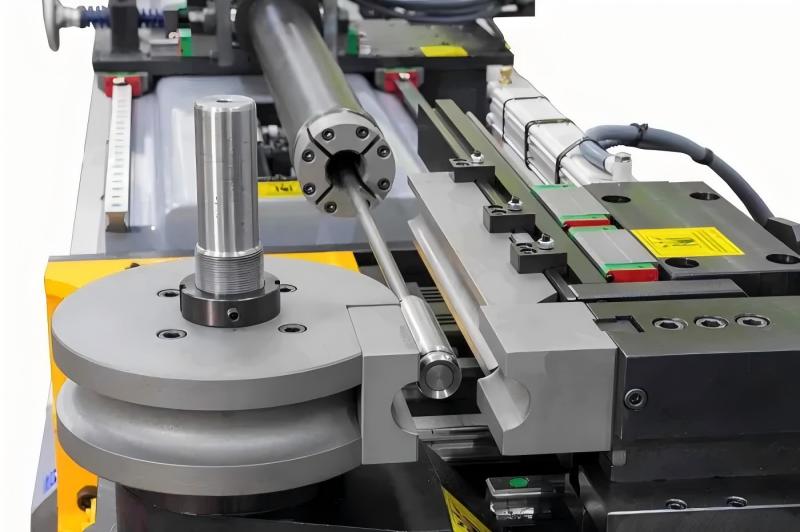
The mandrel is critical for internal tube support. I always recommend applying a suitable mandrel lubricant that can withstand high pressure and temperature. Proper mandrel lubrication minimizes internal friction, prevents galling, and helps maintain consistent bend radii, especially for tight-radius or thin-wall tube bending applications.
Bending Die and Pressure Die Lubrication
The contact surfaces between the tube and bending die must remain smooth. A thin, even layer of lubricant helps reduce surface drag and prevents scratches or drag marks. This directly improves repeatability when producing multiple identical parts.
Clamp Die and Wiper Die Lubrication
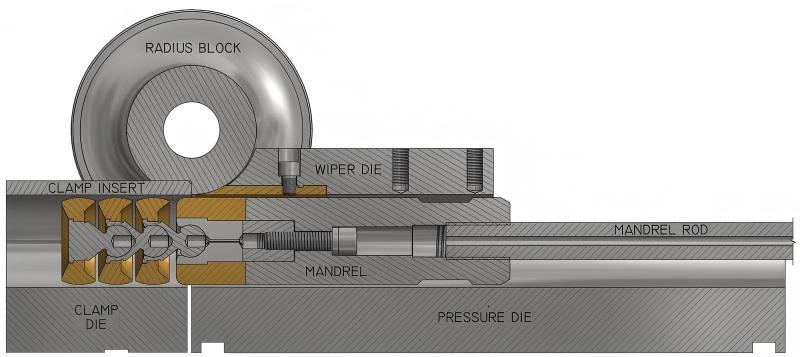
Clamp dies require stable gripping without slippage. Using the correct lubricant ensures controlled clamping force while avoiding tube deformation. For wiper dies, proper lubrication helps prevent wrinkling at the bend tangent point, which is essential for high-accuracy tube bending.
Choosing the Right Lubricant for Tube Bending Machines
Not all lubricants are suitable for tube bending. Choosing the wrong type can cause residue buildup, contamination, or inconsistent friction behavior.
Selecting Lubricants Based on Material Type

Different tube materials require different lubrication strategies. Stainless steel usually needs high-pressure lubricants, while aluminum requires low-residue lubricants to avoid surface staining. Matching the lubricant to the material improves bending accuracy and surface finish.
Balancing Lubrication and Cleanliness
Excessive lubrication can attract dust and metal particles, affecting machine movement and sensor accuracy. I always recommend using controlled application methods and cleaning excess lubricant regularly to maintain stable machine performance.
Step-by-Step Lubrication Tips for Tube Bending Machines
Applying lubrication correctly is just as important as choosing the right lubricant.
Step 1: Clean Contact Surfaces Before Lubrication
Before applying lubricant, ensure that dies, mandrels, and tube surfaces are clean. Old lubricant mixed with debris increases friction instead of reducing it.
Step 2: Apply Lubricant Evenly and Consistently

Use brushes, spray systems, or automatic lubrication units to apply lubricant evenly. Consistency is key to achieving uniform bending accuracy across batches.
Step 3: Monitor Lubrication During Production
During continuous production, periodically check lubrication conditions. Changes in temperature, material batch, or bending speed may require lubrication adjustments to maintain accuracy.
Common Lubrication Mistakes That Reduce Accuracy
Even experienced operators make lubrication-related mistakes that impact bending precision.
Over-Lubrication and Slippage
Too much lubricant can cause the tube to slip inside the clamp die, leading to angle deviation and poor repeatability. Controlled lubrication ensures stable positioning.
Ignoring Lubrication Schedule
Irregular lubrication schedules lead to fluctuating friction conditions. Establishing a routine lubrication plan helps maintain consistent bending results.
FAQs
How do lubrication tips for tube bending machines improve accuracy?
Proper lubrication reduces friction between the tube and tooling, allowing smoother material flow and more predictable deformation. This results in better angle consistency, reduced springback variation, and improved repeatability.
How often should I lubricate a tube bending machine for accurate bending?
Lubrication frequency depends on production volume, material type, and bending complexity. In general, tooling contact areas should be checked and lubricated at the start of each shift and monitored during long production runs.
Can the wrong lubricant affect tube bending accuracy?
Yes. Using an incompatible lubricant can cause residue buildup, uneven friction, or surface defects, all of which negatively impact bending precision and tool life.
Conclusion
Accurate tube bending is not only about machine settings and tooling quality; it is also about controlling friction through proper lubrication. By following these Lubrication Tips for Tube Bending Machines, you can significantly improve bending accuracy, reduce defects, and extend the service life of your equipment. If you want to optimize lubrication strategies for your specific tube bending machine or materials, feel free to contact the HARSLE technical team or explore our related documentation for advanced maintenance guidance.


