


Tube Bender Alignment Calibration is often overlooked right after installation, especially when operators are eager to put a new machine into production as quickly as possible. Based on my experience with tube bending machines, skipping or rushing this process is one of the quickest ways to create accuracy issues, unexpected downtime, and premature component wear. If you are wondering why alignment and calibration are so critical after installation, you are in the right place. In this article, I’ll explain what tube bender alignment calibration actually involves, why it must be done immediately after installation, and how it directly impacts bending accuracy, machine stability, and long-term production reliability.
What Is Tube Bender Alignment Calibration After Installation?
Understanding tube bender mechanical alignment
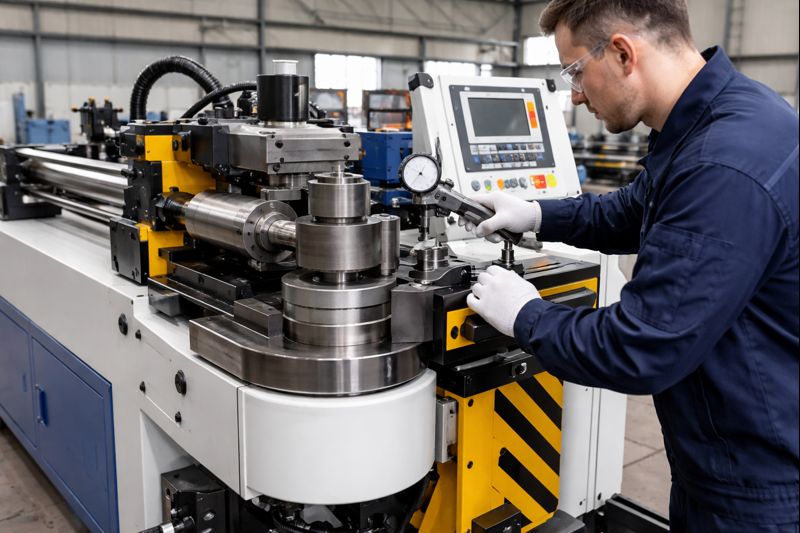
Tube bender alignment calibration starts with mechanical alignment. After transportation and positioning, the machine frame, bending head, clamp unit, pressure die, and mandrel system must all be aligned according to design geometry. Even a small deviation during installation can change the bending centerline, which immediately affects bend angles and radii. Proper Tube Bender Alignment Calibration ensures that all mechanical components work on the same reference axis.
Calibration of motion and control systems
Beyond mechanical alignment, calibration also includes synchronizing servo axes, encoder positions, and hydraulic or electric motion parameters. After installation, control parameters may not perfectly match the physical position of the machine. Tube bender alignment calibration bridges this gap by matching real-world movement with programmed values, ensuring the CNC system delivers precise and repeatable bends.
Why Tube Bender Alignment Calibration Is Critical Right After Installation
Preventing bending inaccuracies from day one
One of the biggest risks of skipping Tube Bender Alignment Calibration is inconsistent bending results. Misalignment can cause angle deviation, uneven bend radii, or visible distortion on the tube surface. These problems often appear immediately after startup and worsen over time. Proper calibration ensures the first produced parts already meet dimensional requirements.
Protecting tooling and machine components
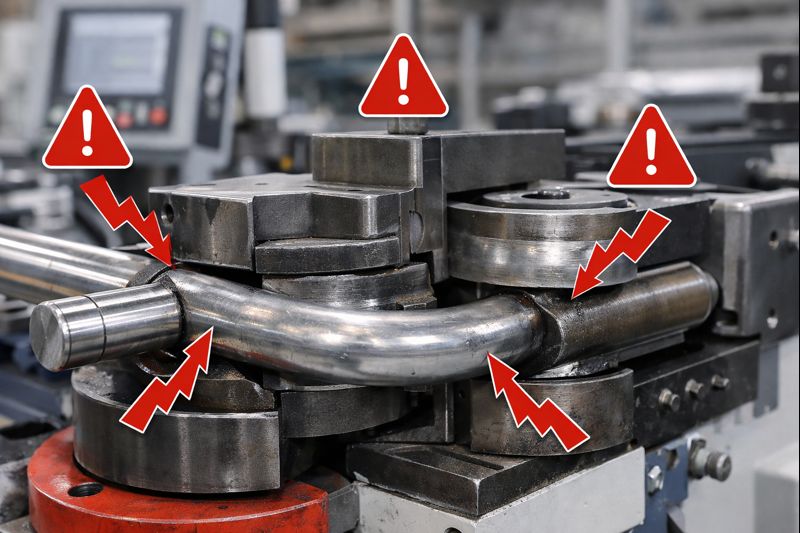
Incorrect alignment puts abnormal stress on tooling such as mandrels, wiper dies, and pressure dies. Over time, this leads to accelerated wear, frequent tool replacement, and even damage to the bending head or bearings. By performing tube bender alignment calibration after installation, I can significantly reduce mechanical stress and extend the service life of both tooling and the machine itself.
Ensuring machine stability and safety
Installation often involves anchoring the tube bender to the floor. If the machine is not leveled and aligned correctly, vibration can occur during bending cycles. Tube bender alignment calibration helps verify machine stability, reducing vibration, noise, and potential safety risks for operators.
Step-by-Step Tube Bender Alignment Calibration After Installation
Step 1: Leveling and anchoring the tube bender
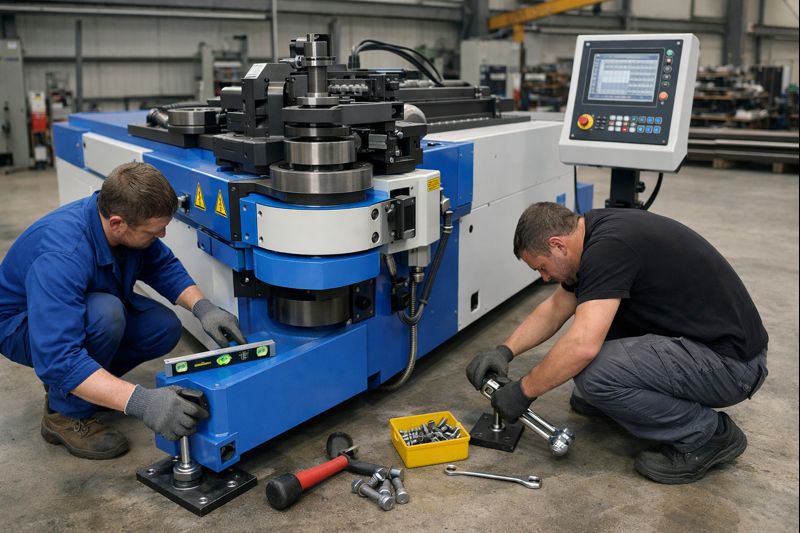
The first step in Tube Bender Alignment Calibration is confirming that the foundation is level and meets load requirements. I always check floor flatness and use precision leveling tools before tightening anchor bolts. Uneven foundations are a hidden cause of long-term accuracy drift.
Step 2: Aligning the bending head and clamping system
Next, the bending head, clamp die, and pressure die must be aligned to the correct centerline. This step ensures that the tube is held straight and centered during bending. Even slight angular misalignment here can lead to twisting or oval deformation.
Step 3: Mandrel and wiper die alignment
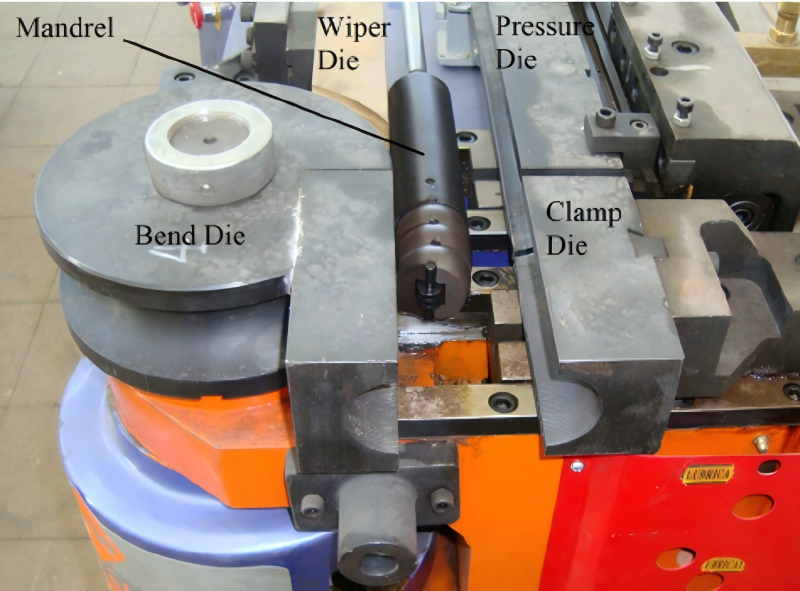
Mandrel position plays a critical role in internal tube support. During tube bender alignment calibration, I carefully adjust mandrel insertion depth and alignment relative to the bending center. The wiper die is also positioned to prevent wrinkling without introducing excess friction.
Step 4: CNC axis calibration and test bends
Once mechanical alignment is complete, I move on to CNC calibration. This includes zero-point setting, axis synchronization, and parameter verification. Test bends are then performed to confirm that programmed angles match actual results. Fine adjustments are made until repeatability is achieved.
Common Problems Caused by Poor Tube Bender Alignment Calibration
Angle deviation and inconsistent bend results
Without proper Tube Bender Alignment Calibration, operators often struggle with inconsistent angles between parts. This leads to rework, scrap, and wasted production time.
Excessive vibration and noise
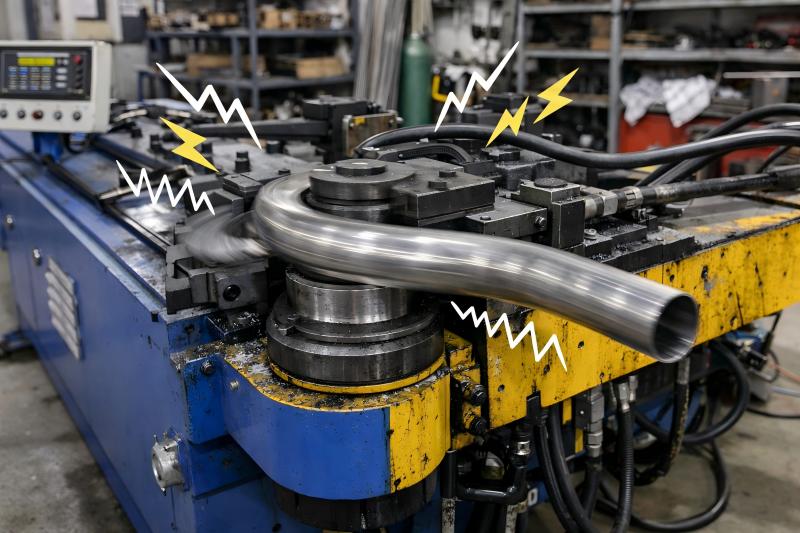
Misalignment can cause unbalanced forces during bending, resulting in vibration and noise. Over time, this affects machine stability and operator comfort.
Premature wear and unexpected downtime
Poor alignment increases friction and stress on moving components. This accelerates wear and can lead to unexpected machine stoppages, directly increasing maintenance costs.
How Often Should Tube Bender Alignment Calibration Be Checked?
Initial installation and relocation
Tube bender alignment calibration is mandatory after initial installation and any machine relocation. Transport and repositioning always introduce the risk of misalignment.
Periodic checks during long-term operation
In high-volume production environments, I recommend periodic alignment checks as part of preventive maintenance. This helps detect gradual shifts before they affect product quality.
FAQs
How long does tube bender alignment calibration take after installation?
In most cases, a complete Tube Bender Alignment Calibration takes several hours to one full day, depending on machine size and complexity. Rushing this process often leads to problems later.
Can I run production without tube bender alignment calibration?
Technically yes, but it is not recommended. Skipping calibration significantly increases the risk of bending inaccuracies, tool damage, and long-term reliability issues.
Does tube bender alignment calibration require special tools?
Yes. Precision levels, dial indicators, calibration gauges, and test materials are commonly required to achieve accurate and repeatable results.
Conclusion
From my perspective, Tube Bender Alignment Calibration is not an optional step but a critical foundation for accurate, stable, and efficient tube bending. Proper alignment after installation prevents early accuracy issues, protects tooling, and ensures the machine performs as designed over its entire service life. If you want reliable bending quality and lower maintenance costs, investing time in proper alignment calibration is essential. For more detailed guidance or professional support, feel free to contact the HARSLE technical team or explore our related tube bender installation and maintenance documentation.


