


Tube Bender Control Setup is often the key reason behind issues like poor accuracy, inconsistent repeatability, or unstable motion in tube bending operations. If you’re looking to fine-tune bending angles, reduce scrap, and achieve more consistent results from your CNC tube bender, you’re in the right place. In this article, I’ll guide you through how to optimize tube bender control setup step by step, covering everything from initial parameter configuration to motion coordination and accuracy verification. Whether you’re setting up a new machine or refining an existing one, this guide will help you achieve better performance and more stable production.
Understanding Tube Bender Control Setup Basics

Before making adjustments, it’s important to understand what tube bender control setup really involves. A proper Tube Bender Control Setup defines how the control system manages bending angle, rotation, feeding length, speed, and synchronization between axes. When these parameters are not optimized, problems such as inconsistent bend angles, ovalization, or unexpected alarms can occur.
Modern CNC tube benders rely heavily on software logic combined with servo-driven motion. That means control setup is not just about mechanical alignment, but also about how the controller interprets commands and executes movements during the bending cycle.
How to Configure CNC Tube Bender Control Parameters
Step 1: Setting Core Bending Parameters
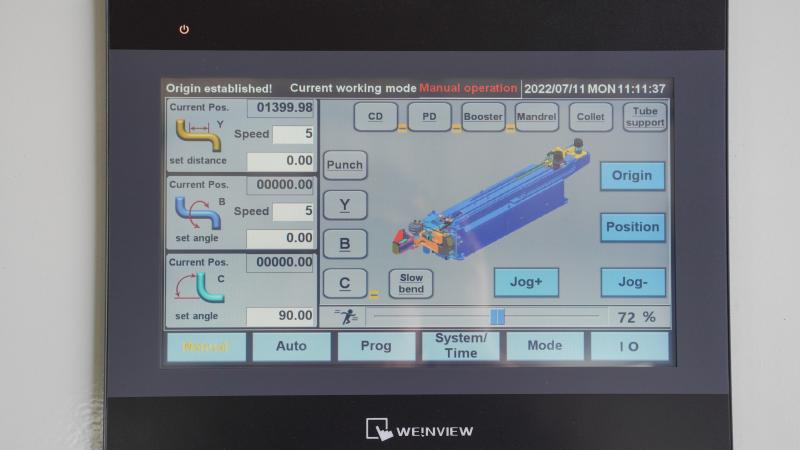
The first step in optimizing tube bender control setup is entering accurate core parameters. I always start by checking tube diameter, wall thickness, bending radius, and material type. These values directly affect springback compensation and bending force calculations.
Incorrect material or radius input can cause the control system to misjudge angle compensation, leading to under-bending or over-bending. Ensuring these parameters are correct lays the foundation for precise bending results.
Step 2: Adjusting Feed Length and Rotation Control
Feed length and rotation accuracy are critical in multi-bend programs. During tube bender control setup, I recommend verifying encoder feedback and servo resolution for both feeding and rotation axes.
Even small feed length deviations can accumulate across multiple bends, resulting in misaligned end geometry. Fine-tuning feed speed, acceleration, and deceleration settings also helps reduce tube slippage and positioning errors.
Step 3: Optimizing Bending Speed and Acceleration

Bending speed plays a bigger role than many operators realize. If the bending speed is too high, the tube may deform or slip. If it’s too low, production efficiency drops.
I usually balance speed and stability by adjusting acceleration curves in the control system. A smooth transition into and out of the bending motion reduces stress on tooling and improves repeatability, which is a key part of an optimized tube bender control setup.
Calibrating Tube Bender Control Setup for Accuracy
Angle Calibration and Springback Compensation
One of the most important tasks in tube bender control setup is angle calibration. I recommend performing test bends and measuring actual angles with a digital angle gauge. Based on the results, springback compensation values should be fine-tuned directly in the controller.
Different materials behave differently, so calibration should be repeated whenever material grade or wall thickness changes. This approach ensures consistent accuracy across different production batches.
Synchronizing Multiple Axes
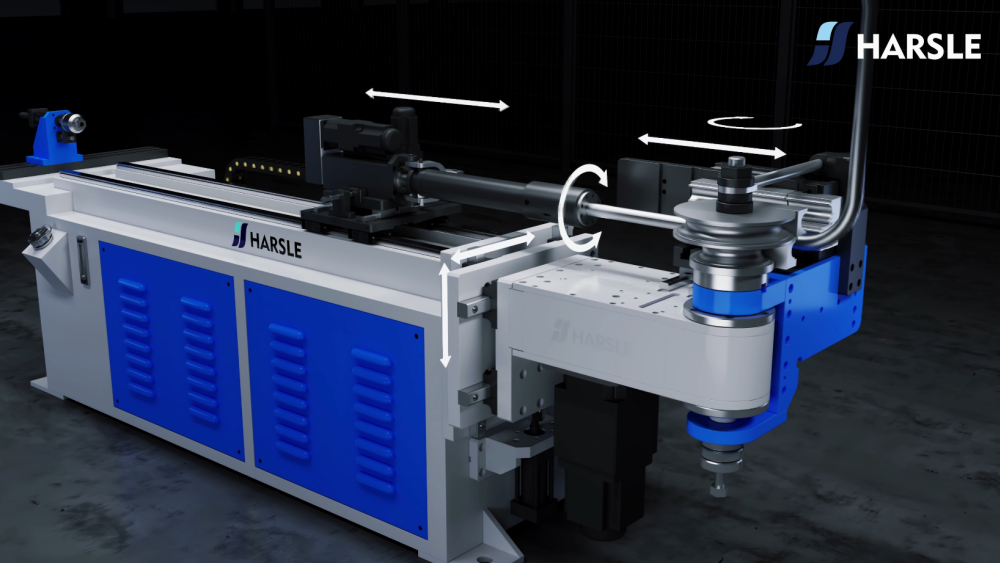
In CNC tube benders, bending, rotation, and feeding must work in perfect harmony. Poor synchronization can lead to vibration, surface marks, or dimensional errors.
I always check axis response times and ensure that control signals are well-coordinated. Proper synchronization not only improves bend quality but also extends the life of mechanical components.
Common Tube Bender Control Setup Issues and Solutions
Inconsistent Bend Angles
If bend angles vary from part to part, the control setup may not be compensating correctly for springback or speed changes. Reviewing bending parameters and recalibrating angle correction usually resolves this issue.
Control Alarms During Operation
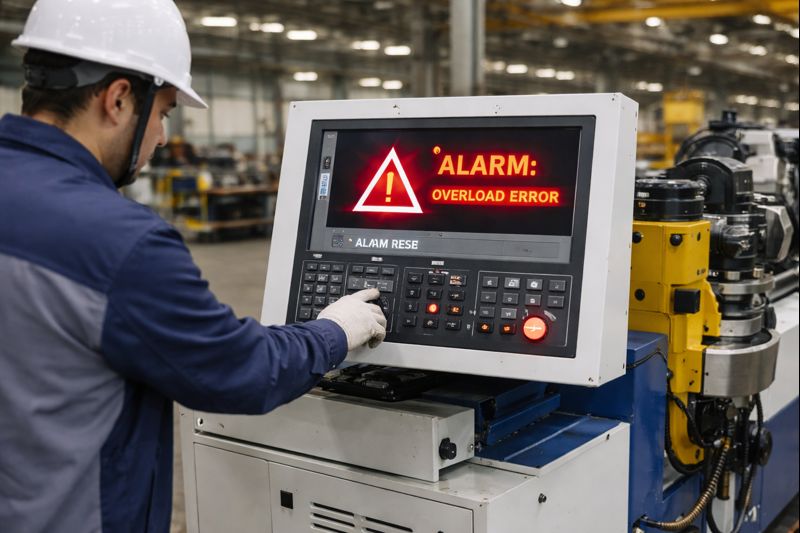
Unexpected alarms often point to overly aggressive acceleration or incorrect parameter limits. Slowing down motion profiles and verifying limit settings can stabilize the system and prevent downtime.
Poor Repeatability in Multi-Bend Programs
Repeatability issues are often caused by feed length drift or rotation misalignment. Refining encoder calibration and reducing mechanical backlash within the control setup can significantly improve consistency.
Best Practices for Long-Term Tube Bender Control Stability
Regular Parameter Review
I recommend periodically reviewing control parameters, especially after long production runs or tooling changes. Small deviations can build up over time and affect overall performance.
Backing Up Control Settings
Backing up your tube bender control setup is essential. If software updates or accidental changes occur, a backup allows you to restore proven parameters quickly and avoid unnecessary re-calibration.
Operator Training on Control Setup
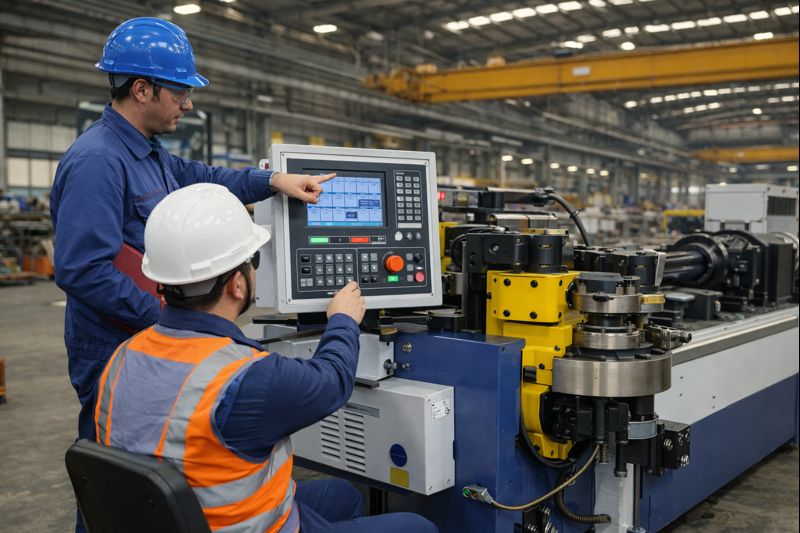
Even the best control system depends on skilled operators. Training operators to understand how tube bender control setup affects bending quality helps prevent errors and improves day-to-day efficiency.
FAQ
How often should I recalibrate tube bender control setup?
I recommend recalibrating whenever you change material type, wall thickness, or bending radius. Regular checks during high-precision production runs also help maintain accuracy.
Can tube bender control setup affect tooling life?
Yes. Poor control setup can cause excessive force, vibration, and uneven wear on dies and mandrels. Optimized control settings reduce mechanical stress and extend tooling lifespan.
Why does my CNC tube bender lose accuracy over time?
Accuracy loss is often related to parameter drift, encoder wear, or mechanical backlash. Reviewing tube bender control setup and performing routine calibration usually restores performance.
Conclusion
Optimizing Tube Bender Control Setup is one of the most effective ways to improve bending accuracy, repeatability, and overall machine reliability. By carefully configuring parameters, calibrating angles, synchronizing axes, and maintaining stable control logic, you can significantly reduce scrap and downtime. If you need expert guidance, advanced control optimization, or support for your CNC tube bender, feel free to contact the HARSLE technical team or explore our related documentation for deeper insights.


