


Tube Bender Foundation and Anchoring are often the real reasons why a tube bender vibrates, loses accuracy, or even shifts position after installation, rather than problems with the machine itself. If you are looking for clear and practical guidance on Tube Bender Foundation and Anchoring, you are in the right place. In this article, I’ll explain how to properly meet tube bender foundation and anchoring requirements, from floor preparation to anchor bolt selection. Whether you are installing a new CNC tube bender or relocating an existing machine, this guide will help you avoid common mistakes, maintain bending accuracy, and ensure long-term stable operation.
Understanding Tube Bender Foundation and Anchoring Requirements
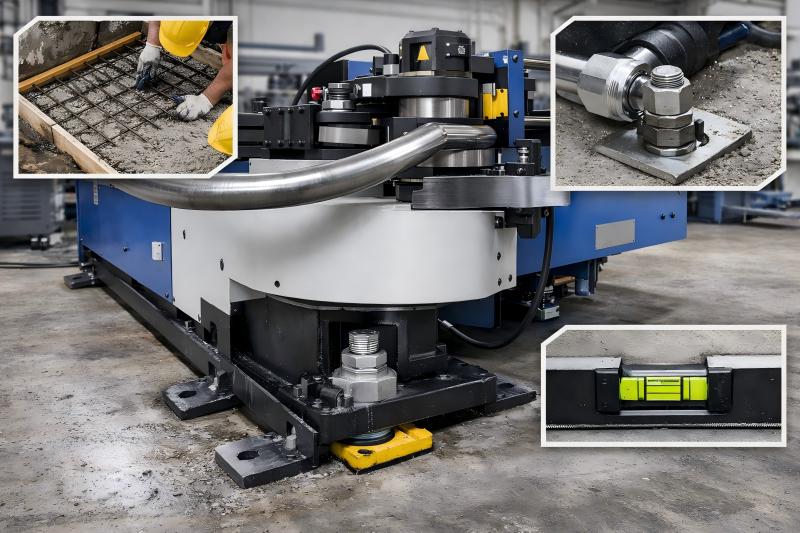
Before discussing installation steps, it’s important to understand why Tube Bender Foundation and Anchoring are critical. Tube bending machines generate significant dynamic forces during bending, clamping, and mandrel movement. Without a properly designed foundation and correct anchoring method, these forces can transfer to the floor, causing vibration, misalignment, and premature wear of key components.
A well-prepared foundation distributes machine loads evenly, while proper anchoring prevents horizontal movement and torsion. Together, they form the physical base that supports bending accuracy, repeatability, and safety.
How to Prepare the Foundation for a Tube Bender
Evaluating Floor Strength and Thickness

The first step in meeting tube bender foundation requirements is checking the existing floor. I always recommend verifying the concrete strength and thickness before installation. For most medium to large CNC tube benders, a reinforced concrete floor with sufficient thickness is essential to support both static machine weight and dynamic bending loads.
If the floor is too thin or has internal cracks, the machine may settle unevenly over time. In such cases, pouring a dedicated foundation block is the safest solution.
Ensuring Floor Levelness and Flatness
Even a strong floor can cause problems if it is not level. An uneven foundation directly affects machine alignment and bending precision. Before positioning the tube bender, I make sure the floor flatness meets the tolerance specified by the manufacturer. Minor deviations can often be corrected with leveling pads, but large slopes should be addressed by surface grinding or re-pouring concrete.
Proper Anchoring Methods for Tube Benders
Choosing the Right Anchor Bolts
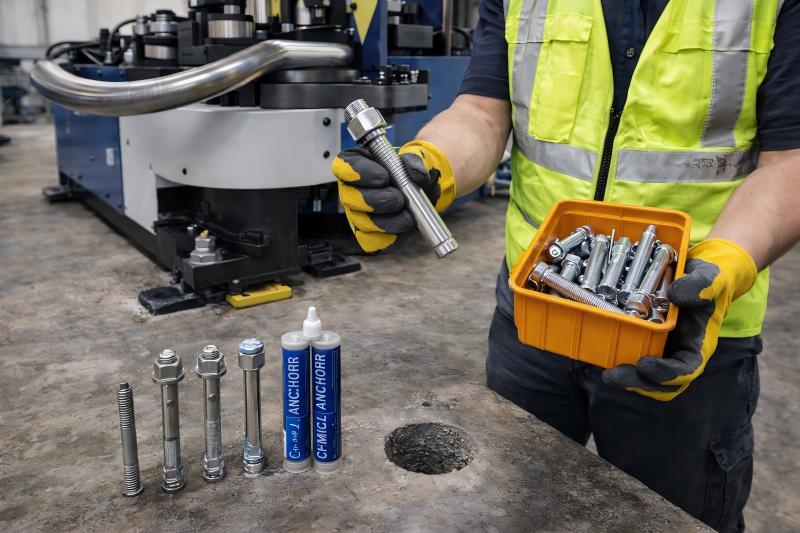
Selecting suitable anchor bolts is a key part of Tube Bender Foundation and Anchoring. Expansion anchors or chemical anchors are commonly used, depending on floor conditions and machine size. For high-load tube bending machines, chemical anchors usually provide better holding strength and long-term reliability.
The anchor bolt diameter, length, and grade should match the machine’s mounting holes and load requirements. Undersized anchors are one of the most common installation mistakes I encounter.
Anchor Bolt Positioning and Installation
Correct positioning is just as important as bolt selection. Anchor bolts must align precisely with the machine base holes to avoid stress concentration. During installation, I always follow a controlled tightening sequence, gradually applying torque to prevent distortion of the machine frame.
After initial tightening, it’s good practice to recheck bolt torque after a short period of operation, as minor settling can occur.
Step-by-Step Guide to Anchoring a CNC Tube Bender
Step 1: Positioning the Machine
Once the foundation is ready, the tube bender should be placed in its final position. I ensure there is enough clearance around the machine for operation, maintenance, and material loading. This step also includes aligning the machine with production flow to improve efficiency.
Step 2: Leveling the Tube Bender
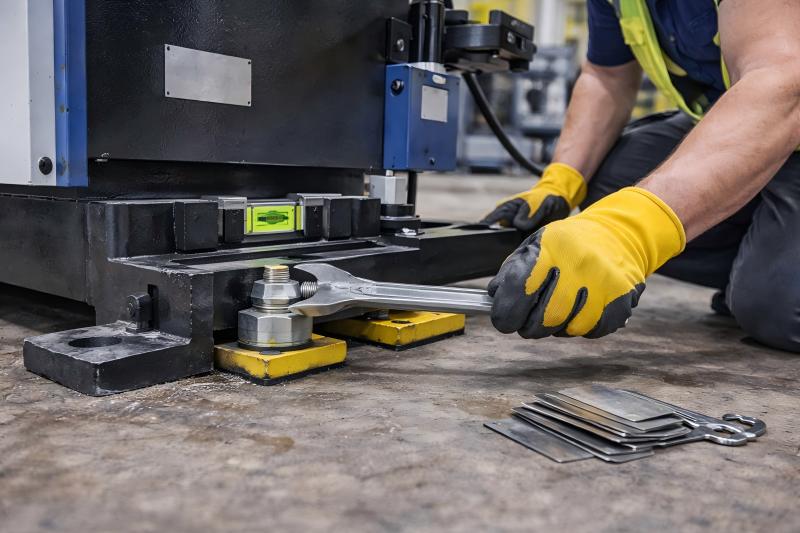
Leveling is a critical step that directly affects bending accuracy. Using precision leveling tools, I adjust the machine feet or shims until the base is perfectly level in all directions. This step should never be rushed, as improper leveling can lead to inconsistent bending angles and tool wear.
Step 3: Drilling and Installing Anchors
With the machine leveled, anchor holes are drilled according to the foundation layout. After cleaning the holes thoroughly, anchors are installed and tightened following the recommended torque values. At this stage, the machine should feel completely stable, with no rocking or movement.
Common Installation Mistakes and How to Avoid Them
Ignoring Dynamic Load Effects
One frequent issue is focusing only on machine weight and ignoring dynamic forces. Tube bending involves acceleration, deceleration, and bending resistance, all of which generate additional loads. Designing the foundation only for static weight often leads to long-term problems.
Skipping Post-Installation Checks
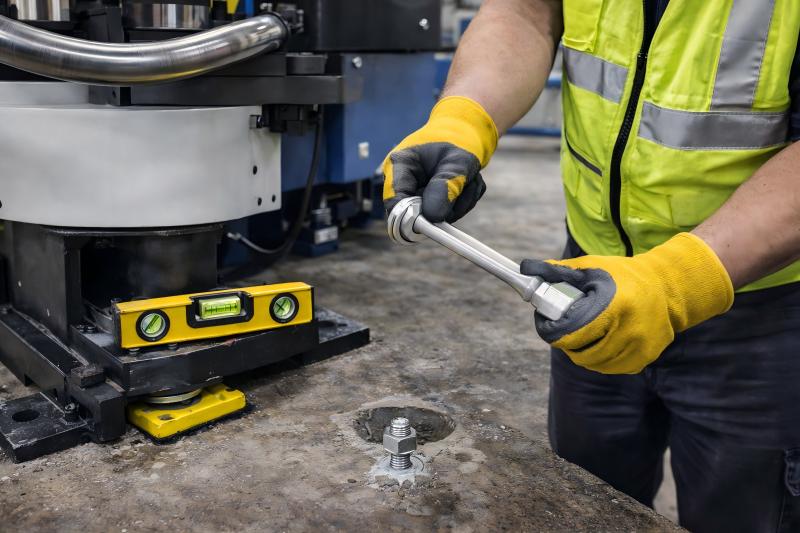
Another mistake is assuming the job is done once the machine is anchored. I always recommend checking machine level and anchor tightness after initial trial runs. This small step can prevent serious alignment issues later.
How Foundation and Anchoring Affect Tube Bender Performance
Proper Tube Bender Foundation and Anchoring directly influence bending accuracy, repeatability, and machine lifespan. A stable base reduces vibration, protects servo systems, and ensures consistent tool alignment. Over time, this translates into better product quality, fewer maintenance issues, and lower operating costs.
FAQ
Do all tube benders require anchoring to the floor?
Most CNC tube benders benefit from anchoring, especially medium and large models. Anchoring improves stability and accuracy, even if the machine can technically operate without it.
Can I install a tube bender on an existing factory floor?
Yes, but the floor must meet strength, thickness, and flatness requirements. If it does not, a dedicated foundation block should be constructed.
How often should anchor bolts be checked after installation?
I recommend checking anchor bolt torque after the first few days of operation and then during routine maintenance intervals.
What happens if tube bender anchoring is not done correctly?
Poor anchoring can lead to vibration, loss of bending accuracy, increased wear, and even safety risks during operation.
Conclusion
Meeting Tube Bender Foundation and Anchoring requirements is not just an installation formality; it is a critical step that determines machine performance, accuracy, and long-term reliability. By preparing a proper foundation, selecting the right anchoring method, and following a careful installation process, you can avoid common problems and protect your investment. If you need detailed foundation drawings, anchoring recommendations, or installation support for your tube bender, feel free to contact the HARSLE team or explore our related technical documentation for more guidance.


