


Tube Bender Guide Rail Maintenance is the first topic I address when customers ask how to keep their tube bending machines accurate and stable over long periods of operation. Guide rails play a critical role in bending precision, repeatability, and overall machine lifespan. If you are experiencing positioning errors, abnormal vibration, or accelerated component wear, insufficient guide rail maintenance is often the underlying cause. In this article, I’ll share proven best practices for maintaining tube bender guide rails, helping you reduce downtime, improve bending accuracy, and protect your long-term investment.
Understanding the Role of Guide Rails in Tube Benders
Why Guide Rails Are Critical for Bending Accuracy

Guide rails control the linear motion of key components such as bending heads, carriages, and auxiliary axes. If the guide rails are worn, contaminated, or misaligned, the tube bender cannot maintain consistent positioning. This directly leads to angle deviation, poor repeatability, and surface defects on the tube. Proper Tube Bender Guide Rail Maintenance ensures smooth motion and stable force transmission during every bending cycle.
Common Types of Guide Rails Used in Tube Benders
Most modern CNC tube benders use linear guide rails with rolling elements, while some heavy-duty or older models may rely on sliding guide structures. Regardless of the design, all guide rails require regular cleaning, lubrication, and inspection to maintain performance.

Daily Tube Bender Guide Rail Maintenance Best Practices
Step 1: Cleaning the Guide Rails Properly
Before focusing on lubrication or adjustment, I always recommend starting with cleaning. Metal dust, oil residue, and debris can accumulate quickly in tube bending environments. Use a lint-free cloth to wipe the guide rail surfaces at the end of each shift. Avoid using compressed air directly on guide rails, as it can push debris into the rolling elements and seals.
Step 2: Visual Inspection for Early Wear Signs
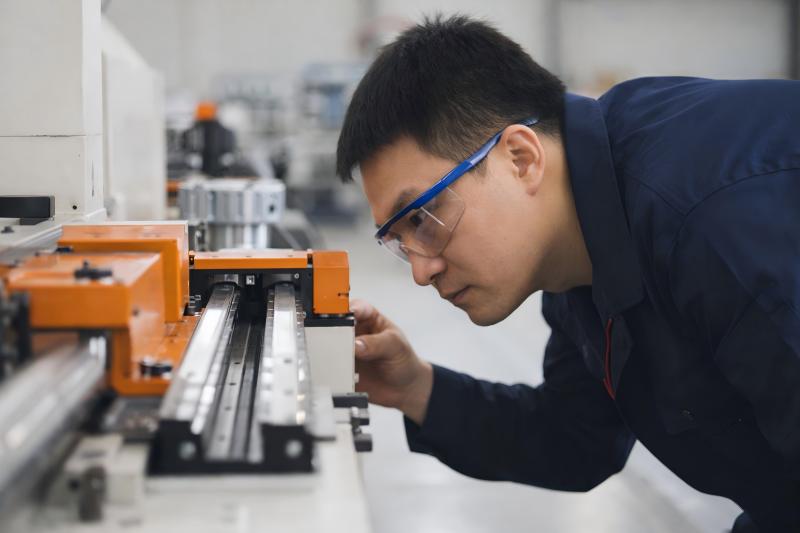
Daily visual checks help identify scratches, discoloration, or uneven wear patterns. These early warning signs often indicate contamination, insufficient lubrication, or misalignment. Catching these issues early is a key part of effective Tube Bender Guide Rail Maintenance.
Lubrication Guidelines for Tube Bender Guide Rails
Choosing the Right Lubricant for Guide Rails

Not all lubricants are suitable for linear guide rails. I recommend using manufacturer-approved guide rail grease or oil with proper viscosity and anti-wear additives. Using incorrect lubricants can attract dust or cause inadequate film strength, accelerating wear.
How Often Should Guide Rails Be Lubricated?
Lubrication frequency depends on machine workload and operating environment. For high-volume tube bending operations, guide rail lubrication, as part of Tube Bender Guide Rail Maintenance, should be performed every 40–80 working hours. In dusty or humid environments, shorter intervals are advisable.
Alignment and Adjustment in Tube Bender Guide Rail Maintenance
Checking Guide Rail Parallelism
Misaligned guide rails increase friction and place uneven loads on bearings. Periodic alignment checks using dial indicators or laser measurement tools help maintain parallelism. If deviations exceed tolerance, corrective adjustments should be performed immediately to avoid long-term damage.
Tightening Mounting Bolts Correctly
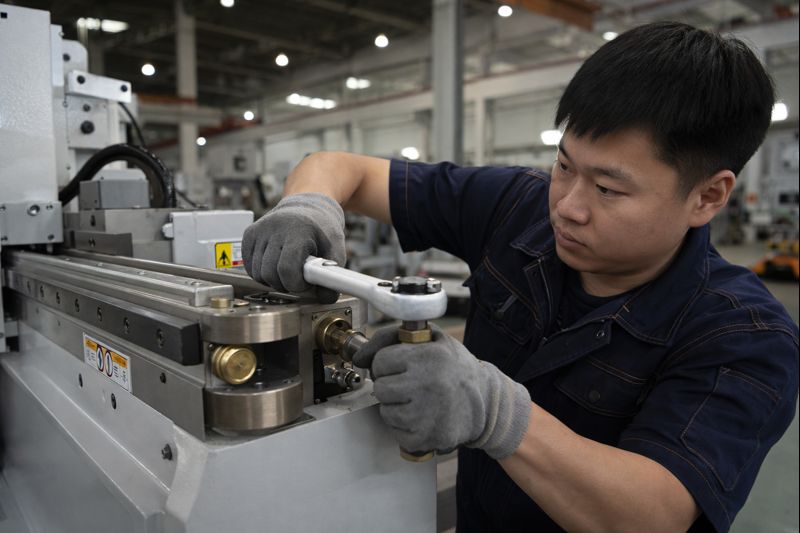
Loose mounting bolts are a surprisingly common issue. During scheduled Tube Bender Guide Rail Maintenance, verify that all mounting bolts are tightened to the specified torque. Uneven torque can distort the rail base and reduce motion accuracy.
Preventive Maintenance for Long-Term Reliability
Scheduled Maintenance Intervals
In addition to daily checks, I recommend a comprehensive guide rail inspection every three to six months. This includes checking preload conditions, inspecting rolling elements, and evaluating lubrication effectiveness. Preventive Tube Bender Guide Rail Maintenance significantly extends service life and reduces unexpected failures.
Protecting Guide Rails from Environmental Damage
Installing protective covers or bellows helps shield guide rails from welding spatter, dust, and coolant splashes. Environmental protection is often overlooked but plays a major role in maintaining long-term guide rail performance.
Troubleshooting Common Guide Rail Problems
Abnormal Noise or Vibration During Operation
Unusual noise often indicates insufficient lubrication or contamination. Stop the machine immediately, clean the guide rails, and reapply lubricant. Continuing operation under these conditions can cause irreversible damage.
Reduced Positioning Accuracy
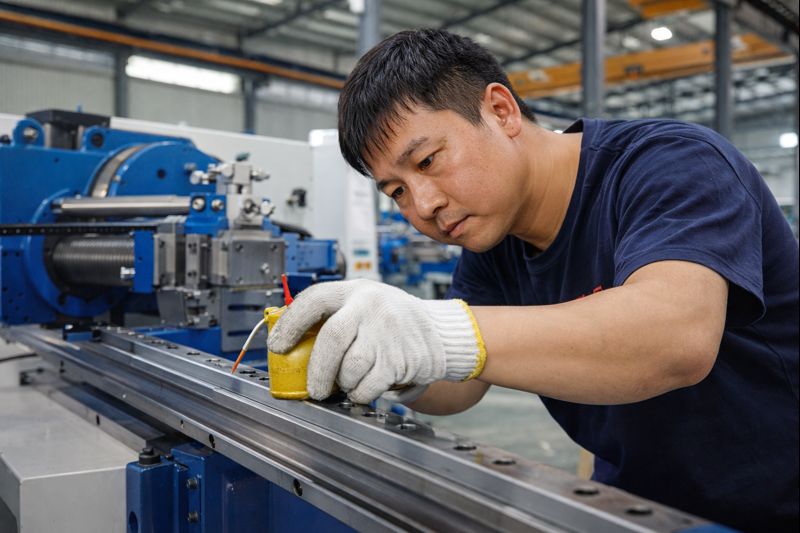
If positioning accuracy declines, inspect the guide rails for wear, loosened fasteners, or alignment issues. Proper Tube Bender Guide Rail Maintenance often restores accuracy without requiring component replacement.
FAQs
How often should Tube Bender Guide Rail Maintenance be performed?
Basic cleaning and inspection should be done daily, while lubrication and alignment checks should follow a weekly or monthly schedule depending on workload.
What happens if guide rails are not maintained properly?
Poor maintenance leads to increased friction, accelerated wear, positioning errors, and reduced bending accuracy, eventually resulting in costly repairs.
Can improper lubrication damage tube bender guide rails?
Yes. Using the wrong lubricant or lubricating too infrequently can cause metal-to-metal contact, overheating, and premature failure.
Do CNC tube benders require different guide rail maintenance than NC models?
CNC tube benders generally require stricter Tube Bender Guide Rail Maintenance due to higher precision requirements and multi-axis coordination.
Conclusion
Consistent and professional Tube Bender Guide Rail Maintenance is one of the most effective ways to protect bending accuracy, reduce downtime, and extend machine lifespan. By following proper cleaning, lubrication, alignment, and preventive maintenance practices, you can ensure stable performance even under demanding production conditions. If you need tailored maintenance guidance or technical support for your tube bender, feel free to contact the HARSLE service team or explore our related documentation for deeper insights.


