


Tube Bender Installation FAQ is often the first reference customers check when preparing to install a tube bending machine, because the concerns are very practical—transportation, foundation requirements, and how to avoid accuracy issues after installation. If you are looking for a clear and reliable Tube Bender Installation FAQ, this guide is designed to help. I’ll walk you through the key installation steps, from site preparation to final inspection, and point out common mistakes I’ve seen in real factory installations. Whether you are setting up a new CNC tube bender or relocating an existing machine, this article will help you achieve stable operation, long-term accuracy, and a smooth production startup.
How to Prepare for Tube Bender Installation
Evaluating the Installation Site and Floor Requirements
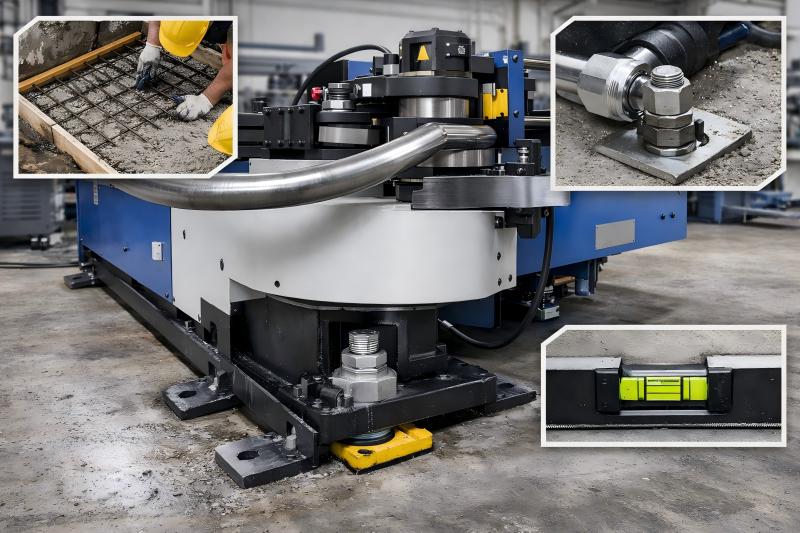
Before the tube bender arrives, I always recommend evaluating the installation site carefully. A CNC tube bender is a precision machine, and the floor condition directly affects bending accuracy. The floor should be flat, level, and capable of supporting the full machine weight plus dynamic loads during operation. For most medium and large tube benders, reinforced concrete flooring is required. Uneven or weak floors often lead to vibration, shifting, and inconsistent bending angles after installation.
Ensuring Sufficient Space and Accessibility
Adequate space around the machine is another key factor. I advise leaving enough clearance for material loading, unloading, maintenance access, and operator movement. You should also consider space for electrical cabinets, hydraulic units, and future tooling changes. Proper accessibility not only improves safety but also reduces downtime during maintenance.
How to Transport and Position a CNC Tube Bender
Choosing the Right Lifting and Transport Equipment
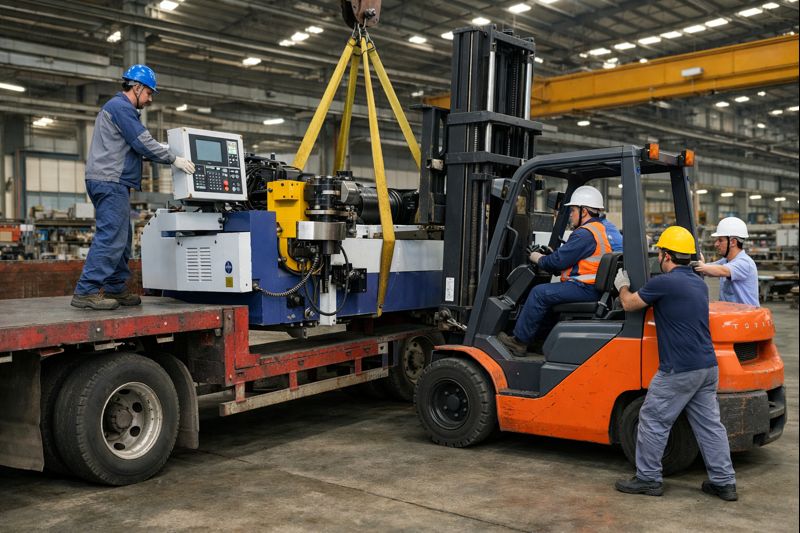
One of the most common Tube Bender Installation FAQ questions I hear is about transportation. Selecting the correct transport equipment is critical. Forklifts, cranes, or overhead hoists must match the machine’s weight and center of gravity. I’ve seen machines damaged simply because the lifting points were ignored. Always follow the manufacturer’s lifting instructions and use certified slings, forks, or lifting eyes.
Positioning the Tube Bender Accurately
Once the machine is inside the workshop, precise positioning matters. I recommend slowly lowering the machine into place and checking alignment before final positioning. Rushing this step often leads to misalignment that shows up later as bending inaccuracies or abnormal noise during operation.
Tube Bender Foundation and Anchoring Guidelines
When Anchoring Is Required
Not every tube bender requires anchoring, but many CNC tube benders do, especially high-speed or high-force models. Anchoring improves stability and minimizes vibration. In my experience, skipping anchoring when it is required almost always results in long-term accuracy issues.
Anchor Bolt Installation Best Practices

Anchor bolts should be installed according to the foundation layout drawing. The holes must be drilled to the correct depth and diameter, and bolts should be tightened evenly after the machine is leveled. I strongly suggest rechecking bolt torque after the first few days of operation, as settling can occur.
Electrical and Hydraulic Connection Setup
Electrical Power and Grounding Requirements
Proper electrical connection is essential for safe operation. Before powering on the machine, I always verify voltage, phase, and frequency match the machine specifications. Reliable grounding is especially important to protect control systems and servo drives. Poor grounding can lead to alarms, unstable operation, or even component damage.
Hydraulic System Checks Before Startup
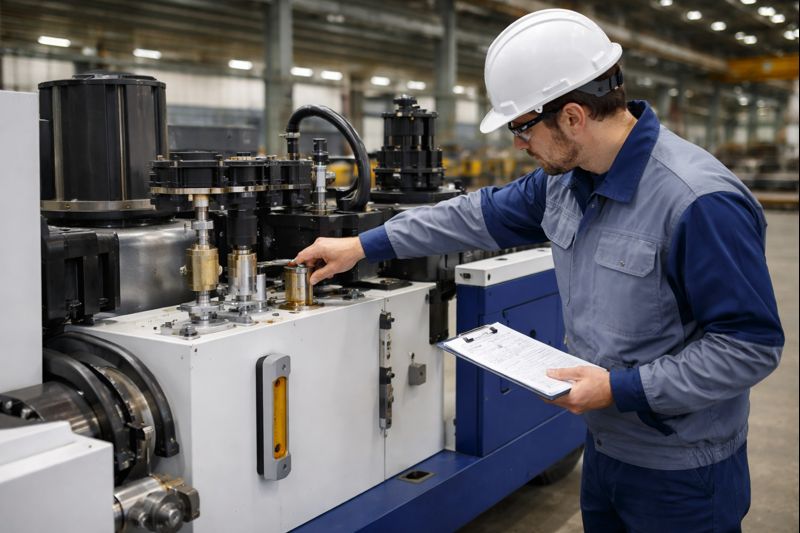
For hydraulic tube benders, checking the hydraulic system is a must. This includes verifying oil level, inspecting hoses and fittings, and ensuring there are no leaks. Air trapped in the hydraulic lines should be removed before full operation to avoid pressure fluctuations.
Machine Leveling and Accuracy Verification
Leveling the Tube Bender Correctly
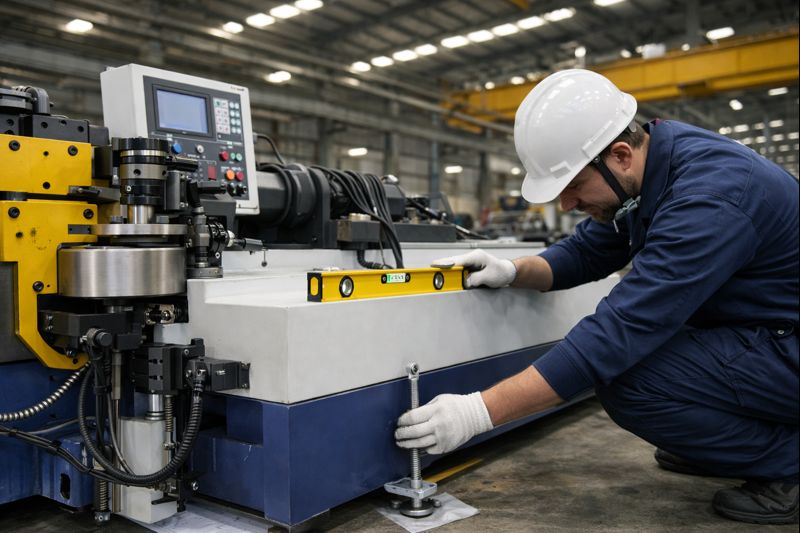
Leveling is one of the most overlooked steps in tube bender installation. I always use a precision level to check the machine bed in multiple directions. Even small deviations can affect bending angles and repeatability. Take your time during this step—it directly impacts final product quality.
Trial Runs and Initial Bending Tests
After leveling and connections are complete, I recommend running the machine without load first. This allows you to listen for abnormal sounds and confirm smooth movement. Then perform trial bending tests using sample tubes. Check bending angle, radius consistency, and repeatability to confirm the installation was successful.
Common Tube Bender Installation Mistakes to Avoid
Ignoring Floor Strength and Flatness
Many installation problems start with poor floor conditions. An uneven or weak foundation often causes long-term issues that are difficult to correct later. Addressing this early saves time and cost.
Skipping Final Inspection After Installation
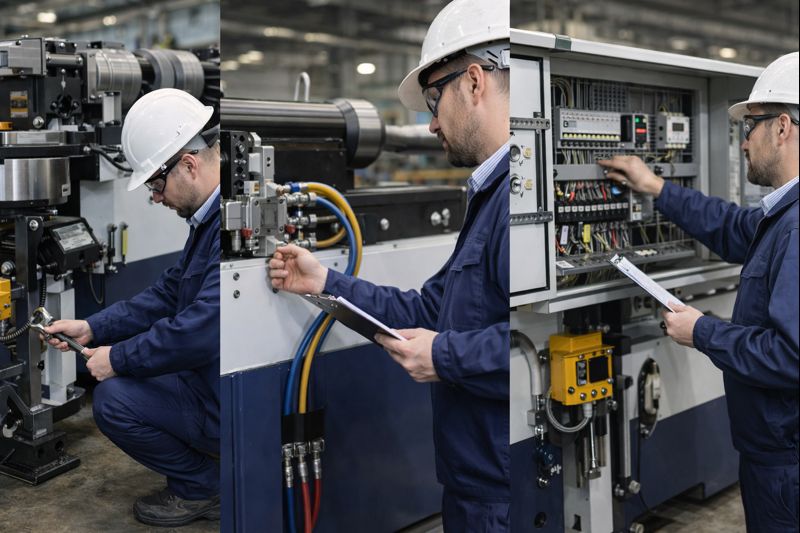
Another common mistake is skipping final inspection. I always advise checking bolts, electrical connections, hydraulic fittings, and safety devices after initial operation. A short inspection can prevent unexpected downtime.
FAQs
What is the most important step in Tube Bender Installation FAQ guidelines?
In my experience, proper floor preparation and machine leveling are the most critical steps. Without a stable and level base, even the best tube bender cannot deliver accurate results.
Do all CNC tube benders need anchor bolts?
Not all models require anchoring, but many high-speed or high-tonnage tube benders do. Always follow the manufacturer’s installation recommendations.
How long does tube bender installation usually take?
Depending on machine size and site readiness, installation can take from one day to several days. Proper preparation significantly shortens installation time.
Can improper installation affect bending accuracy?
Absolutely. Improper leveling, weak foundations, or incorrect electrical connections often lead to vibration, angle deviation, and inconsistent bending quality.
Conclusion
Proper installation is the foundation of reliable and accurate tube bending. By following the guidelines in this Tube Bender Installation FAQ, you can avoid common mistakes, reduce startup problems, and protect your investment over the long term. From site preparation and transportation to leveling and final testing, every step plays a role in machine performance. If you need professional guidance, detailed installation drawings, or on-site support, feel free to contact the HARSLE team or explore our other tube bender documentation for more in-depth technical insights.


