


When it comes to building reliable and visually appealing city structures, precision and durability are everything. Tube Benders in Public Infrastructure play a critical role in shaping strong, efficient, and modern designs for public facilities such as bridges, handrails, lighting poles, and transit shelters. If you’ve ever wondered why tube bending technology is so vital in today’s urban development, this article will give you the full picture. I’ll explain how tube benders support design innovation, ensure safety, and contribute to the longevity of public infrastructure — helping engineers and fabricators meet modern construction standards efficiently and cost-effectively.
How Tube Benders in Public Infrastructure Support Modern Design
Achieving Structural Strength and Aesthetic Appeal
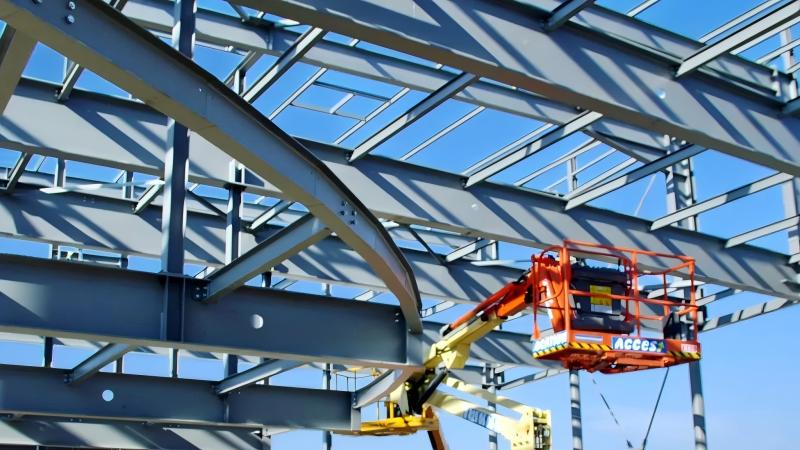
In public projects, tube bending helps designers create both durable and aesthetically refined components. Bent tubes provide smooth curves and clean angles that are not only stronger under stress but also visually pleasing. Whether it’s a curved guardrail or a bicycle rack, tube benders allow for seamless shapes that require fewer joints, resulting in higher strength and lower maintenance.
Flexibility for Custom Urban Solutions
Every city project has unique requirements, from custom street furniture to architectural canopies. With CNC-controlled tube benders, fabricators can easily adjust parameters like bend radius and angle to create tailored solutions. This flexibility makes it possible to meet architectural specifications precisely while maintaining consistent quality across multiple units.
Enhancing Efficiency and Safety in Infrastructure Manufacturing
Reducing Material Waste and Production Time
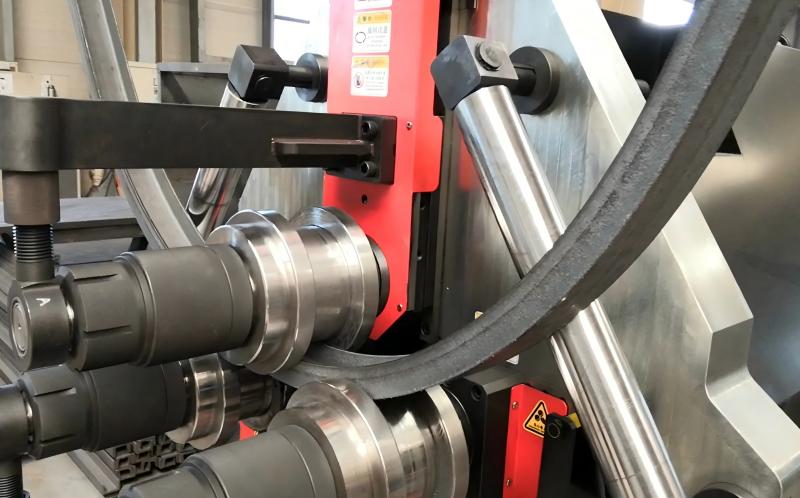
Modern tube benders use advanced servo control systems to ensure each bend is accurate on the first try. This precision minimizes material waste — a crucial factor in large-scale infrastructure projects — and speeds up production. By optimizing energy use and reducing manual errors, manufacturers can significantly lower operational costs.
Ensuring Safety Standards and Long-Term Reliability
Public infrastructure components must meet strict safety regulations. Tube benders ensure that every piece maintains consistent wall thickness and strength throughout the bend, which is essential for parts that bear loads or endure outdoor exposure. By producing accurate and repeatable results, tube bending machines guarantee that each product meets engineering and safety standards.
Applications of Tube Benders in Public Infrastructure Projects
Street Furniture and Urban Fixtures
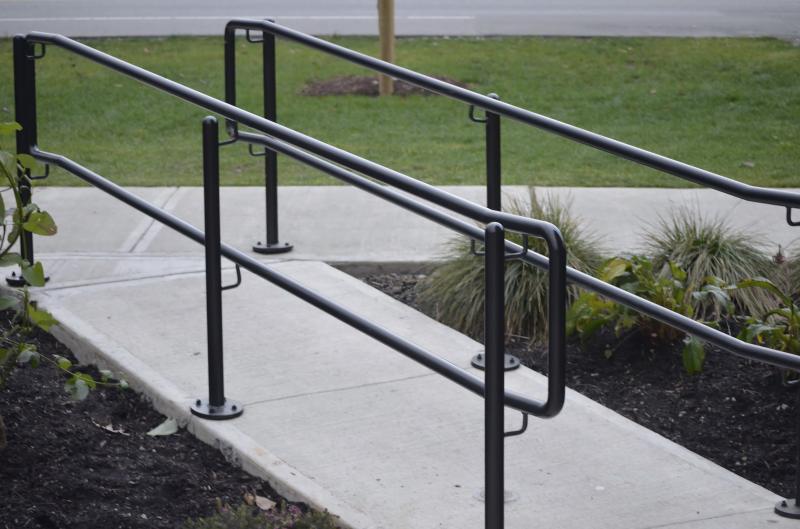
Tube benders are essential in producing benches, railings, barriers, and lighting poles. Their precision ensures ergonomic designs, smooth edges, and robust construction suitable for daily public use.
Transportation and Mobility Systems
From bus shelters to bicycle parking systems, tube bending enables the creation of durable and space-efficient designs. These structures combine functionality with an attractive look that complements urban architecture.
Architectural and Structural Elements

Tube bending technology is also applied in large-scale structures like bridges, canopies, and pedestrian overpasses. Bent steel tubes provide strength and resilience while allowing architects greater creative freedom.
Maintenance and Quality Control Tips for Tube Bending in Public Projects
Routine Calibration of Tube Benders
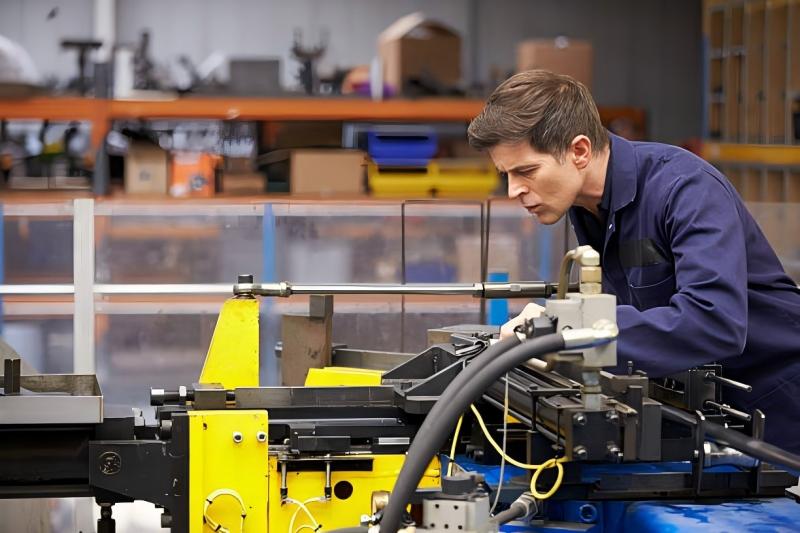
To maintain high precision, tube benders should be calibrated regularly according to manufacturer guidelines. Regular inspection of mandrels, dies, and clamps ensures consistent bending performance.
Checking Material Quality Before Bending
Using high-quality materials such as stainless steel or aluminum ensures better deformation resistance during bending. Always verify material specifications to avoid defects like cracking or flattening.
Implementing Automated Monitoring Systems
Many advanced tube benders come with real-time monitoring features that track bending force and angle accuracy. Implementing these systems helps detect issues early and maintain consistent output quality.
FAQs
Why are Tube Benders in Public Infrastructure projects preferred over welding?
Tube bending reduces the need for welded joints, which are often weak points in structures. This improves durability, reduces corrosion risk, and enhances overall design strength.
What types of tubes are commonly used in public infrastructure bending?
Stainless steel, carbon steel, and aluminum tubes are commonly used because they offer strength, weather resistance, and excellent forming properties.
How does tube bending support sustainable city development?
By minimizing waste, improving efficiency, and enabling long-lasting structures, tube bending supports eco-friendly manufacturing and sustainable construction practices.
Can tube benders handle large-diameter pipes for infrastructure projects?
Yes. Heavy-duty CNC and hydraulic tube benders are designed to handle large-diameter tubes used in bridges, pipelines, and other major infrastructure applications.
Conclusion
In modern city development, Tube Benders in Public Infrastructure are far more than just fabrication tools — they’re enablers of innovation, safety, and sustainability. From shaping elegant urban furniture to forming the backbone of bridges and transit systems, these machines make it possible to build smarter, stronger, and more efficient cities.
If you’re looking to improve your infrastructure manufacturing capabilities or explore advanced tube bending solutions, feel free to contact HARSLE’s engineering team for expert guidance and customized machine recommendations.


