


NC Press Brake Care ensures accurate bending, reduced downtime, and longer machine life. Learn expert maintenance practices for hydraulic oil, lubrication, and daily inspections.
NC Press Brake Care is essential for maintaining consistent bending accuracy, extending the life of your torsion-bar press brake, and preventing unexpected downtime. Most NC press brakes use a mechanical torsion bar and a gear-and-rack synchronization structure, which makes regular lubrication, hydraulic oil management, and operational inspections especially important. This guide provides a comprehensive, expert-backed maintenance framework based on real field experience, including insights commonly applied by HARSLE technicians.

Why NC Press Brake Care Matters
An NC torsion-bar press brake is a durable machine, but its long-term performance depends heavily on proper maintenance. The gear-and-rack synchronization system, torsion shaft, hydraulic cylinders, and sliding mechanisms all undergo significant load and friction during daily bending production. Without routine care, operators may face:
Although NC torsion-bar press brakes rely primarily on a mechanical synchronization structure rather than a servo-hydraulic system, the machine’s overall performance is still deeply influenced by the condition of its hydraulic oil, which supports the cylinders responsible for generating bending force. Clean hydraulic oil ensures stable pressure, smooth movement, and consistent responsiveness, meaning that even small levels of contamination—whether caused by moisture, oxidation, or microscopic particles—can gradually damage valves, slow the ram, or lead to pressure fluctuations that negatively impact bending quality.
Hydraulic Oil Maintenance
Although NC torsion-bar press brakes rely on a mechanical synchronization system, the bending cylinders still depend on stable hydraulic pressure. Clean oil directly affects the responsiveness and efficiency of the machine.
Why Clean Hydraulic Oil Matters
For NC torsion-bar press brakes, especially those using a gear-and-rack synchronization mechanism, proper lubrication is not just a recommended practice but a critical requirement for ensuring the precise coordination of the left and right cylinders. Because each bending cycle subjects the rack, pinion, guide rails, and torsion bar bearings to continuous friction, neglecting lubrication can gradually lead to metal fatigue, accelerated wear, and ram misalignment—issues that typically manifest first as small inconsistencies in bending angle but can eventually develop into major mechanical failures requiring costly repairs.
Hydraulic oil contamination can cause:
- Valve blockage
- Slow ram movement
- Pressure loss during bending
- Accelerated wear inside the cylinder
- Abnormal heat generation
For long-term stability, always follow the manufacturer’s oil specifications and replacement intervals.
Recommended Oil Change Frequency
The choice of lubricant significantly influences long-term performance. Lithium-based multipurpose grease is typically preferred for racks, pinions, and torsion-bar bearings due to its high-temperature resistance and strong adhesion, while slideway oil (ISO VG 68–100) is better suited for linear guide rails because it reduces friction and minimizes stick-slip during ram movement. It is equally important to thoroughly clean the lubrication points before applying new grease or oil; otherwise, old residue and metal particles may mix with the fresh lubricant, reducing its effectiveness and accelerating component wear.
Most manufacturers—including HARSLE—recommend changing hydraulic oil every:
✅ 3,000–4,000 working hours, or
✅ At least once every 1–2 years, depending on usage conditions
Though operators should also consider environmental conditions such as temperature, humidity, and dust concentration, all of which can accelerate oil degradation and shorten its effective lifespan. Monthly visual checks for NC press brake care are strongly encouraged, especially because early signs of deterioration—like a cloudy, milky appearance caused by moisture or a dark, burnt smell due to oxidation—often indicate that the oil needs to be replaced sooner than scheduled.
Steps for Filtering and Replacing Hydraulic Oil
The oil replacement procedure should be carried out only after the machine is fully powered off and the hydraulic system has cooled, as residual pressure or high oil temperature may pose safety risks. Once the oil tank lid is opened and the drain valve located, operators should allow the oil to flow out completely, ensuring that all contaminated fluid is removed from the system before installing a fresh filter. After refilling with the recommended oil grade (typically ISO VG 46), the pump should be run briefly to release trapped air. The technician must then inspect all hoses and joints for leaks, as even minor seepage can develop into a larger issue if left unchecked.
1. Ensure Safety Conditions
- Power off the machine completely
- Lock out the electrical supply
- Allow hydraulic components to cool
- Prepare tools, new oil, filters, and a collection pan
2. Drain Old Oil
- Open the oil tank lid
- Locate and open the drain valve
- Allow the oil to drain fully into the collection container
- Avoid spillage around electrical components
3. Replace the Hydraulic Filter
The filter must be replaced every time the oil is changed. A clogged filter causes contamination to circulate, damaging valves and cylinders.
4. Refill with New Oil
Use only the recommended oil grade (typically ISO VG46).
- Fill to the tank’s upper mark
- Do not overfill
- Run the pump motor briefly to remove air bubbles
5. Inspect for Leaks
Check seals, hoses, and valve joints after restarting the machine.
Lubrication for Gear-and-Rack and Torsion Bar Structures
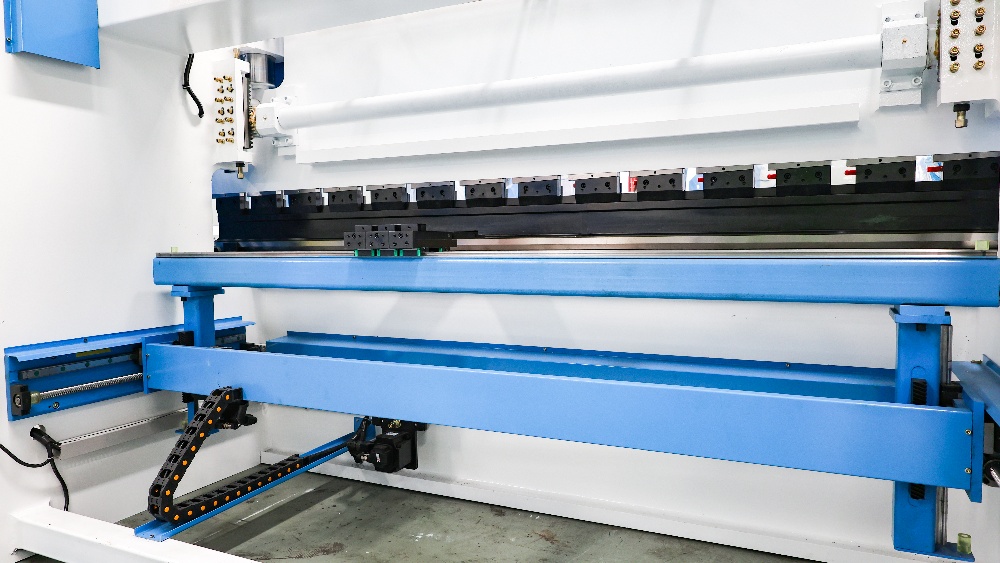
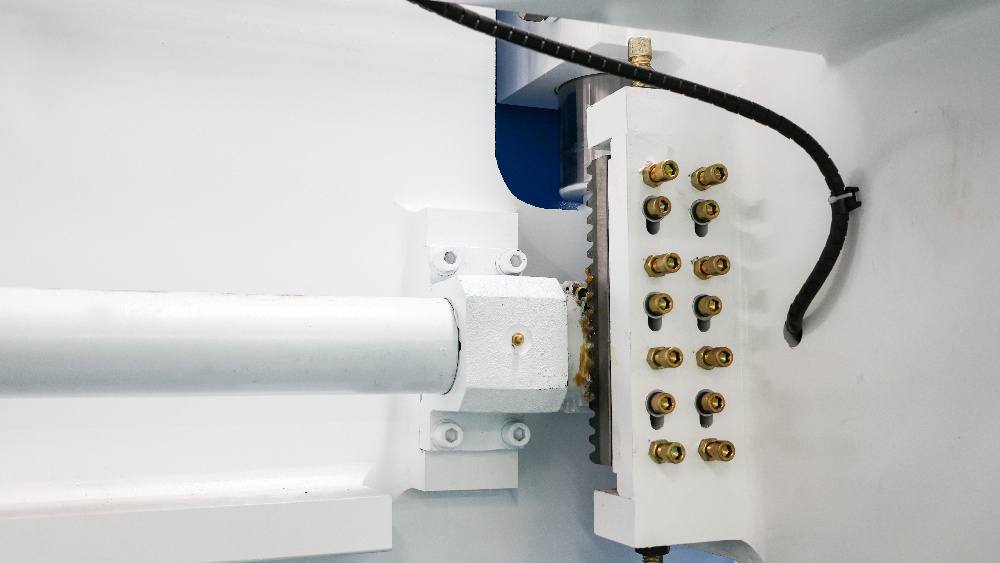
NC torsion-bar press brakes rely heavily on mechanical synchronization. This system includes:
- Torsion shaft
- Gear-and-rack assemblies
- Bearings at each connection point
- Guide rails and slider blocks
These components endure significant mechanical friction during production, making lubrication a fundamental part of NC Press Brake Care.
Effects of Proper Lubrication
Regular lubrication ensures:
- Smooth and synchronized ram movement
- Reduced rack and pinion wear
- Lower friction and reduced heat
- Accurate bending angles
- Longer lifespan of mechanical components
Insufficient lubrication often leads to:
- Abnormal noise
- Vibration
- Ram misalignment
- Uneven left-right angles
Selecting the Correct Lubricant
The choice of lubricant significantly influences long-term performance. Lithium-based multipurpose grease is typically preferred for racks, pinions, and torsion-bar bearings due to its high-temperature resistance and strong adhesion, while slideway oil (ISO VG68–100) is better suited for linear guide rails because it reduces friction and minimizes stick-slip during ram movement. It is equally important to thoroughly clean the lubrication points before applying new grease or oil; otherwise, old residue and metal particles may mix with the fresh lubricant, reducing its effectiveness and accelerating component wear.
✔ Lithium-based multipurpose grease → racks, pinions, torsion bar bearings
✔ Slideway oil ISO VG 68–100 → guide rails, sliders, and linear motion components
Avoid cheap lubricants that break down quickly or oxidize into sludge.
Steps for Proper Lubrication
1. Clean Before Application
- Remove old grease
- Clean metal debris and dust
- Use a soft cloth or brush
- For heavy residue, apply an approved solvent

2. Apply Lubricant Thoroughly
A proper lubrication routine of NC press brake care involves more than simply applying grease to visible surfaces. The operator should ensure that the lubricant is worked into all relevant contact areas, including gear teeth, sliding blocks, and the internal surfaces of linear motion components, allowing the machine to operate with minimal resistance throughout the entire stroke. Weekly lubrication of the rack and pinion system, combined with monthly maintenance of the backgauge lead screws and periodic greasing of torsion bar bearings, forms a complete lubrication strategy that greatly improves machine reliability and contributes to the overall effectiveness of NC Press Brake Care.
- Gear and rack teeth
- Backgauge lead screws
- Torsion bar bearings
- Guide rails
- Slider blocks
Lubricate until the movement becomes smooth and silent.
3. Recommended Frequency
| Component | Lubricant | Frequency |
|---|---|---|
| Rack & Pinion | Lithium grease | Weekly |
| Torsion Bar Bearings | Lithium grease | Every 6 months |
| Backgauge Lead Screw | Slideway oil | Monthly |
| Guide Rails / Linear Guides | VG68 slideway oil | Weekly |
Daily, Weekly, and Monthly Maintenance Checklist
A structured maintenance schedule is a core part of NC Press Brake Care. Operators should follow these checklists to avoid unexpected failures.
✅ Daily Checklist
A structured maintenance schedule plays a central role in NC Press Brake Care, as it helps operators detect early warning signs that may otherwise go unnoticed during normal production. Daily NC press brake care should include checking the hydraulic oil level, cleaning accumulated dust from guide rails, and listening for unusual noises such as grinding or rattling, which may indicate insufficient lubrication or mechanical wear. Operators should also confirm that the backgauge moves smoothly and accurately, since irregular positioning is often the first sign of debris buildup or loose components.
- Inspect the hydraulic oil level
- Check for leaks around valves and cylinders
- Clean dust and metal chips from guide rails
- Verify ram movement is smooth
- Check for unusual noises
- Confirm backgauge positioning accuracy
✅ Weekly Checklist
Weekly NC press brake care tasks require a slightly more technical approach. Beyond lubricating the rack and pinion system, technicians should inspect the torsion bar connections, verify ram parallelism, and ensure that all limit switches and emergency stopping devices function as intended. These tasks, although seemingly routine, have a significant impact on long-term performance because torsion-bar machines rely on mechanical synchronization that can deteriorate gradually without obvious signs.
- Lubricate racks and pinions
- Clean and lubricate guide rails
- Inspect torsion bar connection bolts
- Check ram parallelism
- Test the emergency stop and the foot pedal
✅ Monthly Checklist
Monthly maintenance, which is more comprehensive, involves examining electrical components for loose wiring, testing sensors and relays, checking for uneven rack wear, and tightening major bolts across the machine frame. This deeper level of inspection allows operators to detect hidden issues such as progressive misalignment or early-stage wear in the gear-and-rack system, both of which can cause angle deviations if not corrected promptly when processing NC press brake care. When performed consistently, this checklist not only prevents costly downtime but also enhances the overall stability and lifespan of the torsion-bar press brake.
- Inspect the electrical cabinet for loose wires
- Test limit switches and safety relays
- Check gear-and-rack wear
- Tighten all major fastening bolts
- Inspect filter condition if machine runs heavily
Common Problems and Troubleshooting Guide
1. Uneven Bending Angles
Possible causes:
- Insufficient lubrication
- Gear-rack wear
- Loose torsion-bar connections
Fix:
- Lubricate immediately
- Check rack teeth
- Tighten coupling components
2. Backgauge Inaccuracy
Causes:
- Dirty lead screw
- Loose backgauge fingers
- Damaged limit switches
Fix:
- Clean and lubricate
- Tighten screws
- Replace faulty switches
3. Slow Cylinder Movement
Causes:
- Contaminated oil
- Failing valves
- Overheated hydraulic pump
Fix:
- Replace oil and filter
- Check valve block
- Inspect the motor cooling system
Advanced Maintenance Tips
To further extend machine life:
- Keep the workshop temperature stable
- Avoid prolonging full-tonnage bends
- Calibrate angles regularly
- Use high-quality dies with correct V-openings
- Schedule annual full-machine maintenance checks
Conclusion
A well-maintained NC press brake performs more predictably, generates fewer operating errors, and provides greater confidence during high-volume or precision-critical jobs, which is especially important in fabrication environments where tight tolerances and repeatability are essential. Over time, this disciplined approach to maintenance dramatically prolongs the lifespan of key mechanical assemblies such as the torsion bar, guide rails, cylinders, and synchronization components, ensuring that the machine continues to operate with the same stability and responsiveness as when it was first installed.
Moreover, the financial benefits of proper NC Press Brake Care extend beyond reduced repair expenses. Improved reliability leads to higher production capacity, fewer workflow disruptions, and greater overall output efficiency—factors that directly impact a workshop’s profitability. By emphasizing proactive care rather than reactive repair, fabricators can safeguard their investment, maintain consistent product quality, and build a more resilient production system capable of supporting long-term growth.
In essence, NC Press Brake Care is not just a technical responsibility but a strategic business practice. Shops that prioritize preventive maintenance consistently outperform those that neglect it, both in machine longevity and in production performance. For any workshop committed to quality, safety, and operational excellence, adopting a comprehensive NC Press Brake Care program is not optional—it is a foundational requirement that ensures the machine operates at peak capability for many years to come.
FAQ
1. How often should hydraulic oil be changed?
Every 3,000–4,000 hours or once every 1–2 years.
2. How do I recognize lubrication issues?
Noise, vibration, or dry residue on gears indicates immediate lubrication is needed.
3. What oil does an NC press brake use?
Typically ISO VG46.
4. How do I maintain the gear-and-rack system?
Clean weekly, lubricate with lithium grease, and inspect teeth for wear.
5. What causes uneven angles?
Rack wear, insufficient lubrication, or torsion bar misalignment.
6. Should the backgauge be lubricated?
Yes, lead screws and linear guides need regular lubrication.
7. How can I prevent hydraulic overheating?
Clean cooling fans, maintain proper oil level, and avoid overloading.
8. How often should electrical components be inspected?
At least monthly or after heavy production cycles.


