


Press Brake Backgauge Accuracy is often the real reason bending dimensions suddenly become inconsistent, rather than the tooling or the operator. If you are looking for clear and practical guidance on how to keep your press brake backgauge accurate over time, you are in the right place. From real shop-floor experience, maintaining stable backgauge accuracy is not a one-time calibration task, but a combination of correct machine setup, disciplined daily habits, regular inspections, and a solid understanding of how mechanical components, servo systems, and CNC controls work together. In this article, I’ll walk you through proven methods to maintain press brake backgauge accuracy step by step, explain common causes of deviation, and show how proper maintenance directly protects bending consistency and overall production efficiency.
Understanding Press Brake Backgauge Accuracy and Its Importance
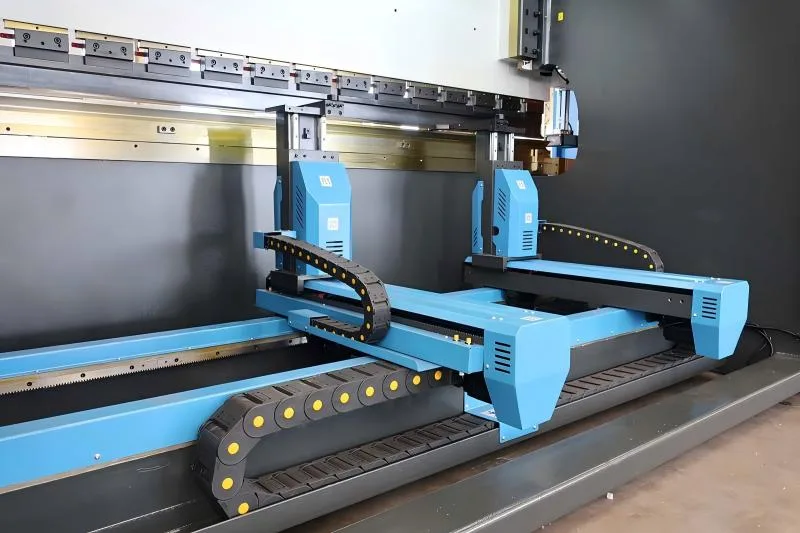
Press brake backgauge accuracy refers to how precisely the backgauge positions the workpiece relative to the bending line. Even a small deviation in the X, R, or Z axis can result in dimensional errors, scrap parts, or repeated adjustments during production.
From my experience, stable backgauge accuracy is essential for:
- Consistent flange length control
- Repeatable bending results in batch production
- Reduced trial bends and setup time
- Improved confidence for operators and programmers
Ignoring backgauge accuracy usually leads to hidden losses: wasted material, slower cycles, and frequent operator intervention.
How to Set Up the Press Brake Backgauge Correctly
Step 1: Checking Machine Level and Foundation Stability
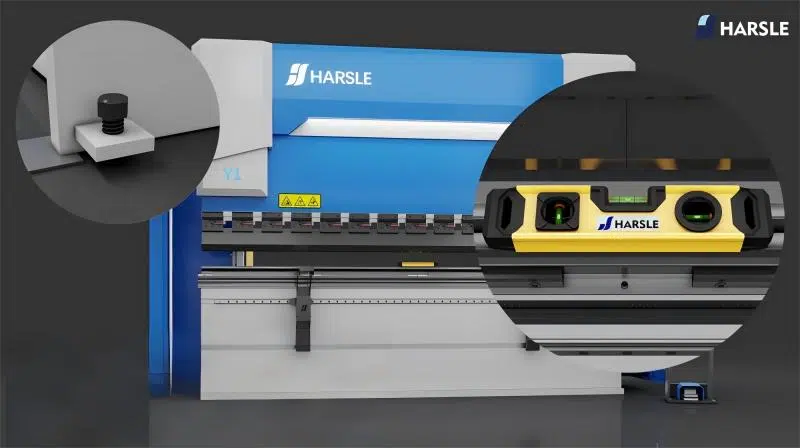
Before focusing on the backgauge itself, I always start with the basics. An uneven or unstable foundation can cause gradual backgauge misalignment. Use a precision level to confirm that the press brake bed and frame are properly leveled. If the machine shifts or settles over time, backgauge accuracy will inevitably suffer.
Step 2: Verifying Backgauge Beam Parallelism
The backgauge beam must remain parallel to the bending line. I recommend measuring the distance between the backgauge fingers and the die at multiple positions. Any variation usually indicates mechanical spacing issues, loose fasteners, or guide rail wear.
Step 3: Initial Backgauge Calibration Procedure
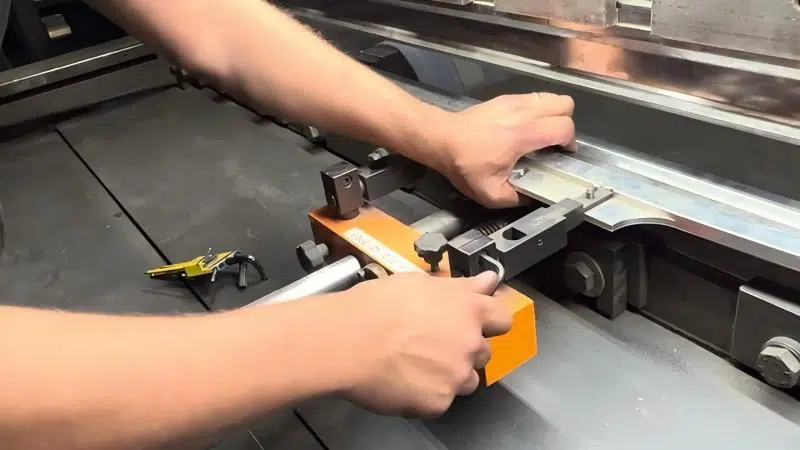
To calibrate press brake backgauge accuracy, I typically:
- Move the backgauge to a known reference position
- Measure the actual distance using a steel rule or digital caliper
- Compare the measured value with the CNC display
- Apply compensation values in the control system if needed
This step ensures that programmed dimensions match real-world positioning.
Daily Maintenance Practices That Protect Backgauge Accuracy
Routine Cleaning of Backgauge Guide Rails and Screws
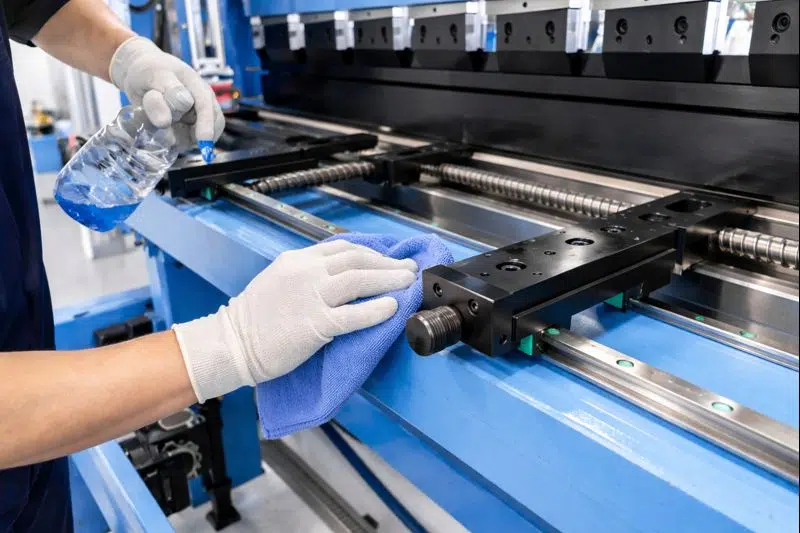
One of the most common issues I see is contamination. Dust, metal particles, and oil residue can accumulate on guide rails and ball screws, increasing resistance and positioning errors. Daily cleaning with a lint-free cloth helps maintain smooth movement and accurate positioning.
Lubrication of Moving Components
Proper lubrication reduces friction and wear on the backgauge transmission system. I always recommend using the lubricant specified by the manufacturer and following a fixed lubrication interval. Over-lubrication can be just as harmful as neglect.
Visual Inspection Before Production
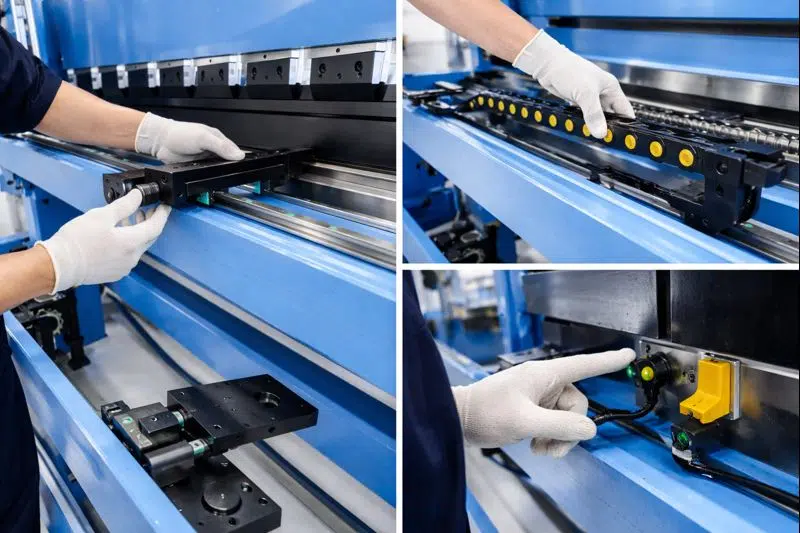
Before each shift, I advise operators to visually inspect:
- Backgauge fingers for bending or impact damage
- Cable carriers for smooth movement
- Sensors and limit switches for obstruction
These simple checks often prevent accuracy issues before they affect production.
Periodic Inspection and Mechanical Adjustment
Checking Ball Screws and Linear Guides
Over time, ball screws and linear guides may develop backlash or uneven wear. I suggest checking axial play and listening for abnormal noise during backgauge movement. Early detection allows adjustment or replacement before accuracy degrades.
Tightening Fasteners and Structural Components
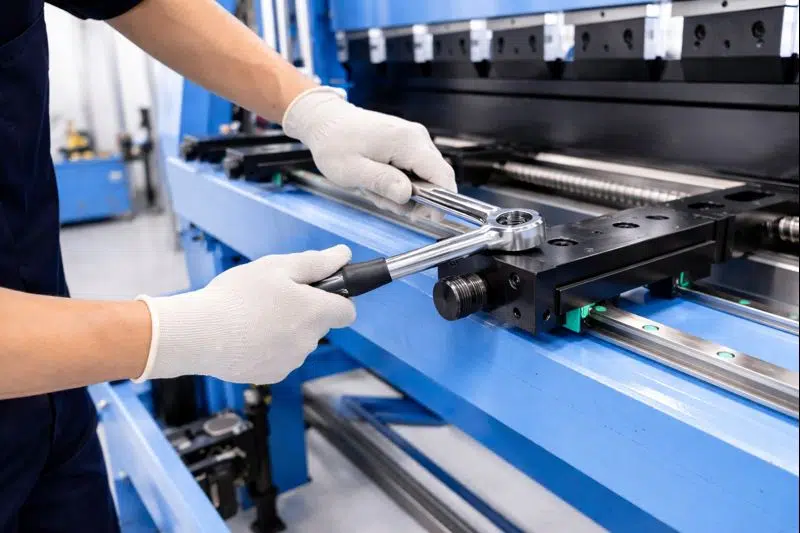
Loose bolts on backgauge frames or motor mounts can cause micro-movements that are difficult to detect but disastrous for accuracy. Periodic torque checks are a small effort with a big payoff.
Aligning Backgauge Fingers for Repeatable Positioning
Misaligned fingers can cause inconsistent contact with the workpiece. I usually verify finger alignment using a straight edge and ensure consistent contact across the full bending width.
Electrical and CNC Factors Affecting Backgauge Accuracy
Servo Motor and Encoder Health
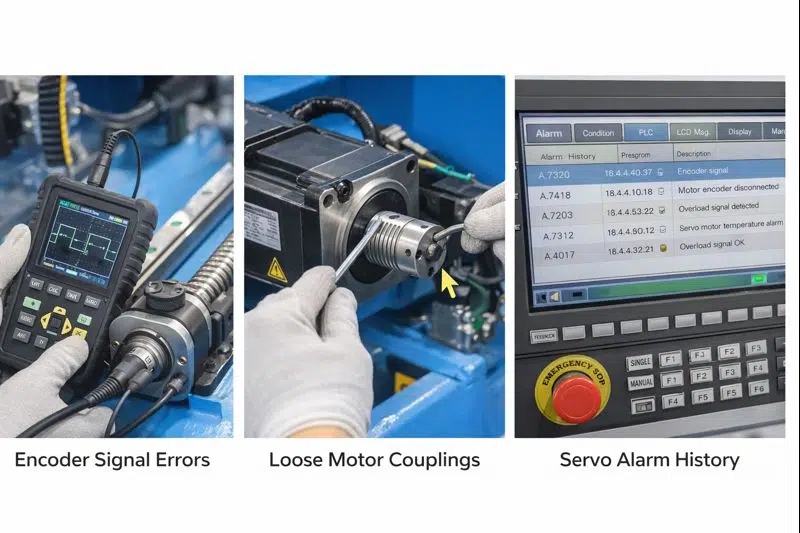
Press brake backgauge accuracy relies heavily on servo motors and encoders. If positioning becomes unstable or inconsistent, I always check for:
- Encoder signal errors
- Loose motor couplings
- Servo alarm history
These components directly affect positioning precision.
CNC Parameter Verification and Compensation
Modern CNC systems allow backgauge compensation based on real measurements. Periodically reviewing these parameters ensures that thermal expansion, wear, and mechanical changes are properly corrected.
Common Causes of Backgauge Accuracy Problems
Operator Handling and Collision Damage
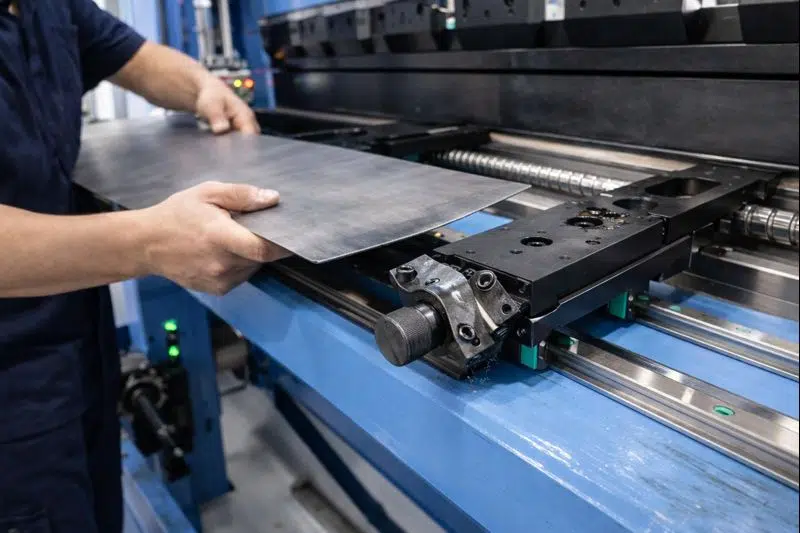
Accidental collisions with heavy workpieces are a frequent cause of backgauge deviation. Even minor impacts can bend fingers or shift alignment. Proper operator training and collision protection help prevent this issue.
Lack of Preventive Maintenance
In my experience, most backgauge accuracy problems come from neglect rather than design flaws. Skipped lubrication, ignored wear, and delayed inspections eventually show up as dimensional errors.
Environmental Factors and Temperature Changes
Temperature fluctuations can cause material expansion and affect measurement consistency. In high-precision applications, allowing the machine to reach thermal stability before calibration improves accuracy.
FAQs
How often should I calibrate press brake backgauge accuracy?
I recommend checking backgauge calibration at least once a month, or immediately if you notice dimensional deviations during production.
Can software compensation fully replace mechanical maintenance?
No. CNC compensation helps fine-tune positioning, but it cannot fix mechanical wear, misalignment, or contamination issues.
What is the most common cause of backgauge accuracy loss?
From what I’ve seen, contamination and lack of lubrication are the most frequent causes, followed by collision damage.
Does backgauge accuracy affect bending angle?
Indirectly, yes. While angle is mainly controlled by stroke and tooling, incorrect backgauge positioning leads to incorrect flange lengths, which affects overall part quality.
Conclusion
Maintaining Press Brake Backgauge Accuracy is a continuous process built on correct setup, disciplined daily maintenance, periodic inspection, and proper CNC calibration. By keeping guide rails clean, components lubricated, and parameters verified, you can prevent most accuracy problems before they disrupt production. Consistent backgauge accuracy not only improves part quality but also saves time, material, and operator effort. If you need professional guidance, calibration support, or want to learn more about optimizing your press brake performance, feel free to contact the HARSLE technical team or explore our related maintenance documentation.


