


When operators tell me their Press Brake Backgauge Move Slowly, the first thing I explain is that this issue is usually caused by mechanical resistance, poor lubrication, servo system problems, or parameter settings. The backgauge is one of the most critical positioning components of a CNC press brake, and its speed directly affects production efficiency and bending accuracy. In this guide, I’ll walk through the most common reasons why a press brake backgauge moves slowly, how to diagnose the problem step by step, and what practical solutions can restore normal speed and positioning performance.
Understanding How the CNC Press Brake Backgauge System Works

Before troubleshooting why the Press Brake Backgauge Move Slowly, I always recommend understanding how the backgauge system operates.
A modern CNC press brake backgauge typically includes:
- Servo motor or stepper motor
- Ball screw transmission system
- Linear guide rails
- Backgauge fingers and beam
- CNC controller positioning commands
The servo motor drives the ball screw, which moves the backgauge beam forward and backward along precision linear guides. If any part of this system experiences resistance, lack of lubrication, or control delay, the backgauge speed can decrease.
Mechanical Causes When Press Brake Backgauge Moves Slowly
In many workshops, the most common reason I see for slow backgauge movement is mechanical resistance.
Dirty Linear Guides and Ball Screws

Dust, metal chips, and oil residue can accumulate on the guide rails and ball screws over time.
When this happens:
- Friction increases
- Servo motor load rises
- Backgauge movement becomes slower
The solution is simple but often overlooked. Clean the linear guides regularly and apply proper lubrication oil recommended by the manufacturer.
Lack of Lubrication in Backgauge Transmission
Proper lubrication ensures smooth movement of the ball screw and guide rail system.
Without lubrication:
- Movement becomes rough
- Servo motors work harder
- Positioning speed decreases
I always suggest implementing a weekly lubrication schedule for the backgauge mechanism.
Mechanical Misalignment of Backgauge Beam
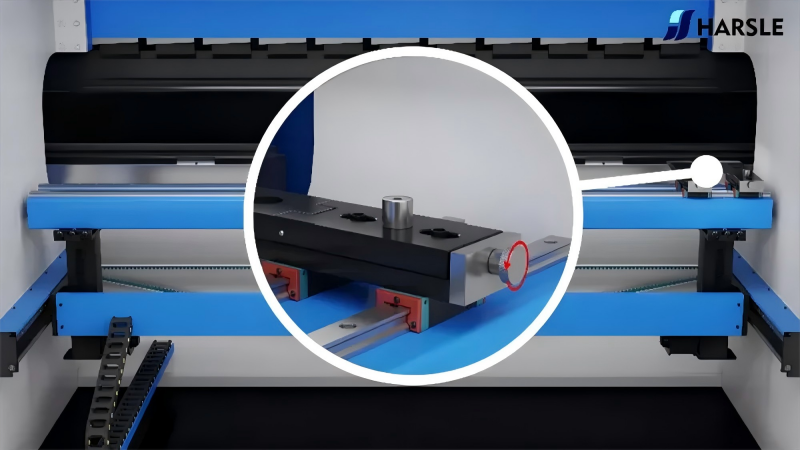
If the backgauge beam is slightly misaligned due to long-term vibration or improper installation, resistance increases during movement.
Typical symptoms include:
- Uneven movement
- Abnormal motor noise
- Slow positioning speed
Checking guide rail parallelism and adjusting the beam alignment can restore normal operation.
Electrical and Servo System Issues That Cause Slow Backgauge Movement
Sometimes the issue is not mechanical but related to the electrical drive system.
Servo Motor Parameter Settings
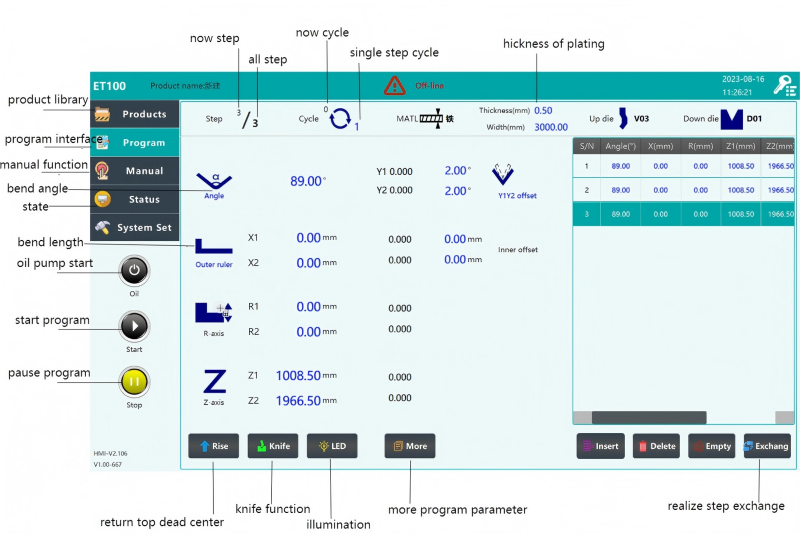
Modern CNC press brakes allow speed parameters to be configured within the controller.
If the acceleration or maximum speed settings are too low, the backgauge may move slowly even though the machine is functioning normally.
In this case, I recommend checking:
- Servo speed limits
- Acceleration parameters
- Positioning mode settings
Adjusting these parameters carefully can significantly improve backgauge response.
Servo Motor Overload or Driver Alarms
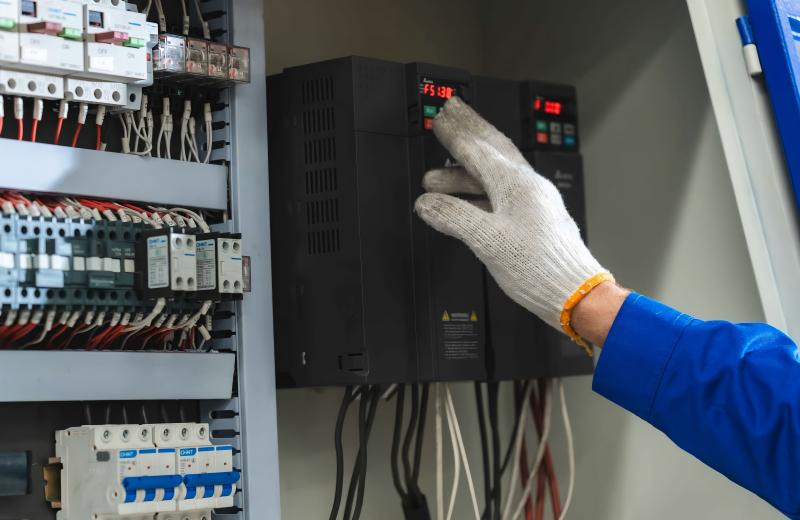
If the servo motor detects excessive load, the system may automatically limit speed to protect the motor.
Possible causes include:
- Mechanical resistance
- Electrical faults
- Overheated servo drivers
Inspecting the servo driver status and checking error codes can quickly identify the root cause.
Controller and Software Factors Affecting Backgauge Speed
Many operators overlook the role of the CNC controller in backgauge performance.
Programmed Positioning Speed Limits

Some CNC systems, such as Delem controllers, allow programmers to limit backgauge speed within the bending program.
If these limits are configured incorrectly, the machine may move slowly between positions.
Checking the program parameters can often solve the issue.
Positioning Accuracy Mode
High precision positioning modes sometimes reduce movement speed intentionally.
For example:
- Fine positioning mode
- Slow approach mode
- Safety positioning mode
These modes improve accuracy but may reduce speed during certain movements.
Step-by-Step Troubleshooting When Press Brake Backgauge Moves Slowly
When diagnosing why the Press Brake Backgauge Move Slowly, I usually follow a simple troubleshooting sequence.
Step 1: Inspect Mechanical Components
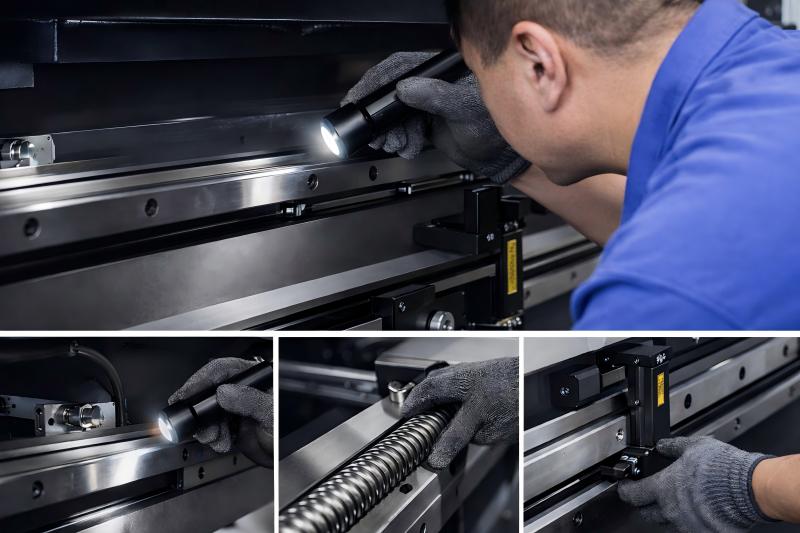
Start by checking:
- Linear guide cleanliness
- Ball screw condition
- Backgauge beam alignment
Cleaning and lubricating these parts often solves the issue.
Step 2: Check Servo Motor Load
Next, observe the servo motor status on the CNC controller.
Look for:
- Overload warnings
- Abnormal noise
- Motor overheating
These signs indicate electrical or mechanical resistance problems.
Step 3: Verify Controller Parameters
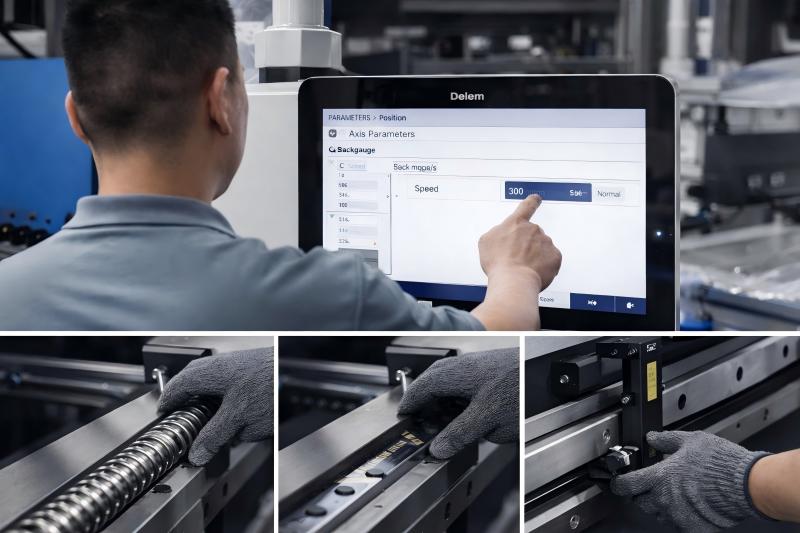
Finally, review the CNC settings.
Confirm:
- Backgauge speed limits
- Acceleration parameters
- Program positioning modes
Incorrect settings can easily restrict movement speed.
Preventive Maintenance to Keep Backgauge Movement Fast
In my experience, preventive maintenance is the best way to avoid slow backgauge movement.
Key maintenance practices include:
- Cleaning guide rails daily
- Lubricating ball screws weekly
- Checking servo motor temperature
- Inspecting backgauge alignment monthly
These simple routines help maintain both speed and positioning accuracy.
FAQs
Why does my press brake backgauge move slowly after long production hours?
This usually happens because dust and metal debris accumulate on the guide rails and ball screws, increasing friction and slowing movement.
Can lubrication improve backgauge speed?
Yes. Proper lubrication significantly reduces mechanical resistance and allows the backgauge system to move smoothly and quickly.
Does servo motor failure cause slow backgauge movement?
It can. Servo motor overload, driver faults, or incorrect parameter settings can all reduce movement speed.
How often should the press brake backgauge system be maintained?
I recommend cleaning the system daily and lubricating mechanical components at least once a week to maintain optimal performance.
Conclusion
When a Press Brake Backgauge Move Slowly, the cause is usually related to mechanical resistance, poor lubrication, servo motor issues, or incorrect CNC parameters. By inspecting the mechanical transmission system, checking electrical components, and verifying controller settings, most slow movement problems can be solved quickly.
Regular maintenance plays a major role in preventing these issues. Keeping the guide rails clean, maintaining proper lubrication, and monitoring servo performance will ensure that your press brake backgauge operates smoothly and efficiently.
If you need additional technical guidance or troubleshooting support for your press brake system, our engineering team is always ready to help you find the right solution.


