


Press Brake Ram Maintenance is often the hidden reason behind sudden accuracy loss, inconsistent bending angles, or abnormal wear on a press brake. In daily metal fabrication, I frequently see customers focus on tooling, CNC systems, or hydraulics, while the ram itself is overlooked. As the core moving structure that delivers force directly to the tooling, the ram has a direct impact on bending precision, machine stability, and overall safety. When ram maintenance is neglected, friction increases, alignment degrades, and performance drops—even on high-quality machines. In this article, I’ll explain based on real workshop experience what problems poor ram maintenance causes, how these issues gradually develop, and what operators should pay attention to during daily production.
How Poor Press Brake Ram Maintenance Affects Bending Accuracy
Uneven Ram Movement Causes Angle Inconsistency
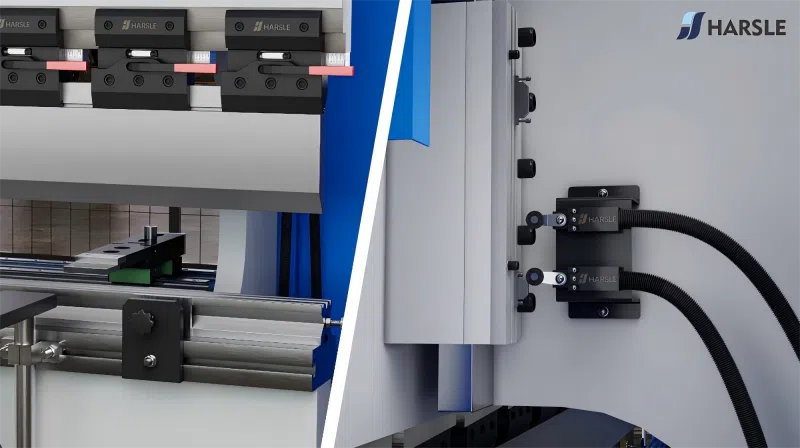
One of the first signs I notice with poor Press Brake Ram Maintenance is uneven ram movement during bending. When guide rails, linear bearings, or sliding surfaces are dirty, dry, or worn, the ram no longer moves smoothly along its stroke. This leads to different bending angles across the length of the workpiece, especially on long parts. Operators may try to compensate by adjusting parameters, but the real issue lies in mechanical resistance and misalignment within the ram system.
Ram Deflection Increases Over Time
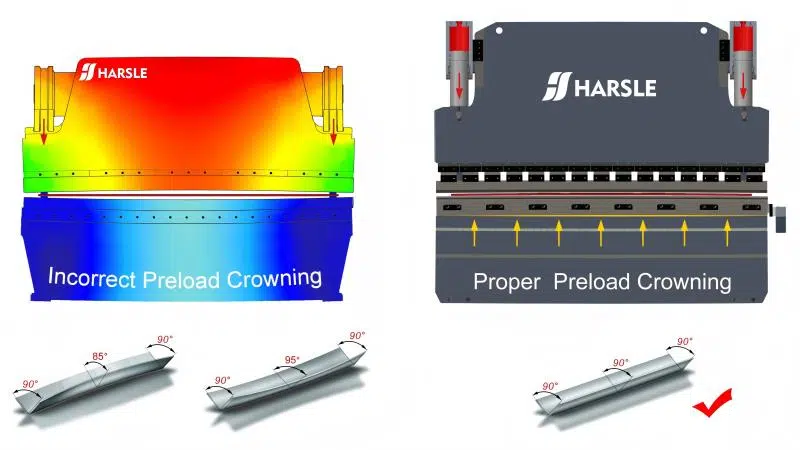
Without proper inspection and lubrication, the ram can develop uneven load distribution. Over time, this causes excessive ram deflection under load. I’ve seen cases where the center bends correctly, but both ends are off by several degrees. Poor Press Brake Ram Maintenance accelerates this problem because friction and wear prevent the ram from maintaining parallelism with the worktable.
Mechanical Wear Problems Caused by Poor Ram Maintenance
Accelerated Guide Rail and Bearing Wear
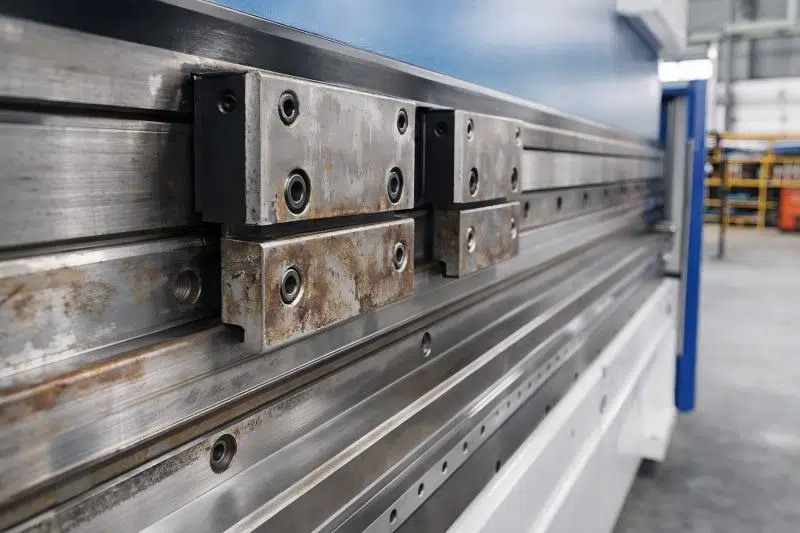
Guide rails and linear bearings are designed to support precise ram movement. When maintenance is ignored, metal dust, oil contamination, and lack of lubrication increase friction dramatically. This results in premature wear of guide rails and bearings. Once wear sets in, no parameter adjustment can fully restore accuracy. Proper Press Brake Ram Maintenance is the only way to prevent irreversible mechanical damage.
Increased Stress on the Frame Structure
A poorly maintained ram does not distribute force evenly. This places additional stress on the press brake frame, side plates, and connection points. Over time, this can lead to frame deformation, bolt loosening, or micro-cracks in high-stress areas. I’ve seen machines lose structural stability simply because routine ram inspections were skipped.
Hydraulic and Control Issues Linked to Poor Ram Maintenance
Unstable Hydraulic Pressure During Bending
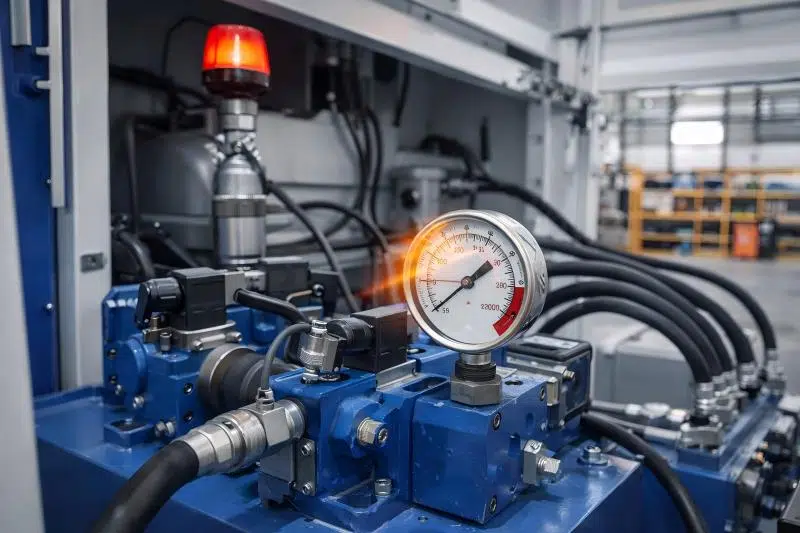
Although the ram is a mechanical component, poor Press Brake Ram Maintenance directly affects the hydraulic system. Increased friction requires higher pressure to achieve the same stroke movement. This leads to pressure fluctuations, oil overheating, and unstable bending speed. Operators often mistake this for hydraulic valve problems, when the real issue is mechanical resistance in the ram assembly.
Feedback Errors in CNC Systems
Modern CNC press brakes rely on precise feedback from encoders and position sensors attached to the ram. If the ram movement becomes inconsistent due to poor maintenance, the CNC system receives inaccurate position data. This results in repeated corrections, alarms, or unexpected bending deviations. Regular ram cleaning and inspection help ensure reliable feedback signals.
Safety Risks Caused by Neglected Press Brake Ram Maintenance
Increased Risk of Sudden Ram Sticking
One serious risk I’ve encountered is sudden ram sticking during operation. Contaminated guide surfaces or damaged bearings can cause the ram to momentarily seize and then release abruptly. This is extremely dangerous for operators and can damage tooling instantly. Proper Press Brake Ram Maintenance significantly reduces this risk by keeping all sliding surfaces clean and well-lubricated.
Higher Tooling Breakage Probability
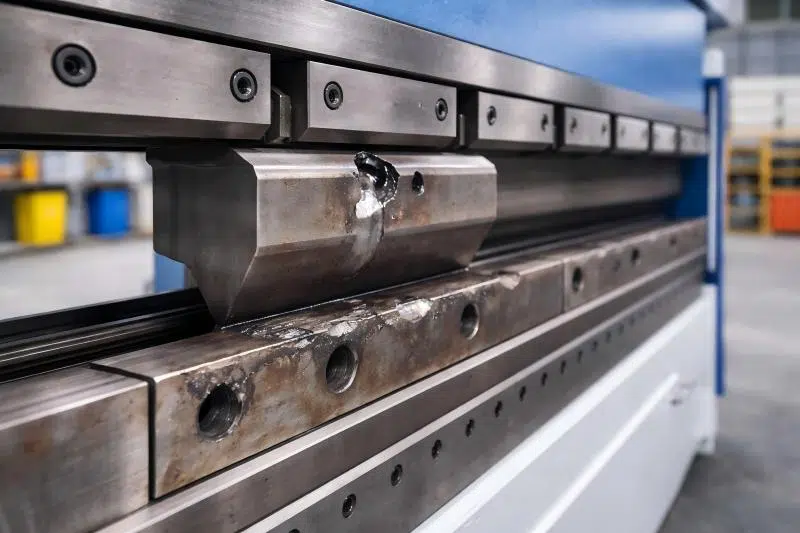
When ram movement is uneven, tooling receives irregular force. This increases the chance of punch or die cracking, especially during high-tonnage operations. Many customers blame tooling quality, but in reality, poor ram alignment caused by inadequate maintenance is often the root cause.
How to Improve Press Brake Ram Maintenance in Daily Production
Routine Cleaning and Visual Inspection
From my experience, daily visual checks make a huge difference. Operators should clean ram guide areas, remove metal dust, and check for abnormal marks or oil contamination. Catching small issues early prevents major failures later.
Proper Lubrication of Ram Guide Systems
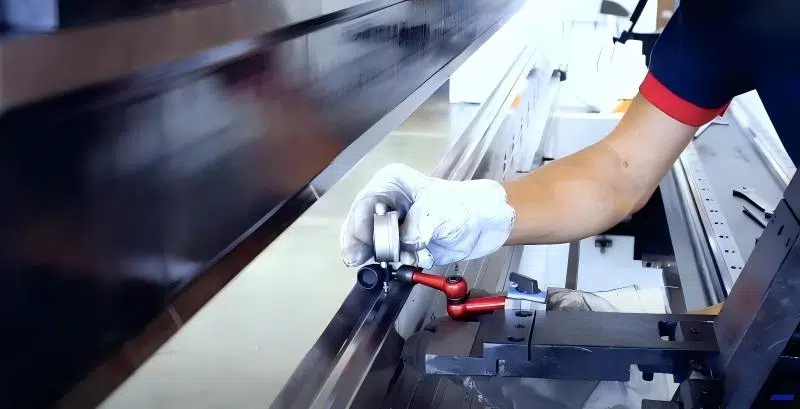
Lubrication should follow the manufacturer’s recommendations and production intensity. Over-lubrication attracts dust, while under-lubrication increases friction. Balanced lubrication is a core part of effective Press Brake Ram Maintenance.
Periodic Parallelism and Alignment Checks
Regularly checking ram parallelism helps detect early wear or misalignment. This step is especially important for long-bed press brakes or machines used for precision bending.
FAQs
How often should Press Brake Ram Maintenance be performed?
Basic cleaning and inspection should be done daily, while detailed ram alignment and lubrication checks are recommended weekly or according to operating hours.
Can poor Press Brake Ram Maintenance affect CNC accuracy?
Yes. Inconsistent ram movement leads to inaccurate position feedback, which directly impacts CNC bending precision and repeatability.
What is the most common sign of ram maintenance problems?
Uneven bending angles along the workpiece length are usually the first visible sign of ram-related issues.
Conclusion
From what I’ve seen on real shop floors, poor Press Brake Ram Maintenance quietly causes many of the accuracy, wear, and safety problems operators struggle with. The ram is not just a moving part—it is the backbone of bending precision. By keeping the ram clean, lubricated, aligned, and regularly inspected, you protect not only bending accuracy but also the hydraulic system, tooling life, and operator safety. If you want more detailed maintenance guidance or need technical support for your press brake, feel free to contact the HARSLE team or explore our related maintenance documentation for deeper insights.


