


When it comes to precision in metal bending, understanding how ESA S640 Coining Coefficients aid the process can make a significant difference. If you’re curious about how these coefficients enhance your bending operations, you’re in the right place. In this article, I’ll explain how ESA S640 Coining Coefficients impact the metal bending process and improve the accuracy and quality of your work. Whether you’re a seasoned professional looking to refine your techniques or someone new to the field seeking foundational knowledge, this guide will provide you with valuable insights into optimizing your bending projects with these coefficients. Let’s delve into the importance of ESA S640 Coining Coefficients and how they play a crucial role in ensuring precise and efficient metalworking outcomes.
Understanding ESA S640 Coining Coefficients
Before delving into their practical application, it’s crucial to understand what ESA S640 Coining Coefficients are and why they are important. In precision metal bending, coining is a process where the metal workpiece is pressed completely into the die, producing a high level of precision and repeatability. The ESA S640 system utilizes specific coefficients to fine-tune this process, ensuring optimal bending results for different materials and thicknesses. These coefficients play a vital role in calculations to maintain consistency and quality across all productions.
What Are Dutch Folding/Coining Coefficients?
Dutch Folding and Coining Coefficients are parameters used within the ESA S640 system to adapt the bending process precisely according to the material’s characteristics. These coefficients influence how the machine applies force and performs bends, impacting the accuracy and durability of the finished product. For businesses aiming to reduce waste and improve output quality, understanding and utilizing these coefficients is essential.
Accessing the Coefficients Corrections Page
To make effective use of the ESA S640 coining coefficients, operators must know how to access the necessary configuration settings. Here’s a step-by-step guide to navigating these settings:
Step 1: Enter the Corrections Page
Begin by accessing the corrections functionalities of the ESA S640.

Press this button on your machine’s interface to enter the Corrections page.
This page acts as the gateway to all subsequent adjustments.
Step 2: Access Coeff. Corrections
Once you are on the Corrections page, locate and select the [Coeff. Corrections] key. This will direct you to the Coefficients Corrections page where you can input or adjust the Danish Folding and Coining Coefficients. This setup ensures that your press brake is ready for precision operation.
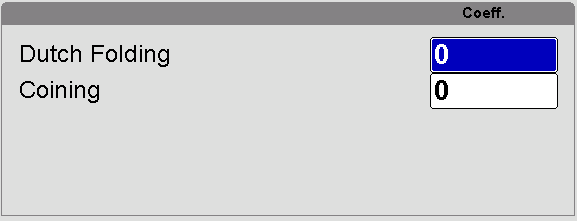
Step 3: Input the Coefficients
The ESA S640 allows you to input specific parameters for each type of bending, including Dutch Folding/Coining. Modify the parameters according to the material specifications and desired bend precision. Remember, these values are crucial as they directly affect the Linear Die Coining (L.D.C.) calculations that dictate the press operations.
Applying Dutch Folding/Coining Coefficients in Practice
After setting the coefficients, they must be applied correctly to see effective results:
Step 4: Save and Implement Coefficients
The system saves new coining coefficients automatically when you exit the Coefficient Corrections page. However, note that although they aren’t saved in the current work program, they remain integral to the machine’s settings, ensuring consistency across different jobs without the need for repeated input.
Step 5: Reboot for Assimilation
For changes to take effect, it’s essential to reboot the Numerical Control (NC) system. This rebooting process integrates the new coefficient data into the system’s operational framework, thereby allowing for seamless adjustment of the L.D.C. values during subsequent bending operations.
Adjusting and Resetting Coefficients
At times, operators might need to tweak or revert previous settings:
Making Adjustments
Sometimes, the initial settings might require adjustments, particularly when working with new materials or when there’s a need to enhance precision. Operators can revisit the Coefficient Corrections page to refine the inputs based on empirical observations from bending outcomes.
Undoing Changes
If modifications do not yield the desired results, or in cases of errors, the ESA S640 provides a convenient [Undo. Correct.] function. This feature allows you to revert to the original coefficient settings, restoring the values as they were upon initial access to the correction page.
Importance of Proper Coefficient Management
Effective management of the Dutch Folding/Coining Coefficients involves more than just setting values. It requires an understanding of how these settings interact with the broader operational parameters of the press brake. Proper management leads to enhanced precision, reduced waste, and optimal machine performance.
By following these guidelines, manufacturers can leverage ESA S640 coining coefficients to optimize their production processes, ensuring that each bend meets the highest standards of accuracy. This, in turn, supports operational efficiency, cost savings, and the ability to produce high-quality products consistently.
Above all, integrating these methods into daily operations promotes a deeper understanding of machine capabilities and encourages the development of best practices in metal forming industries.
Frequently Asked Questions(FAQ)
Can ESA S640 Coining Coefficients be used with all materials?
While ESA S640 Coining Coefficients are versatile, they are most effective with materials that respond well to coining techniques. It’s advisable to consult material specifications and perform tests to determine compatibility.
How do I adjust ESA S640 Coining Coefficients for different projects?
To adjust ESA S640 Coining Coefficients for various projects, start by assessing the material properties and required bend angles. Modify the coefficients in the control software, following the manufacturer’s guidelines for specific parameters.
What factors influence ESA S640 Coining Coefficients settings?
Several factors affect ESA S640 Coining Coefficients settings, including material type, thickness, and tooling used. It’s crucial to adjust these coefficients according to specific material characteristics to achieve optimal results.
Conclusion
Understanding and utilizing ESA S640 Coining Coefficients can significantly enhance your bending operations by ensuring precision and reducing material waste. By accurately adjusting these coefficients, you can achieve more consistent results across various projects. Ensuring that your press brake is set up to optimize these factors will help maintain the quality and efficiency of your manufacturing process.
For further assistance or detailed guidance on implementing ESA S640 Coining Coefficients effectively, please reach out to our team. Additionally, explore our other documentation for more insights into optimizing your press brake operations.


