


Learn how to configure OPC UA CNC Press Brake systems with Delem 60S control for Industry 4.0 applications. This step-by-step application guide explains network setup, data integration, and remote monitoring to help manufacturers achieve smarter, connected bending operations.
Introduction
OPC UA CNC Press Brake integration has become a foundational requirement for manufacturers moving toward Industry 4.0, particularly as smart factories increasingly rely on real-time data exchange, remote monitoring, and system-level interoperability. For CNC press brakes equipped with the Delem 60S control system, OPC UA provides a standardized and secure communication protocol that enables seamless connectivity between shop-floor equipment and higher-level production systems such as MES, SCADA, and ERP platforms.
This application guide accompanies a YouTube animation tutorial and is designed to explain not only how to configure OPC UA on a Delem 60S CNC press brake, but also why this configuration matters in practical Industry 4.0 environments. By understanding the underlying communication logic, configuration steps, and application scenarios, manufacturers can fully unlock the digital potential of their bending operations.
Understanding OPC UA in the Context of Industry 4.0
OPC UA, short for Open Platform Communications Unified Architecture, is widely recognized as one of the core communication standards supporting Industry 4.0 initiatives. Unlike traditional industrial protocols that are often vendor-specific or limited in scalability, OPC UA is platform-independent, service-oriented, and designed with cybersecurity, extensibility, and long-term interoperability in mind.
Within an Industry 4.0 framework, OPC UA enables CNC machines to move beyond isolated operation by acting as intelligent data nodes capable of publishing machine status, production metrics, alarm information, and process parameters in real time. For an OPC UA CNC Press Brake, this means bending machines are no longer standalone assets but active participants in a connected manufacturing ecosystem, supporting data-driven decision-making and predictive maintenance strategies.
Why OPC UA Matters for CNC Press Brakes with Delem 60S
The Delem 60S control system is commonly used on CNC press brakes for its reliable bending control, intuitive interface, and suitability for both standalone and networked production environments. When combined with OPC UA functionality, Delem 60S becomes a critical gateway for Industry 4.0 integration, allowing press brake data to flow transparently to supervisory systems without compromising control stability or machine safety.
From an operational perspective, OPC UA on a CNC press brake enables centralized monitoring of machine states, cycle counts, bending programs, and fault diagnostics, while also supporting remote troubleshooting and performance analysis. From a management perspective, this data transparency supports higher equipment utilization, reduced unplanned downtime, and more accurate production planning, all of which are core objectives of Industry 4.0 manufacturing strategies.
System Requirements Before Configuring OPC UA on Delem 60S
Before configuring an OPC UA CNC Press Brake, it is essential to verify that both hardware and software prerequisites are met to ensure stable communication and reliable data exchange.
On the hardware side, the CNC press brake must be equipped with a Delem 60S control unit that supports network connectivity via Ethernet, along with a stable local area network infrastructure. On the software side, the Delem system firmware must support OPC UA functionality, and appropriate licenses or feature activations may be required depending on the system configuration.
Equally important is a clear understanding of the OPC UA architecture, including the roles of the OPC UA server (typically the CNC control) and the OPC UA client (such as MES, SCADA, or industrial data platforms), as well as basic IP addressing and network security principles.
Step-by-Step OPC UA Network Configuration on Delem 60S
Configuring OPC UA on a Delem 60S CNC Press Brake involves a structured sequence of steps that align machine-level communication with factory network requirements.

First, the operator must access the system configuration menu on the Delem 60S interface and enable the OPC UA communication module, ensuring that the OPC UA server function is activated. Once enabled, network parameters such as IP address, subnet mask, and communication port must be configured to match the factory network environment.
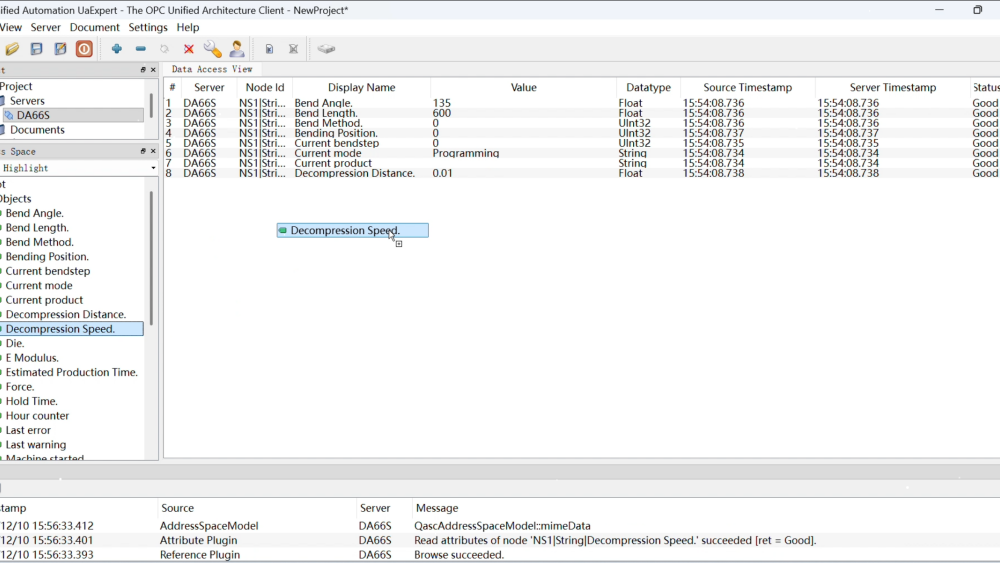
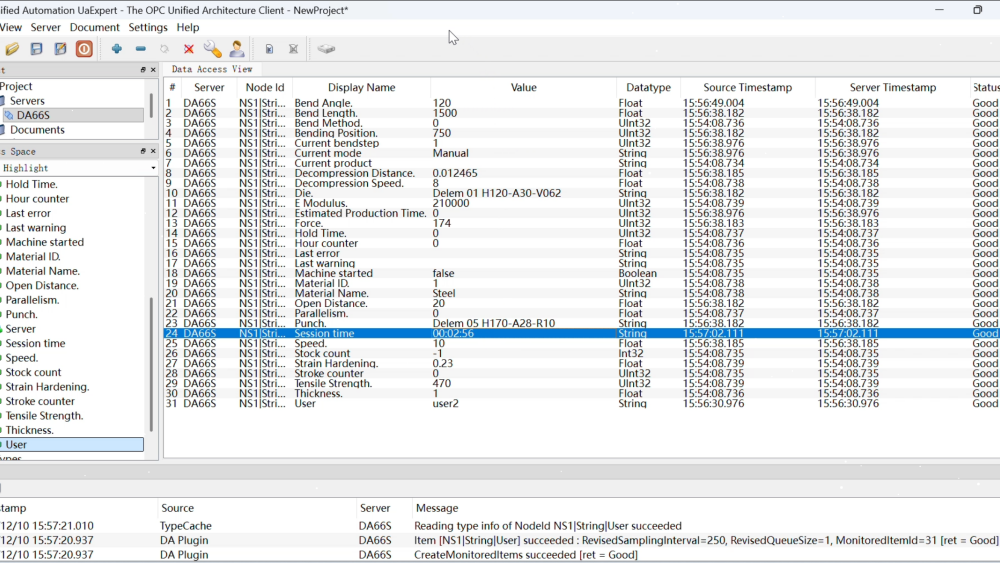
Next, OPC UA security settings, including user authentication and access permissions, should be carefully defined to prevent unauthorized data access while maintaining sufficient flexibility for system integration. After network and security parameters are confirmed, the OPC UA server can be tested by establishing a connection with an external OPC UA client, verifying that machine data nodes are visible and accessible.

This configuration process, demonstrated visually in the accompanying YouTube tutorial, ensures that the CNC press brake can reliably publish real-time operational data while maintaining stable machine control.
Typical OPC UA Application Scenarios for Industry 4.0 Press Brake Workshops
Once an OPC UA CNC Press Brake is successfully configured, a wide range of Industry 4.0 application scenarios becomes possible within modern bending workshops.
One common scenario involves real-time production monitoring, where machine status, cycle times, and program execution data are transmitted to a central dashboard for supervisory oversight. Another scenario focuses on predictive maintenance, where historical data trends and alarm logs are analyzed to anticipate component wear or system anomalies before failures occur.
Additionally, OPC UA enables seamless integration between CNC press brakes and MES or ERP systems, supporting automated job scheduling, performance tracking, and production traceability, all of which contribute to higher operational efficiency and improved product consistency.
Common Configuration Issues and Troubleshooting Tips
Despite its robustness, OPC UA configuration on CNC press brakes may encounter challenges related to network instability, firewall restrictions, or mismatched security certificates. Common issues include failed client connections, incomplete data visibility, or intermittent communication drops.
To address these challenges, it is recommended to verify network configurations, confirm firmware compatibility, and ensure that OPC UA security policies are aligned between server and client systems. Regular system updates, structured documentation, and controlled access management further reduce the likelihood of long-term communication issues.
Best Practices for OPC UA-Based Industry 4.0 Integration
For sustainable Industry 4.0 implementation, OPC UA integration should be treated as a long-term system architecture decision rather than a one-time configuration task. Best practices include establishing standardized data structures, maintaining clear documentation of network configurations, and implementing robust cybersecurity measures to protect machine data.
Equally important is ongoing system monitoring and periodic validation of OPC UA connections to ensure consistent performance as production requirements evolve. By adopting these practices, manufacturers can maximize the return on investment from their OPC UA CNC press brake infrastructure while maintaining operational reliability.
Conclusion: Building an Industry 4.0-Ready CNC Press Brake with OPC UA and Delem 60S
Configuring an OPC UA CNC Press Brake with the Delem 60S control system represents a strategic step toward Industry 4.0 readiness, enabling manufacturers to transition from isolated machine operation to fully connected, data-driven production environments. Through standardized communication, secure data exchange, and scalable integration capabilities, OPC UA empowers CNC press brakes to serve as intelligent assets within modern smart factories.
By following the configuration principles and best practices outlined in this application guide, manufacturers can improve transparency, enhance operational efficiency, and build a robust digital foundation that supports future automation, analytics, and optimization initiatives.


