


What Is Press Brake Break-In Period Maintenance?
Press Brake Break-In Period Maintenance is one of the most important topics customers ask me about after a new machine is installed. During the first weeks of operation, specific inspections, adjustments, and monitoring tasks must be carried out to ensure the press brake transitions smoothly into stable production. This stage is critical because mechanical components are settling under real load, hydraulic systems are stabilizing, and electrical connections are experiencing full working conditions for the first time. In this article, I’ll walk through what should be checked during the break-in period, how to perform each inspection properly, and how correct early maintenance protects bending accuracy, extends machine lifespan, and ensures consistent production performance.
Why Press Brake Break-In Period Maintenance Is Critical
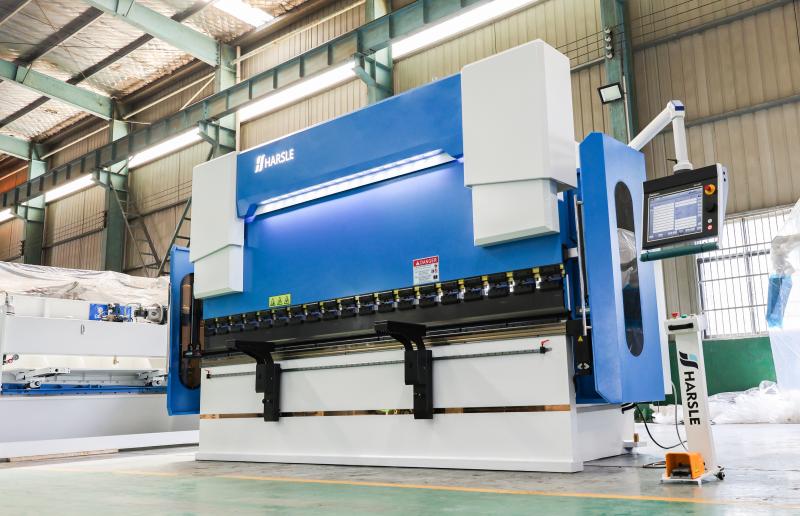
During the first 200–500 operating hours, internal components such as guide rails, linear bearings, ball screws, hydraulic seals, and ram structures gradually adapt to real working stress. Even though the machine has passed factory testing, actual production conditions are different.
If Press Brake Break-In Period Maintenance is ignored, I often see the following problems:
- Loose bolts due to vibration
- Slight hydraulic oil contamination from initial wear
- Unstable bending angles during early calibration
- Abnormal noise from guide rail friction
- Backgauge positioning deviation
Addressing these early prevents long-term precision loss and costly downtime.
Step-by-Step Press Brake Break-In Period Maintenance Guide
Mechanical Inspection During the Initial 100 Hours
The first 100 hours are the most sensitive phase.
Checking Frame and Structural Bolts
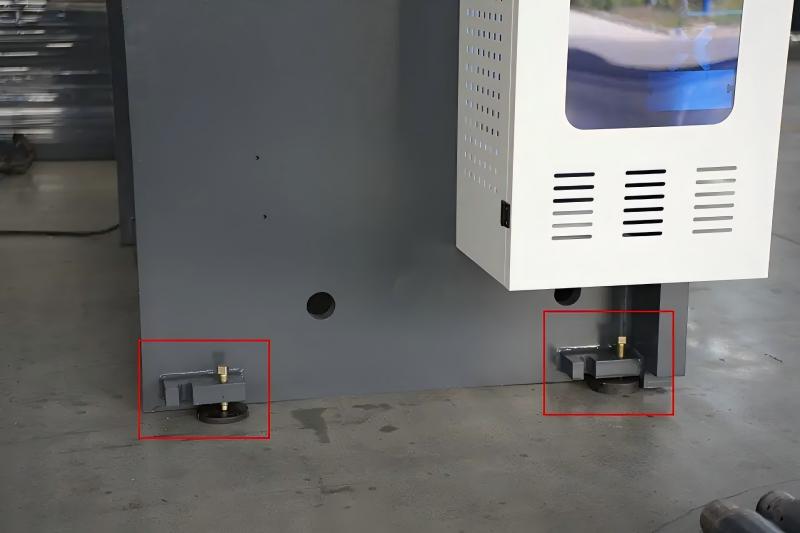
I always recommend rechecking all major structural bolts after the first week of operation. Vibration and stress release can slightly loosen connections.
Step-by-step approach:
- Power off and lock out the machine.
- Inspect side frame bolts, ram connection bolts, and bed mounting bolts.
- Use a calibrated torque wrench to verify tightening torque according to manufacturer specifications.
This simple inspection prevents alignment shifts that could affect bending parallelism.
Guide Rail and Ram Movement Inspection

Smooth ram movement is essential for accuracy. During the break-in period, slight friction adjustments occur between guide rails and sliding blocks.
What I check:
- Smooth vertical movement without abnormal vibration
- No dry friction sounds
- Proper lubrication film on guide surfaces
If movement feels uneven, I adjust lubrication rather than immediately suspecting mechanical defects.
Hydraulic System Monitoring During Break-In
Hydraulic stability directly affects bending consistency.
Hydraulic Oil Level and Cleanliness
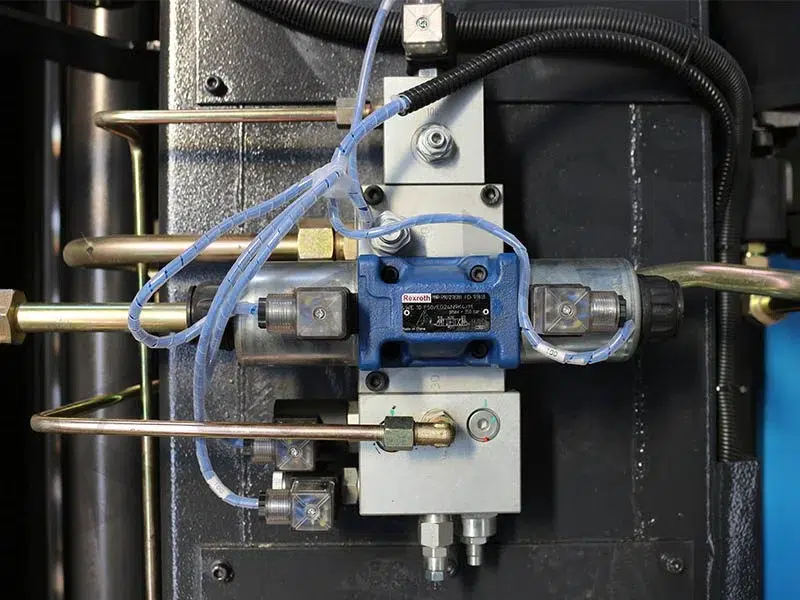
In the early running stage, microscopic metal particles may appear due to initial component wear.
Here’s what I do:
- Check hydraulic oil level daily during the first two weeks
- Inspect oil color and clarity
- Replace or clean filters if contamination is detected
This step is essential in Press Brake Break-In Period Maintenance because contaminated oil can damage proportional valves and seals.
Checking for Hydraulic Leaks and Pressure Stability
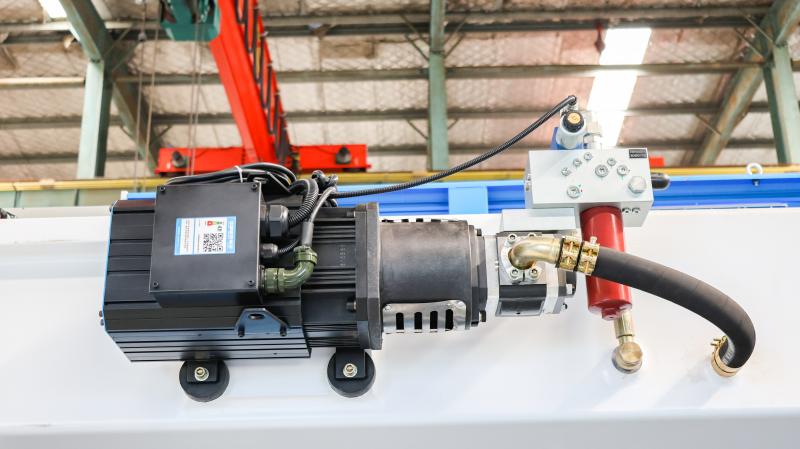
I monitor:
- Hose connections
- Cylinder seals
- Valve block joints
Then I observe pressure stability during bending cycles. Fluctuating pressure during break-in may indicate air trapped in the system, which can be resolved by controlled cycling and proper bleeding.
Backgauge and CNC Accuracy Calibration
New press brakes often require fine tuning after real production starts.
Backgauge Repeat Positioning Test
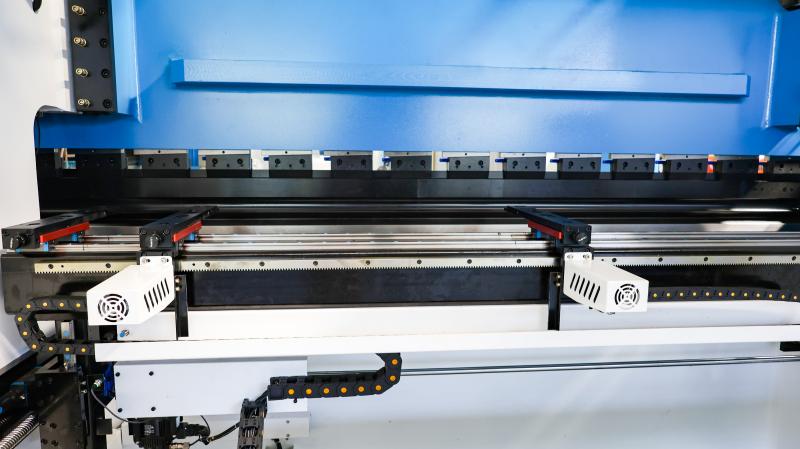
I perform repeated positioning tests using the CNC system.
Steps:
- Set a fixed reference dimension.
- Run multiple cycles without material.
- Measure deviation using a precision gauge.
If deviation exceeds tolerance, I adjust ball screw alignment or servo parameters. This ensures stable small-part bending accuracy.
Angle Consistency Verification
Angle inconsistency is common during the early stage.
To verify:
- Use a digital angle gauge.
- Bend test samples with identical material.
- Compare left and right side angles.
Minor recalibration may be required as machine components settle under load.
Electrical System and Safety Device Inspection
Break-in maintenance also includes electrical stability.
Electrical Terminal Tightness Check
Thermal expansion during initial operation can slightly loosen terminals.
I inspect:
- Main power terminals
- Servo drive connections
- CNC controller wiring
Loose connections can cause intermittent alarms.
Safety System Function Test
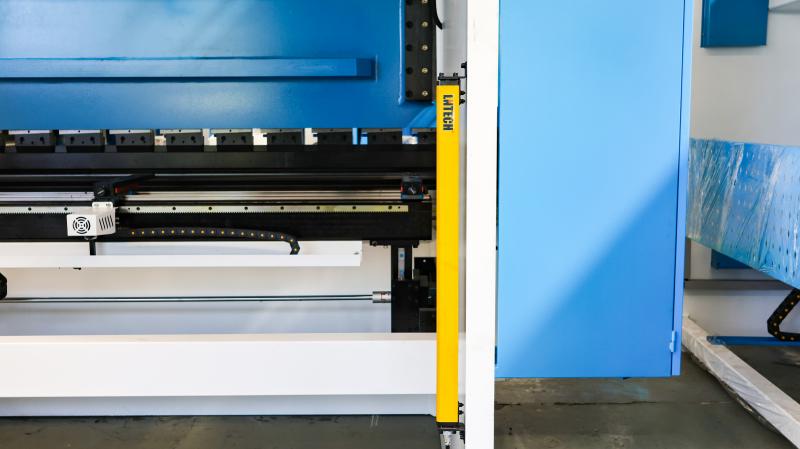
I always test:
- Light curtains
- Emergency stop buttons
- Foot pedal response
A stable safety system is non-negotiable, especially during the early learning stage of operators.
Common Mistakes During the Press Brake Break-In Period
From my experience, these mistakes often shorten machine life:
- Running the machine continuously at maximum tonnage from day one
- Ignoring minor noise during the first weeks
- Delaying lubrication checks
- Skipping calibration after installation
Press Brake Break-In Period Maintenance is not about heavy repair. It’s about careful observation and proactive adjustment.
FAQs
How long does Press Brake Break-In Period Maintenance last?
Typically, the break-in period covers the first 200–500 operating hours. However, monitoring should remain more frequent during the first month of production.
Should I change hydraulic oil during the break-in period?
Normally, a full oil replacement is not required unless contamination is detected. However, filter inspection is strongly recommended during Press Brake Break-In Period Maintenance.
Why does my press brake show slight angle variation during early use?
Angle variation can occur because mechanical components are settling under load. Performing angle consistency verification and CNC recalibration usually solves the issue.
Is it safe to run full tonnage during break-in?
I recommend gradually increasing load rather than running maximum capacity continuously during the first weeks. Controlled loading extends component life.
Conclusion
Press Brake Break-In Period Maintenance is a structured set of inspections, calibrations, and monitoring tasks performed during the first operating stage of a new press brake. By checking mechanical connections, monitoring hydraulic stability, verifying backgauge accuracy, and inspecting electrical systems, I can prevent small early-stage issues from turning into long-term precision problems.


