


If you’re struggling with Press Brake Angle Inconsistency, you’re probably asking whether maintenance can really make a difference. From my experience working with press brakes in real production environments, the answer is yes—maintenance plays a critical role in stabilizing bending accuracy. Angle deviation rarely happens without a reason. It usually develops from hydraulic instability, mechanical wear, tooling issues, or poor calibration. In this article, I’ll explain how proper maintenance directly reduces Press Brake Angle Inconsistency, what specific areas you should inspect, and how to build a practical routine that keeps your bending results consistent and reliable.
Understanding the Root Causes of Press Brake Angle Inconsistency
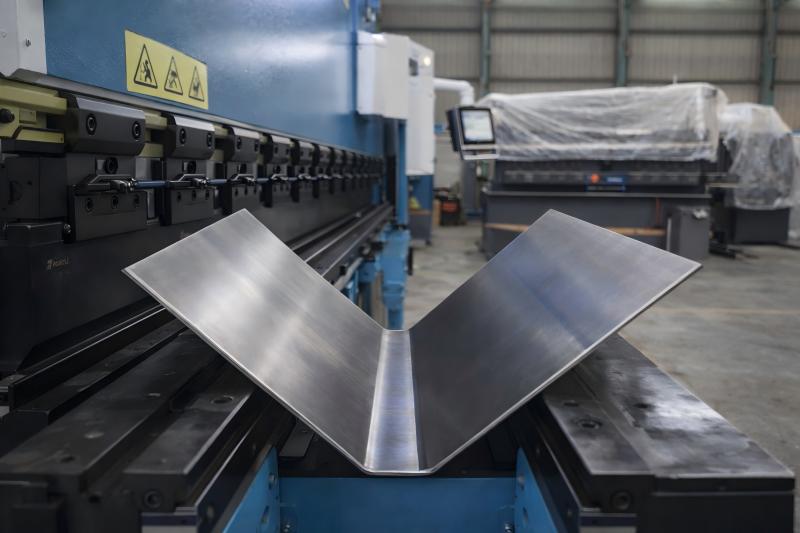
Before fixing the issue, I always identify where the inconsistency comes from. Press Brake Angle Inconsistency is typically linked to one or more of the following systems.
Hydraulic Pressure Fluctuation in CNC Press Brakes
Stable hydraulic pressure is essential for consistent bending angles. If oil contamination, worn seals, or unstable proportional valves exist, the ram force may vary during each cycle. Even small pressure differences can cause measurable angle deviation.

By regularly checking oil cleanliness, replacing filters, and monitoring pressure readings, I can significantly reduce hydraulic-related bending errors.
Mechanical Wear and Ram Parallelism Issues
Guide rails, gibs, and ram components naturally wear over time. If lubrication is insufficient or alignment is ignored, the ram may not move perfectly parallel. This results in uneven force distribution along the tooling, leading to inconsistent bend angles across the workpiece.
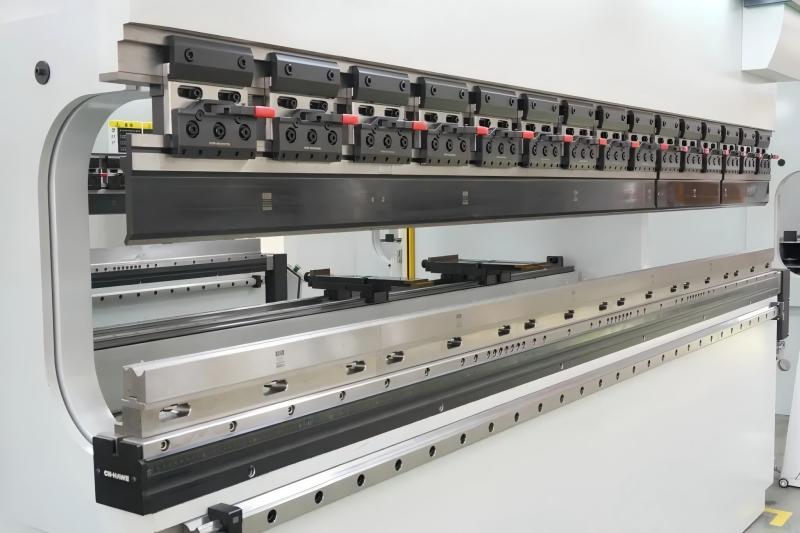
Routine lubrication and periodic parallelism inspection are key preventive steps.
How Preventive Maintenance Improves Bending Accuracy
Preventive maintenance is not just about cleaning the machine. It directly impacts accuracy.
Step 1: Inspect and Maintain the Hydraulic System
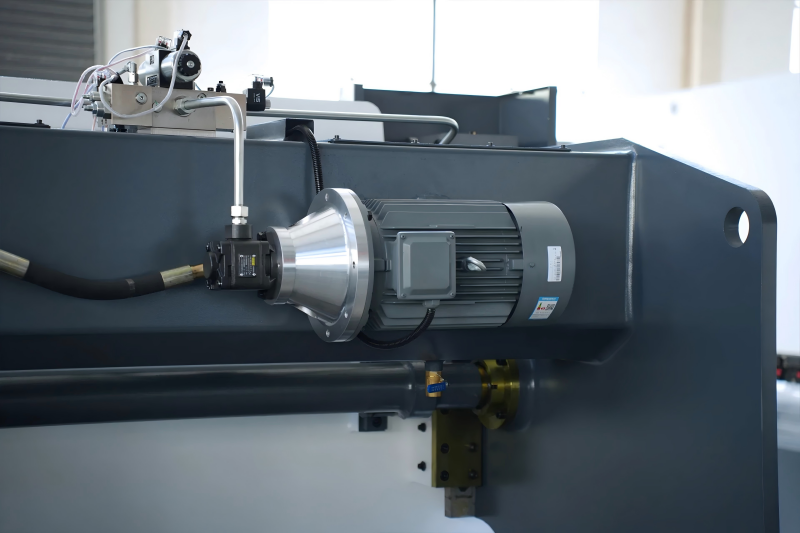
I start by checking hydraulic oil levels and examining whether the oil appears dark or contaminated. Then I:
- Replace filters on schedule
- Inspect cylinder seals
- Monitor pressure consistency during bending
Stable hydraulic performance directly reduces Press Brake Angle Inconsistency.
Step 2: Check Tooling Condition and Alignment
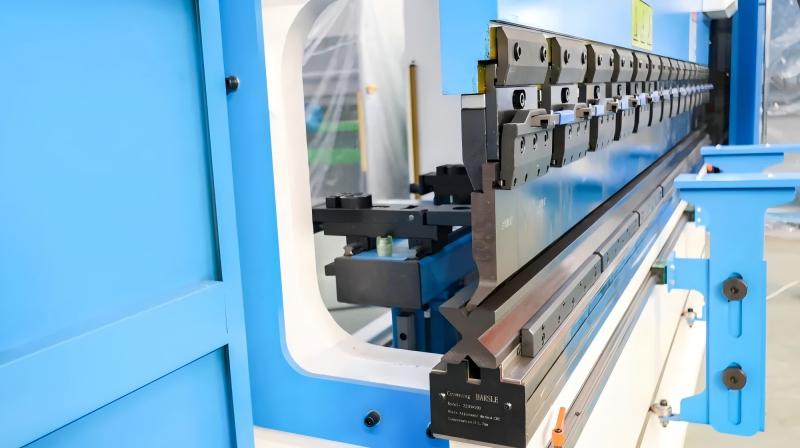
Worn punches and dies can produce angle deviation even if the machine is functioning properly. I always:
- Inspect tooling edges for wear or chipping
- Clean contact surfaces
- Verify correct installation and centering
Tool misalignment is one of the most overlooked causes of angle variation.
Step 3: Calibrate the Backgauge and Depth System
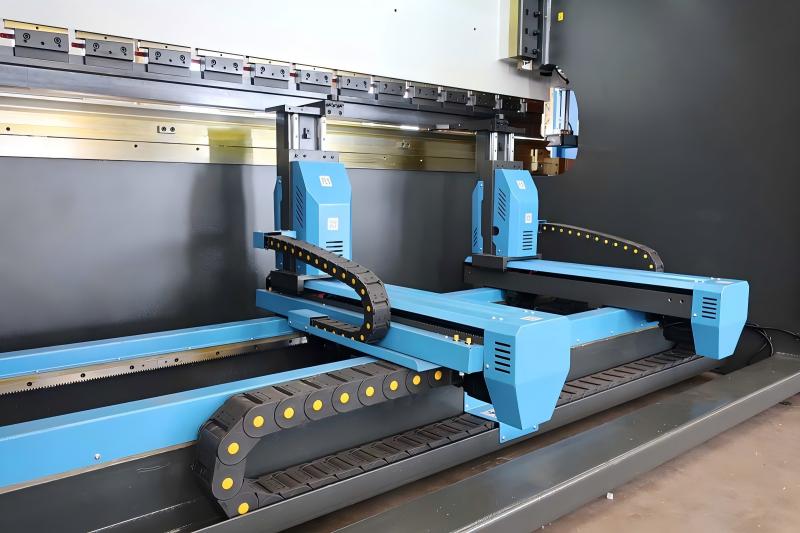
If you’re wondering how to calibrate a press brake for better accuracy, start with the backgauge and depth control system. I regularly:
- Test backgauge repeat positioning
- Confirm depth setting accuracy
- Perform test bends and measure angles
Calibration ensures that programmed values match actual bending results.
Lubrication and Cleaning to Prevent Angle Deviation
Many operators underestimate the importance of simple cleaning.
Routine Lubrication of Guide Rails and Ball Screws

Dry or contaminated guide rails increase friction, which can cause uneven ram movement. I follow a structured lubrication schedule to keep movement smooth and consistent.
Cleaning Electrical Cabinets and Cooling Systems
Overheating can affect servo motor performance and control stability. Dust accumulation inside electrical cabinets may lead to unstable positioning signals. Preventive cleaning keeps electronic systems stable and improves bending consistency.
Structural and Frame Stability Checks
Press brake frame stability also affects angle consistency.
Checking Frame Deformation and Crowning System

For long workpieces, improper crowning adjustment can cause angle variation between the center and edges. I always verify that the crowning system is functioning correctly and calibrated according to material thickness.
Floor Level and Machine Installation
An uneven foundation can gradually cause structural stress and alignment problems. If Press Brake Angle Inconsistency persists despite maintenance, I also check machine leveling.
Building a Practical Maintenance Schedule to Reduce Press Brake Angle Inconsistency
To maintain stable accuracy, I recommend a structured plan:
Daily Maintenance
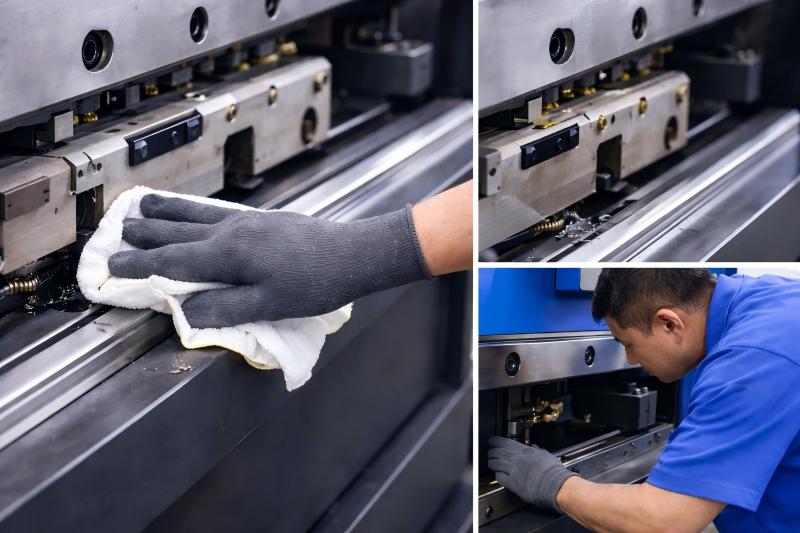
- Clean tooling and working area
- Inspect hydraulic leaks
- Check unusual noise or vibration
Weekly Maintenance
- Lubricate moving parts
- Inspect guide rails
- Check electrical cooling fans
Monthly Maintenance
- Replace hydraulic filters if needed
- Test bending accuracy using sample parts
- Verify ram parallelism
Consistency in maintenance directly leads to consistency in bending results.
FAQs
Can maintenance completely eliminate Press Brake Angle Inconsistency?
While material variation and operator setup also influence results, proper maintenance significantly reduces mechanical and hydraulic causes of angle deviation.
How often should I calibrate my press brake to prevent angle inconsistency?
Calibration should be checked monthly or whenever you notice repeated angle variation in production.
Does hydraulic oil condition affect Press Brake Angle Inconsistency?
Yes. Contaminated or degraded oil can cause unstable pressure, directly impacting bending accuracy.
Is tooling wear a major factor in Press Brake Angle Inconsistency?
Absolutely. Worn tooling edges change contact geometry and produce inconsistent bending angles.
Conclusion
Press Brake Angle Inconsistency is rarely a random issue. In my experience, it is usually the result of hydraulic instability, mechanical wear, poor lubrication, tooling problems, or insufficient calibration. The good news is that structured preventive maintenance can dramatically reduce these risks.
By maintaining the hydraulic system, calibrating the backgauge, inspecting tooling, and following a consistent lubrication schedule, you can stabilize bending accuracy and extend machine lifespan. If you need professional guidance on improving press brake performance or building a customized maintenance plan, feel free to contact our team for technical support.


