


Press Brake Guide Rail Clearance plays a critical role in maintaining consistent bending accuracy and smooth ram movement. If you’re noticing uneven bending angles, abnormal noise during operation, or irregular wear on the machine columns, improper clearance may be the underlying cause. In my experience, many operators focus heavily on hydraulic pressure or tooling alignment while overlooking the guide rail system. However, correct guide rail clearance directly influences ram parallelism, structural stability, and long-term machine performance. In this guide, I’ll explain how to properly adjust Press Brake Guide Rail Clearance and share practical steps to help you maintain precision and extend your machine’s service life.
Why Press Brake Guide Rail Clearance Is Important for Accuracy
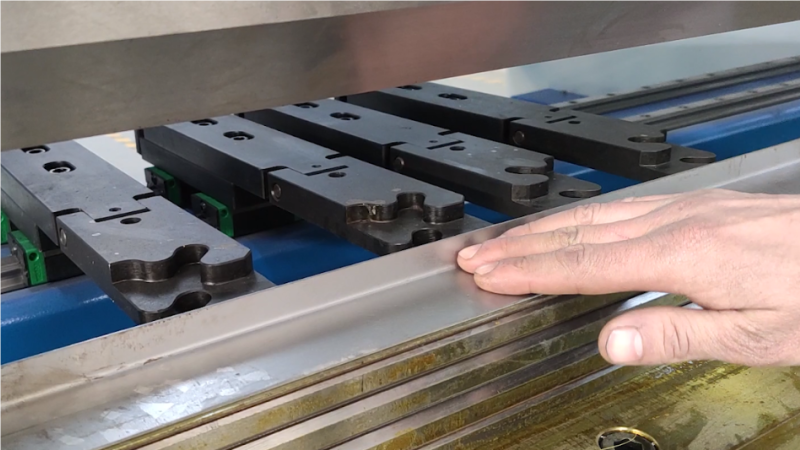
The guide rail system controls the vertical movement of the ram. If the clearance between the guide rail and slider is too tight, friction increases and causes overheating. If it’s too loose, ram deflection and angle inconsistency appear.
Improper Press Brake Guide Rail Clearance may result in:
- Uneven bending angles across the workpiece
- Increased vibration during operation
- Accelerated wear of sliding blocks
- Reduced repeat positioning accuracy
Maintaining correct clearance ensures smooth ram travel and stable bending performance, especially in CNC press brakes used for high-precision applications.
Signs That Guide Rail Clearance Needs Adjustment
Before I adjust anything, I always confirm whether the machine truly needs calibration.
Uneven Bending Angle on Left and Right Sides
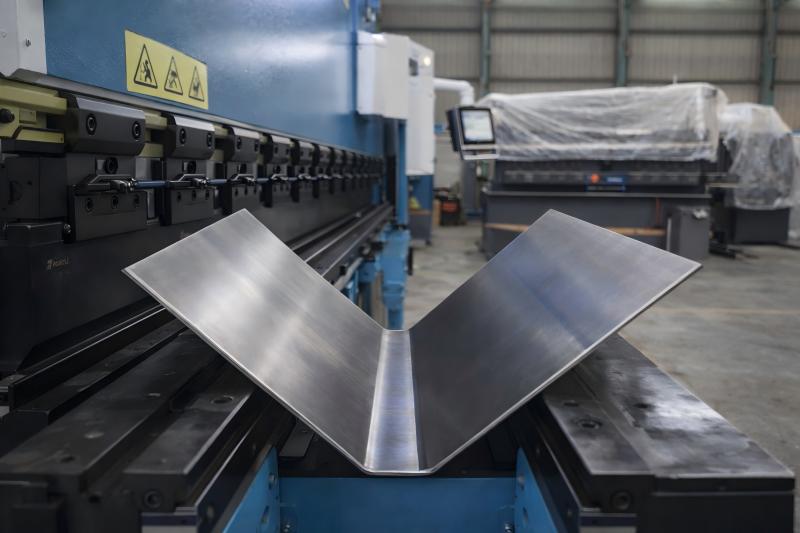
If the bending angle differs from one side to the other, and tooling alignment is correct, excessive guide rail clearance may be causing slight ram tilting.
Abnormal Friction Noise During Ram Movement
A scraping or heavy friction sound often indicates that the clearance is too tight, causing metal-to-metal contact.
Visible Wear on Sliding Blocks
Inspect the guide surfaces. If wear patterns are uneven, adjustment is necessary to prevent long-term structural damage.
Tools Required to Adjust Press Brake Guide Rail Clearance
Before starting the adjustment process, I prepare the following:
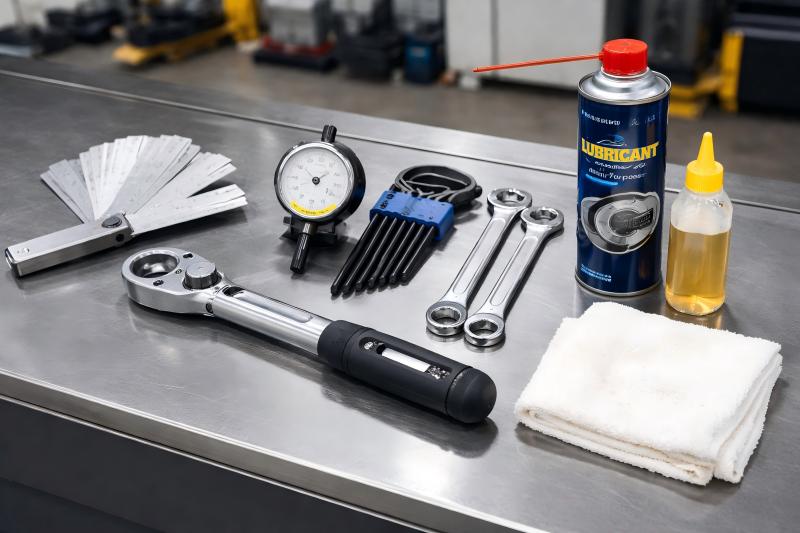
- Feeler gauge
- Dial indicator
- Torque wrench
- Hex keys and spanners
- Cleaning cloth and lubricant
Having accurate measuring tools is critical when adjusting Press Brake Guide Rail Clearance to avoid over-tightening or leaving excessive gaps.
Step-by-Step Guide to Adjust Press Brake Guide Rail Clearance
Step 1: Power Off and Secure the Machine
First, I completely power off the press brake and disconnect the main power supply. Safety is always the priority. Then I lower the ram to a stable position to reduce stress on the guide system.
Step 2: Clean the Guide Rail Surfaces
Before measuring clearance, I clean the guide rails and sliding blocks. Dust, oil residue, or metal debris can affect measurement accuracy. A clean surface ensures reliable adjustment.
Step 3: Measure Existing Guide Rail Clearance
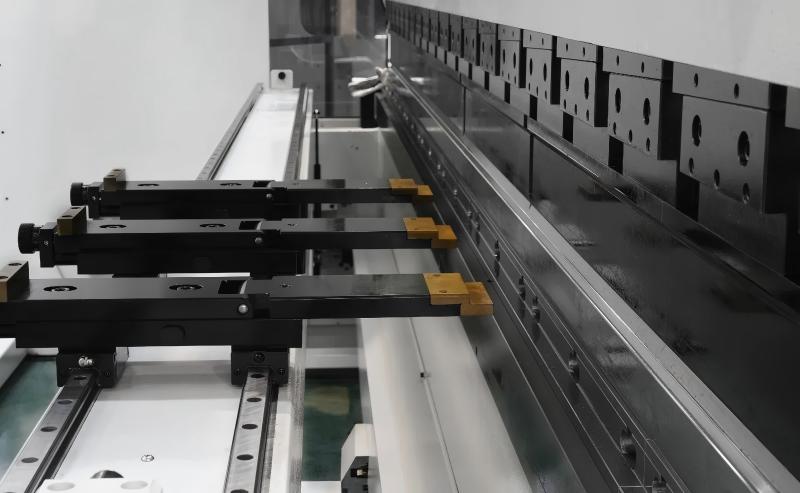
Using a feeler gauge, I check the gap between the guide rail and sliding block. I also use a dial indicator to measure ram movement deviation. This helps determine whether the clearance exceeds manufacturer specifications.
For most CNC press brakes, the clearance should remain within the tolerance specified in the technical manual. Excessive deviation impacts bending precision.
Step 4: Adjust the Gib Screws Evenly
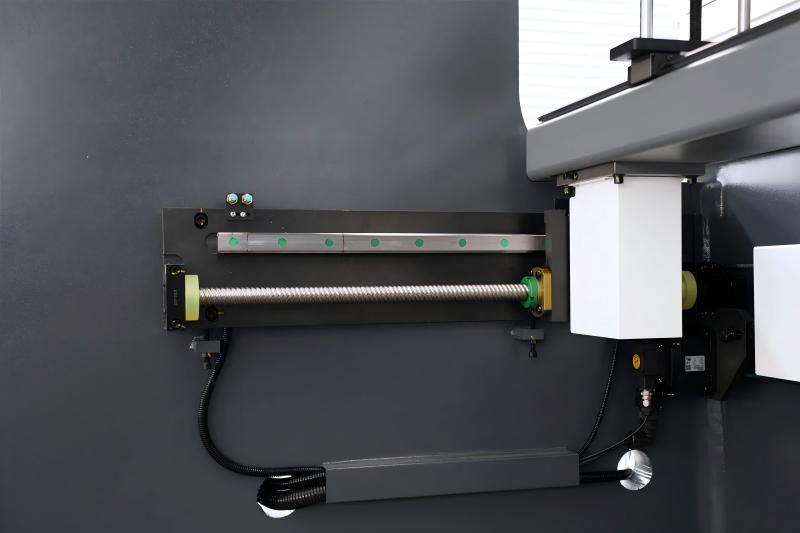
Most press brakes use adjustable gibs or side screws to control guide rail clearance. I gradually tighten or loosen these screws in small increments.
Key principles I always follow:
- Adjust both sides symmetrically
- Avoid sudden large adjustments
- Re-measure clearance after each change
Proper Press Brake Guide Rail Clearance requires balance. If one side is tighter than the other, ram parallelism will be compromised.
Step 5: Test Ram Movement Smoothness
After adjustment, I manually move the ram slowly to check for resistance. It should move smoothly without vibration or abnormal noise.
Then I perform a light bending test using scrap material to verify angle consistency across the entire length.
How to Maintain Guide Rail Performance Long-Term
Adjustment alone is not enough. Preventive maintenance prevents future misalignment.
Regular Lubrication Schedule

I always follow a consistent lubrication schedule. Guide rails require clean lubricant to minimize friction and wear.
Periodic Parallelism Inspection
Using a dial indicator, I periodically check ram parallelism. Early detection prevents major recalibration later.
Avoid Overloading the Press Brake
Operating beyond rated tonnage accelerates guide wear. I always ensure bending force calculations are correct before production.
FAQs
How often should I check Press Brake Guide Rail Clearance?
I recommend inspecting guide rail clearance every 3–6 months, depending on machine usage intensity and workload.
Can improper Press Brake Guide Rail Clearance affect bending accuracy?
Yes. Excessive clearance can cause ram tilt, leading to uneven bending angles and poor repeatability.
What happens if guide rail clearance is too tight?
If the clearance is too tight, friction increases, which may cause overheating, abnormal noise, and premature wear of sliding components.
Do I need professional service to adjust guide rail clearance?
If you are experienced with press brake maintenance and have proper measuring tools, you can perform basic adjustment. However, for high-precision CNC press brakes, professional calibration ensures optimal results.
Conclusion
Proper adjustment of Press Brake Guide Rail Clearance is essential for maintaining bending precision, smooth ram movement, and long-term machine reliability. By carefully measuring the clearance, adjusting the gibs evenly, and testing performance after each modification, I can prevent angle inconsistency and excessive wear.
Regular inspection and lubrication further protect the guide system from premature damage. If you are unsure about the adjustment process or want expert support for your CNC press brake, I recommend contacting our technical team for professional guidance. Maintaining correct guide rail clearance today can prevent costly repairs and downtime tomorrow.


