


Press Brake Tooling Marks are a common challenge when you notice visible dents, scratches, or pressure lines on your bent parts. I’ve worked with many fabricators who encounter this issue, particularly when forming stainless steel panels, aluminum covers, or coated sheets. These surface imperfections can significantly impact product appearance and may even result in customer complaints. In this guide, I’ll share practical, workshop-tested methods to reduce Press Brake Tooling Marks, enhance surface quality, and maintain stable bending performance without compromising efficiency.
Why Do Press Brake Tooling Marks Appear on Workpieces?
Before solving the problem, I always start by identifying the root cause. Tooling marks are usually not random—they are the result of pressure concentration, improper tooling selection, or poor maintenance habits.
Excessive Contact Pressure During Bending
When tonnage is too high or the V-die opening is too small for the material thickness, pressure concentrates along a narrow line. This creates deep indentation marks, especially on soft materials like aluminum.
To reduce Press Brake Tooling Marks, I first verify that the selected V-opening follows the standard rule (generally 6–8 times the material thickness for air bending). Proper tonnage calculation prevents unnecessary surface damage.
Worn or Damaged Punch and Die Surfaces

Over time, tooling edges develop micro-chips or rough spots. Even small imperfections leave visible lines on polished sheets.
I always inspect punch tips and die shoulders regularly. If I notice surface scratches or burrs, I polish or replace the tooling immediately. Preventive tooling inspection is one of the simplest ways to minimize Press Brake Tooling Marks.
How to Choose the Right Tooling to Prevent Surface Marks
Tool selection directly affects surface quality. Many surface defects are caused by using standard tooling for sensitive materials.
Use Multi-V Dies or Larger V Openings
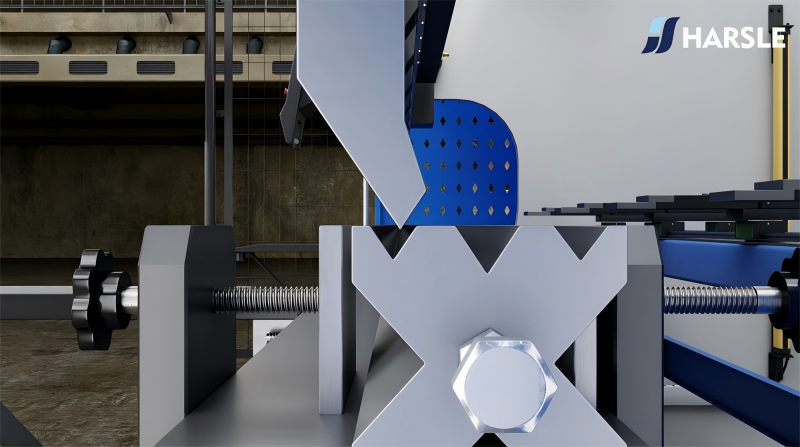
When bending stainless steel decorative panels, I prefer multi-V dies. They distribute pressure more evenly and reduce concentrated stress points.
Larger V openings reduce surface indentation. However, I balance this with angle accuracy requirements to maintain dimensional control.
Apply Urethane or Nylon Protective Inserts
For high-end surface requirements, such as elevator panels or appliance covers, I often use urethane die covers or nylon inserts. These materials create a softer contact surface between the die and the sheet.
This method significantly reduces Press Brake Tooling Marks without affecting bending angle consistency.
How to Adjust Press Brake Parameters for Better Surface Quality
Even with good tooling, improper machine setup can cause marks. I always review bending parameters before starting production.
Optimize Bending Pressure and Speed

I avoid applying full tonnage when it’s not necessary. Excessive pressure increases surface indentation risk.
Reducing bending speed during the contact phase also helps. Slower initial contact minimizes sudden impact force, especially on CNC press brakes with programmable ram speed control.
Ensure Proper Backgauge Alignment

If the backgauge is misaligned, the sheet may tilt slightly during bending. This uneven loading creates asymmetrical marks.
I routinely calibrate the backgauge system and check parallelism. If you’re wondering how to calibrate a press brake for better bending quality, start by verifying machine leveling and ram alignment.
Maintenance Practices That Reduce Press Brake Tooling Marks
Surface quality is closely tied to machine condition. Preventive maintenance plays a critical role.
Clean Tooling After Every Shift
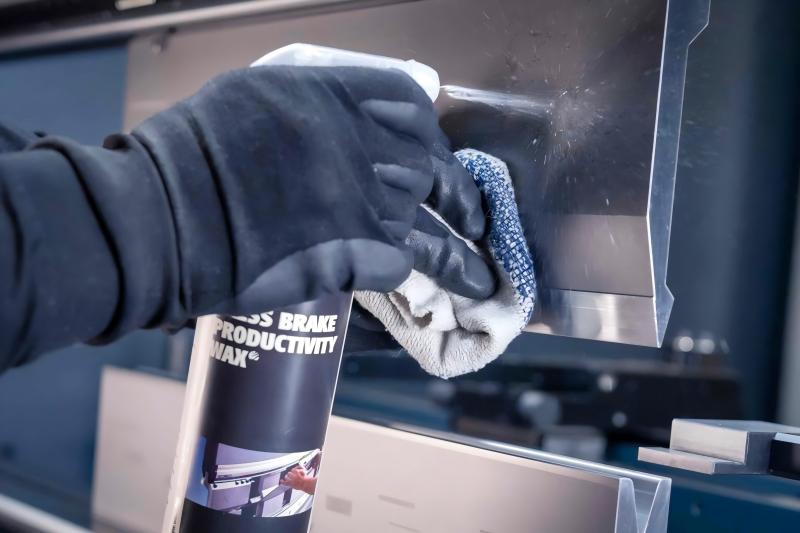
Metal dust and small particles often stick to die shoulders. If not removed, they act like abrasive materials during the next bending cycle.
I make it a rule to wipe tooling surfaces after each shift. This simple habit dramatically reduces unexpected scratches.
Lubricate and Inspect Moving Components
Guide rails and ram movement must remain smooth. Jerky or unstable motion may cause inconsistent pressure distribution.
Regular lubrication and inspection of mechanical components ensure stable bending performance and reduce the chance of visible tooling marks.
How to Protect Sensitive Materials During Press Brake Bending
Some materials are more vulnerable than others.
Use Protective Films on Stainless Steel Sheets
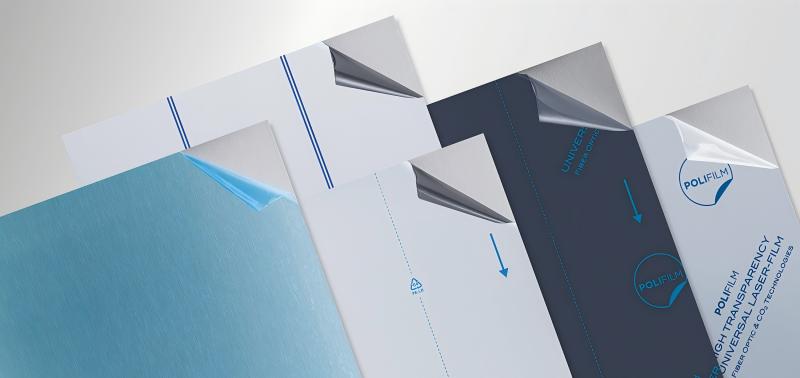
When bending mirror-finish stainless steel, I keep the protective film intact whenever possible. It acts as a buffer between the tooling and the material surface.
Apply Bending Film or Surface Protection Tape
For painted or coated sheets, I sometimes apply a thin bending protection film. This extra layer absorbs minor pressure lines and prevents surface scratches.
While it may slightly increase setup time, it greatly reduces rework and rejection rates.
FAQs
What causes Press Brake Tooling Marks on stainless steel?
They are usually caused by high contact pressure, worn tooling edges, or contaminated die surfaces. Proper tooling selection and maintenance reduce the risk significantly.
Can I eliminate Press Brake Tooling Marks completely?
In most cases, marks can be minimized to an acceptable level. Using protective inserts and optimizing bending parameters helps achieve near-mark-free results.
Does using a larger V-die reduce tooling marks?
Yes. A larger V opening distributes pressure more evenly, reducing surface indentation. However, it must be balanced with bending accuracy requirements.
How often should I inspect tooling to prevent marks?
I recommend checking tooling surfaces daily and performing more detailed inspections weekly, depending on production volume.
Conclusion
Reducing Press Brake Tooling Marks is not about a single adjustment—it requires the right tooling selection, correct bending parameters, proper calibration, and consistent maintenance habits. From my experience, small daily actions such as cleaning tooling surfaces and verifying machine alignment make a significant difference in final product appearance.
If surface quality is critical for your production, start by reviewing your tooling condition and bending setup today. For more professional guidance or customized solutions, feel free to contact our technical team. We’re always ready to help you improve bending performance and protect your workpiece quality.


