


In daily sheet metal production, one issue I occasionally see operators struggle with is Press Brake Workpiece Slippage. When a sheet moves during bending, the result is often inaccurate angles, inconsistent flange lengths, and even damaged parts. If you are experiencing this problem, the good news is that it is usually caused by a few identifiable factors such as tooling condition, insufficient clamping force, improper setup, or surface contamination. In this guide, I’ll explain why Press Brake Workpiece Slippage occurs and, more importantly, how I typically diagnose and fix it in real workshop situations so that bending accuracy and production stability can be restored.
Understanding Why Press Brake Workpiece Slippage Happens
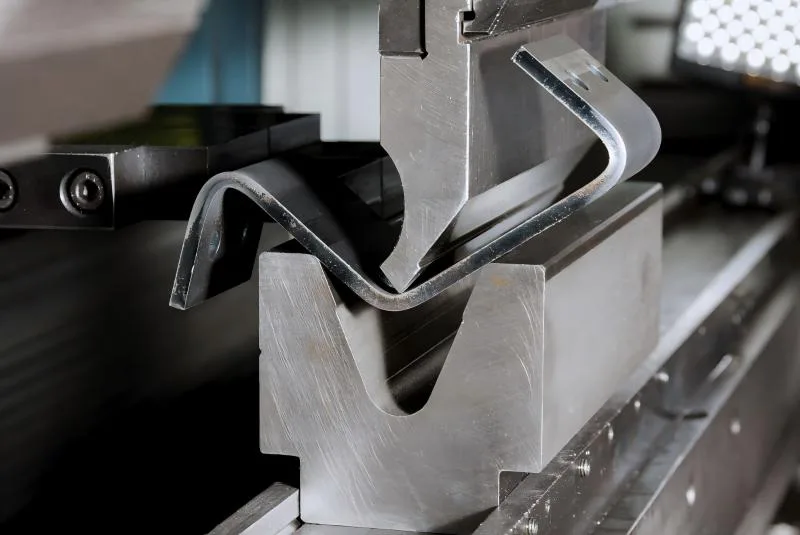
Before fixing the problem, I always start by identifying the root cause. Press Brake Workpiece Slippage usually occurs when the friction between the sheet metal and tooling is insufficient to hold the material in place during bending.
Several common factors contribute to this issue:
- Low friction between punch, die, and sheet metal
- Improper press brake pressure or tonnage settings
- Incorrect tooling selection
- Surface oil or contamination on the workpiece
- Improper backgauge positioning
- Poor operator handling or part support
Once the cause is identified, solving the issue becomes much easier.
Step-by-Step Solutions to Fix Press Brake Workpiece Slippage
When I troubleshoot slipping problems on a press brake, I usually follow several practical steps to eliminate the issue quickly.
Step 1: Inspect the Condition of the Tooling
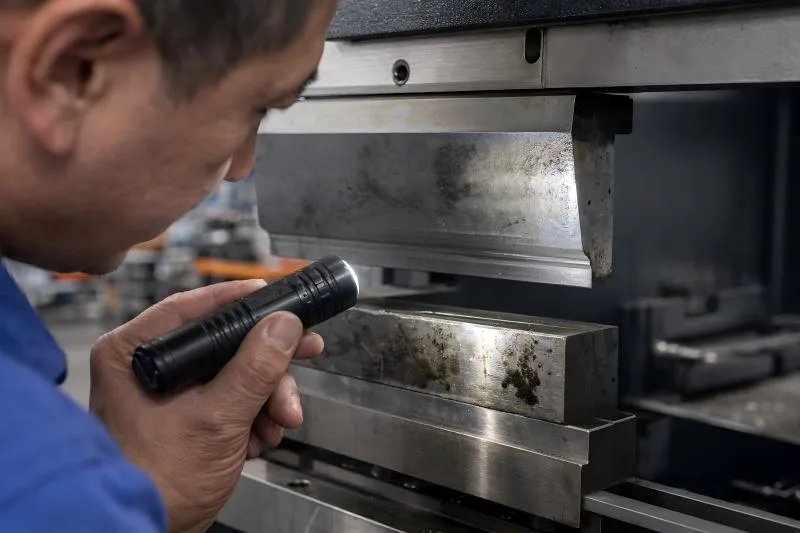
The first thing I check is the punch and die condition. Worn or polished tooling surfaces can significantly reduce friction.
Look for the following signs:
- Excessively smooth die surfaces
- Worn punch edges
- Tooling contamination or oil residue
If tooling wear is visible, I recommend cleaning the tooling or replacing it if necessary. In some cases, switching to serrated or anti-slip tooling can greatly reduce Press Brake Workpiece Slippage.
Step 2: Clean the Workpiece Surface
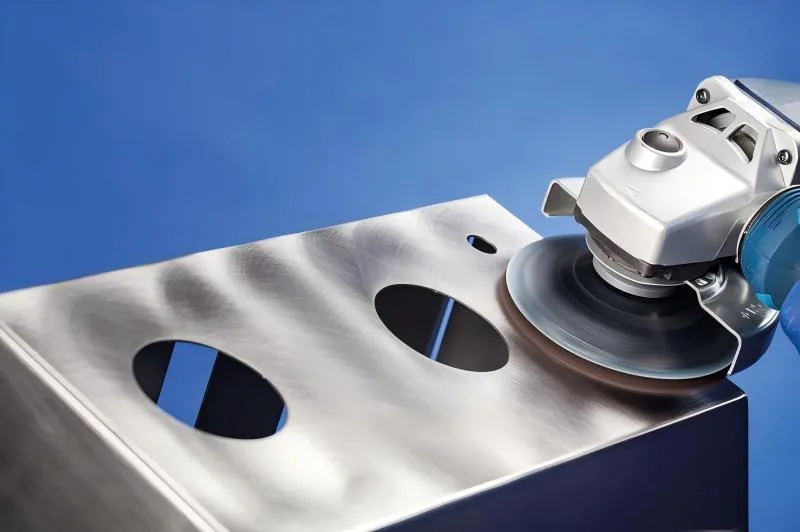
Another very common cause of slipping is oil or lubricant residue on the sheet metal.
During fabrication processes such as laser cutting or punching, protective oil is often applied to the sheet. This creates a low-friction surface during bending.
To solve this issue:
- Wipe the sheet surface before bending
- Remove excessive oil or coolant
- Ensure tooling surfaces are also clean
Even a simple cleaning step can significantly reduce Press Brake Workpiece Slippage in production.
Step 3: Verify Press Brake Tonnage Settings
If the bending force is too low, the sheet may not be held firmly between the punch and die.
When I set up a press brake, I always confirm that the machine provides sufficient tonnage for the material thickness and bending length.
You should check:
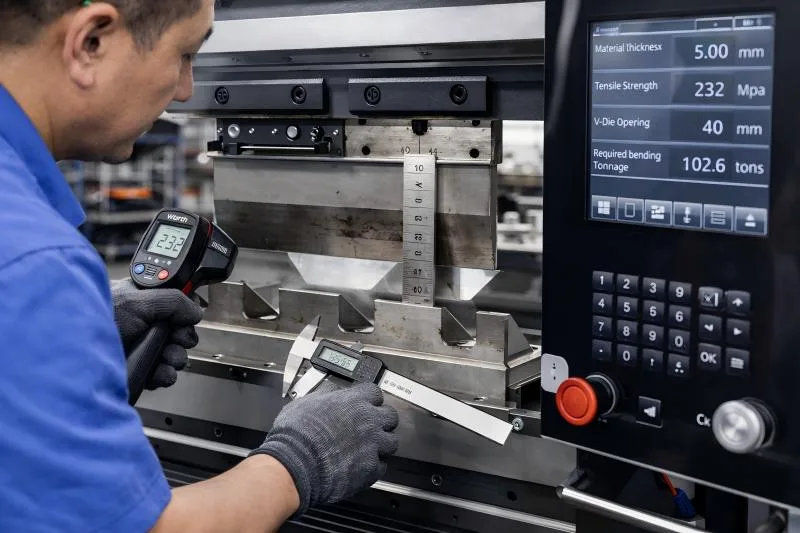
- Material thickness and tensile strength
- V-die opening size
- Required bending tonnage
Increasing the tonnage slightly within safe limits often eliminates workpiece movement.
Step 4: Check Backgauge Position and Support
The backgauge plays an important role in stabilizing the sheet during bending.
If the backgauge fingers are positioned incorrectly, the workpiece may shift when the punch contacts the material.
To prevent this problem:
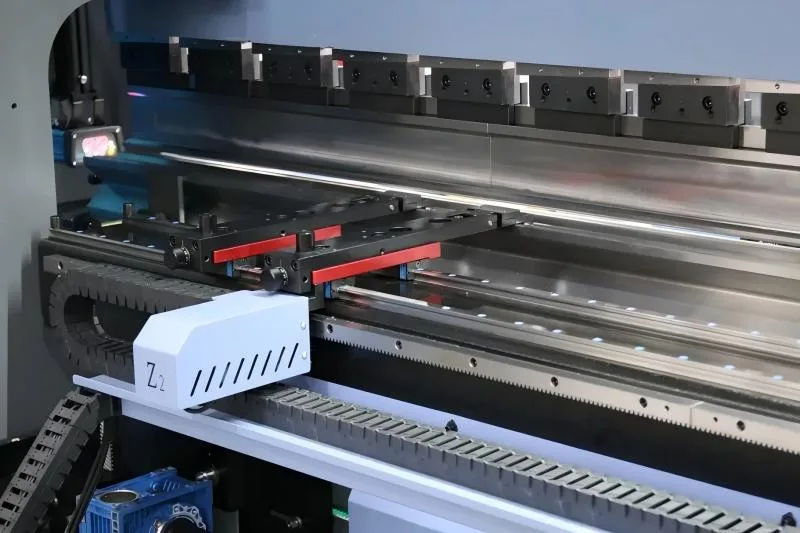
- Ensure the backgauge fully supports the sheet
- Align backgauge fingers with the bending line
- Verify positioning accuracy before bending
A properly adjusted backgauge system helps prevent Press Brake Workpiece Slippage and improves repeatability.
Step 5: Adjust Bending Speed and Operator Handling
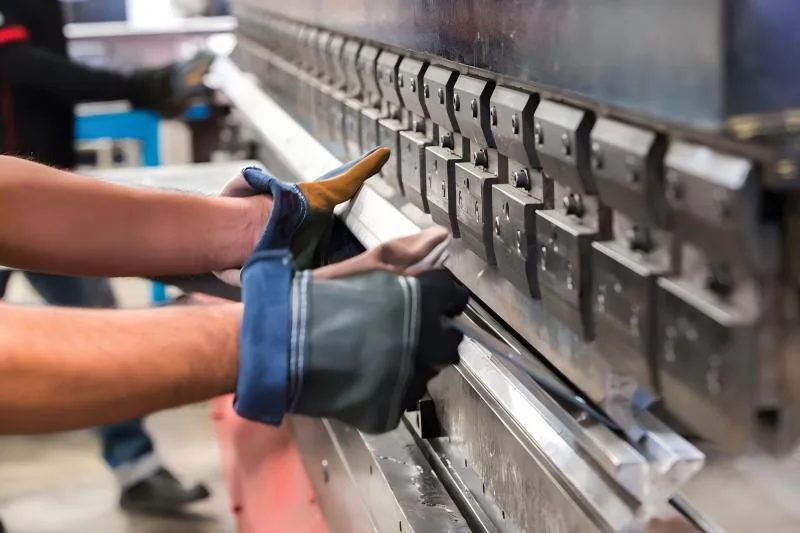
Sometimes the issue is related to machine speed or operator technique.
If the ram descends too quickly, the sudden contact may cause the sheet to move slightly.
Possible solutions include:
- Reducing approach speed
- Supporting large sheets manually or with support arms
- Ensuring the operator maintains stable positioning
These small adjustments can make a noticeable difference during precision bending operations.
Additional Preventive Measures to Avoid Workpiece Slippage
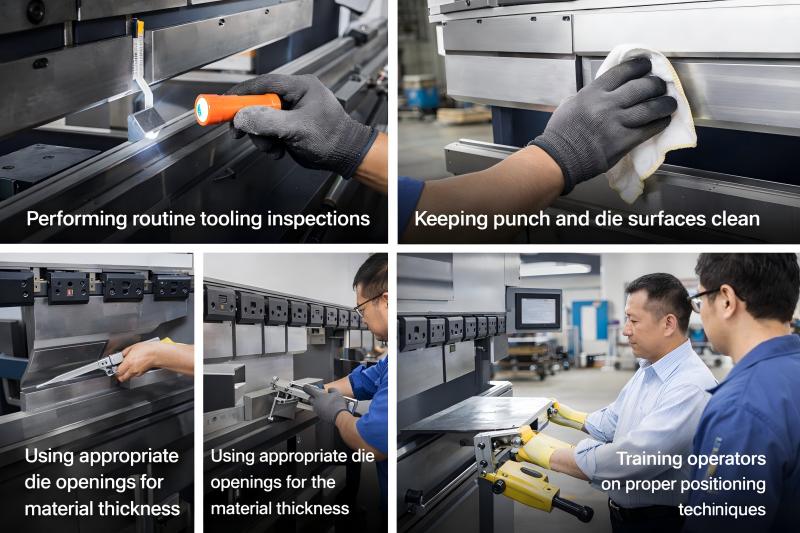
Beyond immediate fixes, I always recommend implementing preventive practices to reduce the chance of Press Brake Workpiece Slippage.
Some effective preventive steps include:
- Performing routine tooling inspections
- Keeping punch and die surfaces clean
- Using appropriate die openings for the material thickness
- Installing sheet support systems for large panels
- Training operators on proper positioning techniques
Preventive measures not only improve bending stability but also increase overall production efficiency.
FAQs
What is the most common cause of Press Brake Workpiece Slippage?
In my experience, the most common cause is insufficient friction due to oil on the sheet metal or worn tooling surfaces.
Can tooling selection affect Press Brake Workpiece Slippage?
Yes. Using the wrong die opening or overly smooth tooling surfaces can significantly reduce friction and cause the sheet to move during bending.
Does increasing press brake tonnage help prevent slippage?
In many cases, yes. Slightly increasing the bending force improves clamping pressure between the punch and die, reducing movement.
How can I prevent large sheets from slipping during bending?
Using sheet support arms, ensuring proper backgauge alignment, and maintaining stable operator handling are effective solutions.
Conclusion
Fixing Press Brake Workpiece Slippage usually involves identifying the root cause and correcting setup issues such as tooling condition, surface contamination, insufficient tonnage, or backgauge positioning. From my experience in sheet metal workshops, most slipping problems can be resolved quickly by cleaning tooling, adjusting machine settings, and improving workpiece support.
By maintaining proper press brake setup and following good operational practices, you can significantly reduce slipping issues and maintain consistent bending accuracy. If you encounter persistent problems or need technical guidance for your press brake setup, feel free to contact our team for professional support and troubleshooting advice.


