


Installing a press brake correctly requires more than simply placing the machine on a flat surface. Proper installation ensures accuracy, repeatability, and machine longevity. Improper installation can lead to uneven bending angles, inconsistent ram travel, and additional stress on the frame, which may shorten service life. Environmental factors such as temperature fluctuations, excessive vibration from nearby equipment, and humidity can also affect the machine’s long-term stability, and should be considered during installation planning.
Overview of Press Brake Installation Requirements
The key to successful press brake installation lies in understanding the relationship between ground conditions, leveling, and floor fixing. While proper leveling is mandatory for machine accuracy, floor fixing with anchor bolts is mainly intended to enhance long-term stability and is not always required. Correct installation ensures optimal machine performance, reduces maintenance needs, and prevents unnecessary misinterpretation of operational issues.
Ground Requirements for Press Brake Installation
A stable and suitable ground is the foundation of any high-precision press brake setup. The floor directly affects the machine frame, the parallelism of the ram, and long-term repeatability. Even the best CNC press brake cannot perform accurately if the ground is uneven or prone to settlement.
Recommended Ground Type
- Preferred: A solid, poured concrete floor with uniform structure and no risk of uneven settlement.
- Thickness Guidance: Typically, the concrete floor should be at least 150–200 mm (6–8 inches) thick for medium tonnage machines, and 200–250 mm (8–10 inches) or more for heavy tonnage machines.
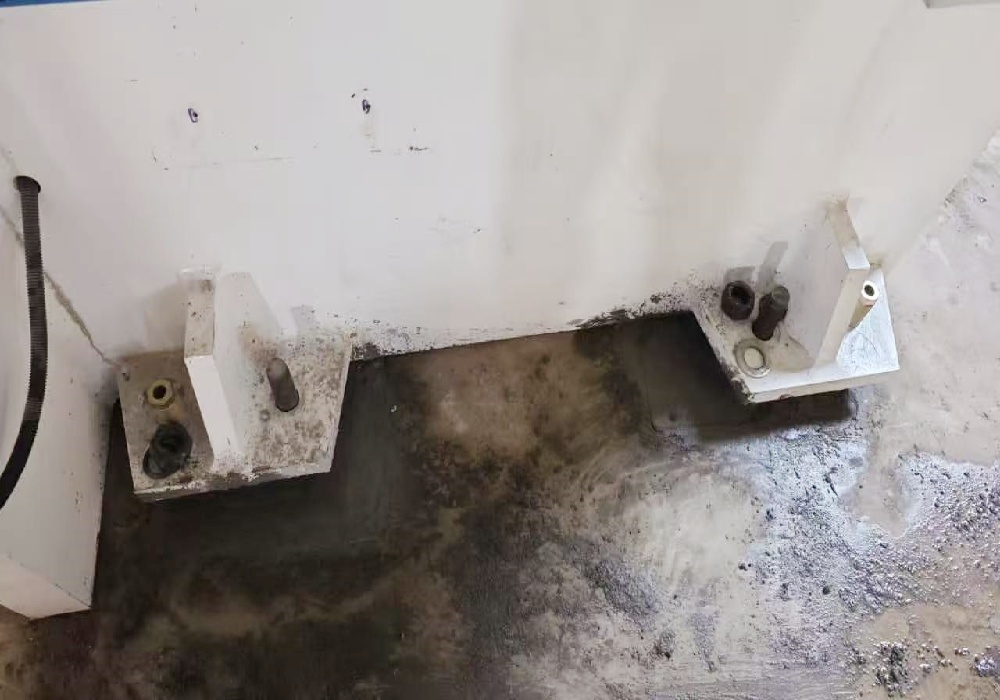
- Concrete Strength: A standard reinforced concrete with a minimum compressive strength of C25 (≈25 MPa / 3625 psi) is recommended. Reinforcement (rebar mesh) helps prevent cracking and long-term settlement.
- Subfloor Conditions: The base should be compacted, stable, and free of loose soil or voids. Any weak spots can lead to long-term unevenness.
- Not Recommended: Soft surfaces, recently backfilled areas, hollow steel platforms, or suspended sections of flooring.
Ground Flatness and Stability
- Absolute flatness is not required, but the surface should have minimal deviation, preferably within ±2 mm over 2 meters.
- Avoid floors with noticeable slope or unevenness; leveling screws can compensate for minor differences, but cannot correct structural instability.
- Ensure that the ground is dry and fully cured before installing the machine, as curing shrinkage may affect leveling.
Minor unevenness can be corrected using the machine’s leveling screws, but unstable or inadequately reinforced ground cannot be compensated by leveling.
Leveling Requirements and Principles for a Press Brake
Leveling a press brake ensures that the ram moves parallel to the bed and that the bending forces are evenly distributed. The machine’s leveling screws allow fine adjustment to compensate for minor floor irregularities. Proper leveling not only maintains bending accuracy but also reduces uneven stress on the frame, extending the machine’s operational life. Precision instruments, such as a digital level or laser leveling device, are recommended for achieving optimal results.
Why Proper Leveling Is Essential
- Ensures parallelism of the ram and die.
- Maintains consistent bending angles and repeatability.
- Prevents uneven stress on the frame that could shorten machine life.
What Leveling Can and Cannot Correct
- Can compensate for: Minor unevenness of a stable concrete floor.
- Cannot compensate for: Unstable or deformable ground, long-term floor settlement, or improper floor support.
Proper leveling is essential for press brake installation requirements, but it is not a substitute for a solid foundation.
Does a Press Brake Need to Be Fixed to the Floor?
Floor fixing with anchor bolts enhances the long-term stability of a press brake, particularly in high-tonnage machines or those used for continuous production. However, the machine’s weight and low center of gravity generally allow medium and small-tonnage press brakes to operate safely without floor fixing, provided proper leveling has been completed. Choosing whether to fix the machine depends on production frequency, material thickness, and ground stability.
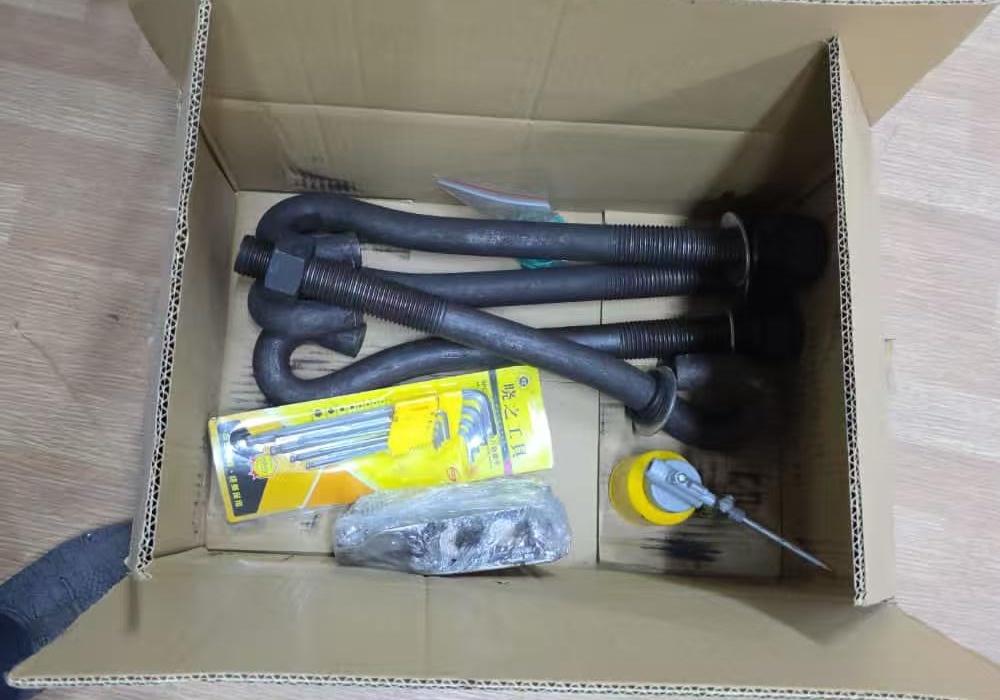
When Floor Fixing Is Recommended
- Heavy tonnage machines.
- High-frequency production environments.
- Bending thick materials regularly.
- Floor conditions are less than optimal or uncertain.
When Floor Fixing May Not Be Necessary
- Medium or small tonnage machines.
- Stable, high-quality concrete floors.
- Machines that have already been properly leveled.
- Standard production without heavy or continuous bending.
Basic Floor Fixing Method Using Anchor Bolts (Optional)
When floor fixing is applied, preparation is essential. Ensure that anchor bolt holes align with the machine’s base and that the floor is properly reinforced. Follow the correct sequence: first, position the machine, then adjust the leveling screws, and finally secure the anchor bolts. Improper fixing sequence can introduce stress into the machine frame and compromise accuracy. After installation, it is recommended to verify the machine’s level and stability once more.
Purpose of Anchor Bolts
- Anchor bolts prevent the machine from experiencing long-term movement.
- They are not used for leveling and should only be applied after the machine is properly leveled.
Correct Fixing Sequence
- Position the machine in the desired location.
- Adjust leveling screws to achieve proper horizontal alignment.
- Insert anchor bolts into pre-prepared holes in the concrete floor.
- Once the machine is level, secure the bolts.
- After fixing, verify that the machine remains level and stable.
This method is optional and mainly recommended for long-term stability.
Common Installation Mistakes to Avoid
Common installation mistakes include attempting to level the press brake by tightening anchor bolts before proper adjustment, neglecting to recheck the machine level after fixing, and assuming that installation issues are equipment defects. These errors can lead to uneven bending, excessive wear, and premature maintenance requirements. Awareness of these pitfalls can save time and prevent costly mistakes.
Awareness of common mistakes can save time and prevent operational issues:
- Attempting to level the machine by tightening anchor bolts before leveling.
- Ignoring the need to verify the machine level after floor fixing.
- Misinterpreting installation issues as machine or hydraulic problems.
- Using unstable ground and relying solely on leveling screws for compensation.
Installation Verification After Setup
After installation, verification ensures that all press brake installation requirements have been met. Conduct empty ram travel tests and light bending operations to check for consistent angles and repeatability. Observe any unusual vibrations or shifts. Documenting initial measurements and performance benchmarks can help identify deviations during future maintenance or operation.
Even after proper installation, it is important to confirm machine stability and accuracy:
- Conduct an empty travel test of the ram.
- Perform a simple bending test to check angle consistency.
- Observe for any unusual vibrations or movement.
- Verify that leveling adjustments remain consistent over time.
These verification steps ensure that all press brake installation requirements have been correctly applied.
Conclusion
Proper installation of a press brake depends on understanding and applying the main press brake installation requirements. These requirements can be summarized in three core elements:
- Ground Requirements: A stable and sufficiently rigid surface is essential to support the machine and meet key installation requirements.
- Leveling Principles: Correct leveling is mandatory for machine accuracy, ensuring parallelism, repeatability, and compliance with installation requirements.
- Optional Floor Fixing: While not always required, securing the machine with anchor bolts enhances long-term stability, particularly for heavy or high-frequency production, and is an important consideration in some press brake installation requirements.
Following these press brake installation requirements ensures optimal performance, minimizes maintenance issues, and prevents misinterpretation of operational problems. By understanding the interplay between ground conditions, leveling, and floor fixing, users can make informed decisions to achieve both precision and stability in their workshop.
For detailed, step-by-step guidance, please refer to our video guide on press brake leveling. This practical demonstration complements the principles and verification methods described here, helping users fully comply with essential press brake installation requirements.


