


When operators notice inconsistent bending angles or difficulty maintaining accuracy, one possible cause is Press Brake Frame Deformation. I often find that many users suspect tooling or programming errors first, but the machine structure itself can sometimes be the real issue. In this guide, I’ll explain how to identify Press Brake Frame Deformation, what symptoms to look for during daily operation, and what inspection methods help detect structural problems early. Understanding these signs can help maintain bending accuracy, protect the machine structure, and avoid costly repairs.
Why Press Brake Frame Deformation Happens
Press brake frames are designed to withstand significant bending forces, but long-term heavy loads, improper operation, or lack of maintenance may gradually affect structural stability.
Overloading the Press Brake Machine
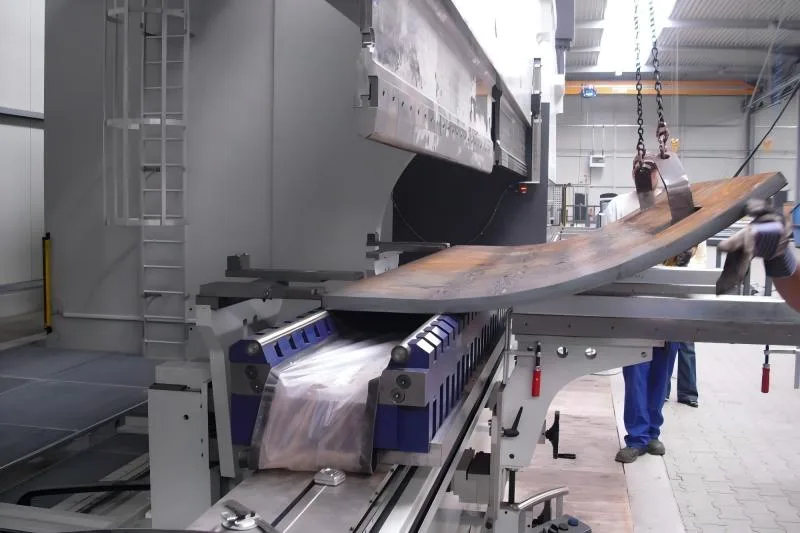
One of the most common causes of Press Brake Frame Deformation is repeated overloading. If operators regularly bend material thicker or harder than the machine’s rated capacity, excessive stress builds up in the frame.
Over time, this may cause:
- Permanent frame distortion
- Uneven ram movement
- Reduced bending precision
I always recommend checking the bending force chart before processing thick materials to ensure the machine operates within its designed limits.
Off-Center Bending and Uneven Load Distribution
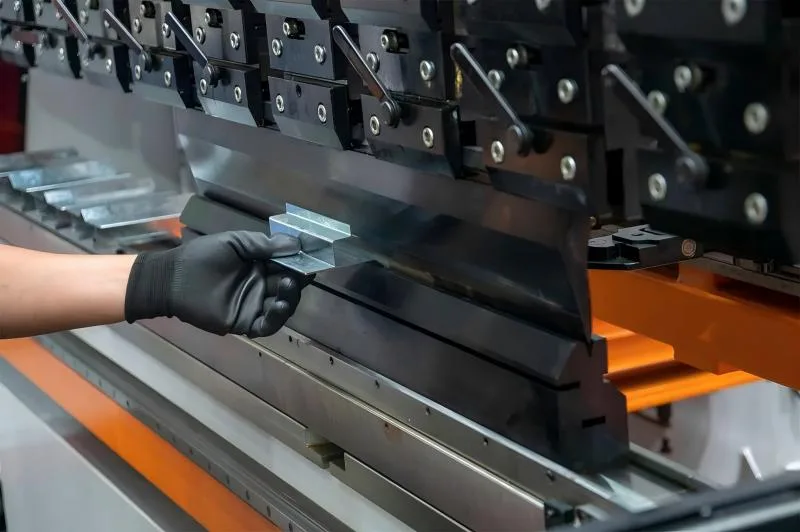
Another cause is off-center loading. If parts are consistently bent on only one side of the machine, the force distribution becomes uneven.
This can lead to:
- Asymmetric frame stress
- Gradual structural deformation
- Differences in bending angle between left and right sides
To prevent this, I try to distribute workpieces across the full bending length whenever possible.
Key Signs of Press Brake Frame Deformation
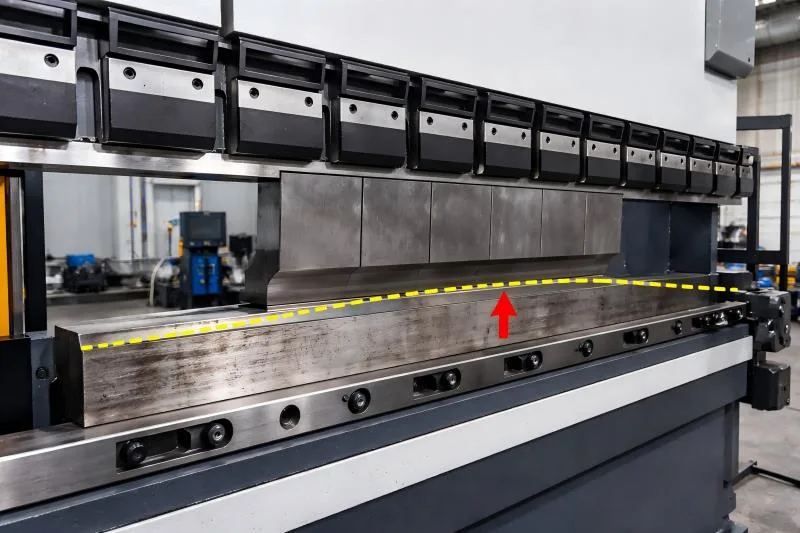
Recognizing early warning signs is essential. Several operational symptoms may indicate frame deformation.
Inconsistent Bending Angles Along the Workpiece
If the bend angle at the center of the sheet differs from the ends, it may indicate structural deformation or ram deflection.
Common symptoms include:
- Larger angle at the center
- Smaller angles near the edges
- Difficulty achieving uniform bends
While this issue can sometimes be corrected by crowning adjustments, persistent inconsistencies may suggest Press Brake Frame Deformation.
Visible Misalignment of the Ram or Tooling
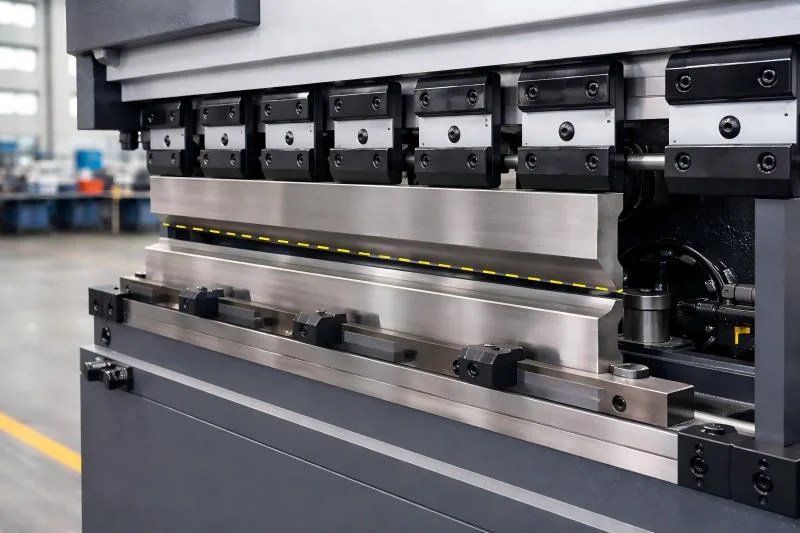
Another warning sign is visible misalignment between the punch and die.
During inspection, I check for:
- Uneven contact between punch and die
- Tooling gaps along the length
- Ram tilting during movement
These indicators often reveal structural changes affecting machine alignment.
Unusual Noise During Bending
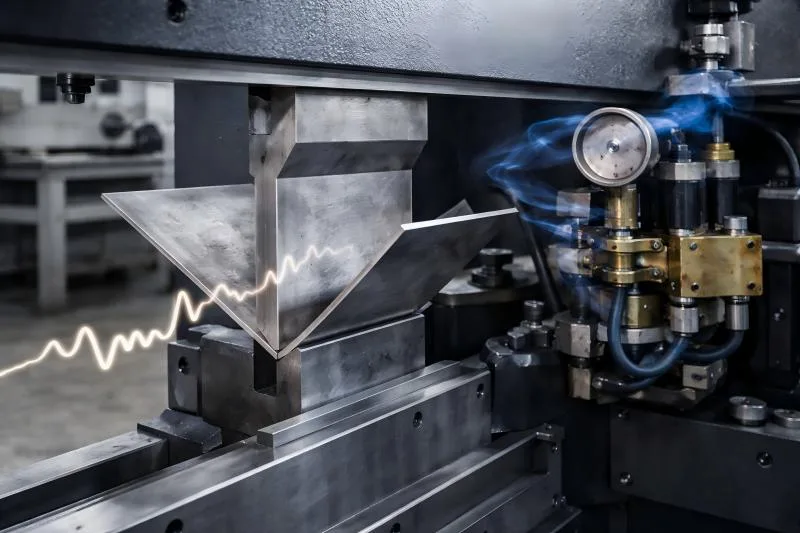
When the frame experiences deformation or uneven stress, operators may hear abnormal sounds during operation, such as:
- Metallic creaking
- Frame vibration
- Hydraulic pressure fluctuations
Although noise alone does not confirm deformation, it is an important signal that further inspection is required.
Step-by-Step Methods to Identify Press Brake Frame Deformation
Detecting structural deformation requires careful inspection and measurement.
Step 1: Inspect the Machine Frame Visually
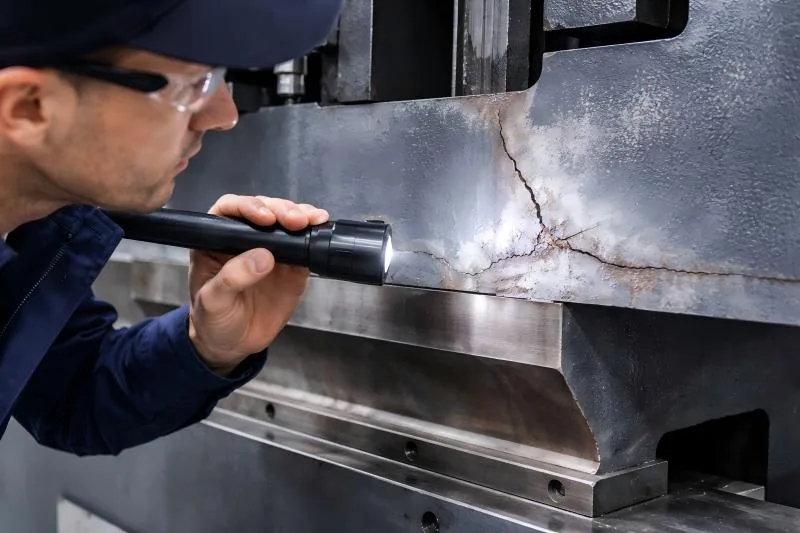
I always start with a visual inspection. Look closely at the press brake frame for signs of structural changes.
Check for:
- Visible cracks or weld stress marks
- Uneven paint wear on the frame
- Frame distortion near high-stress areas
Even small structural changes can affect bending performance.
Step 2: Check Ram Parallelism
Ram parallelism directly affects bending accuracy.
To inspect this:
- Lower the ram slowly without material.
- Measure the gap between punch and die along the full machine length.
- Compare measurements on both sides.
If the gap differs significantly, Press Brake Frame Deformation or ram misalignment may be present.
Step 3: Measure Bending Consistency with Test Pieces
A practical method is performing a test bend.
I usually:
- Use identical material strips.
- Bend them across different positions on the machine.
- Measure angles using a digital angle gauge.
If the angles vary significantly, structural deformation or improper crowning may be affecting the machine.
Step 4: Check the Crowning System
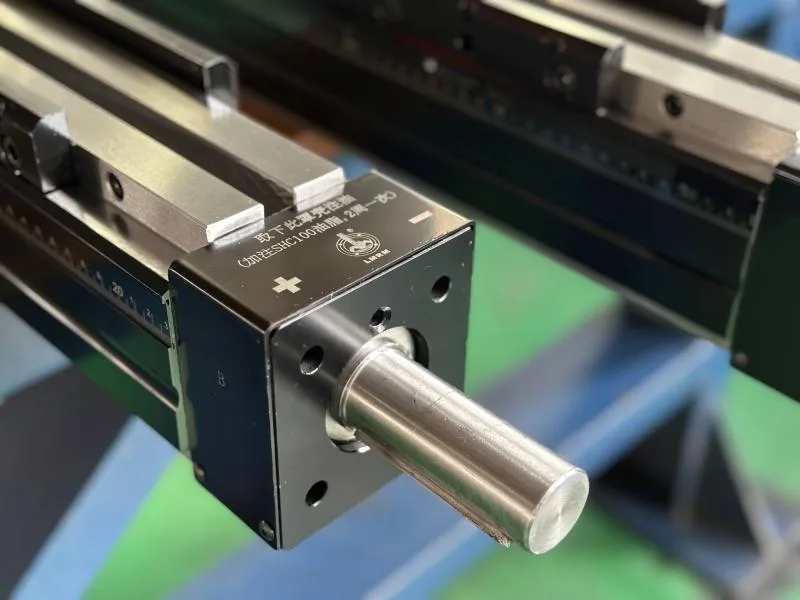
Modern CNC press brakes use mechanical or hydraulic crowning systems to compensate for deflection.
However, if the crowning system cannot correct angle differences, it may indicate structural issues such as Press Brake Frame Deformation.
Inspect the crowning system to ensure:
- It adjusts properly
- Compensation values respond correctly
- The system moves smoothly along the bed.
Preventing Press Brake Frame Deformation
Prevention is always better than repair. I recommend several practices to maintain structural integrity.
Follow Machine Capacity Limits
Never exceed the rated bending capacity. Always check:
- Material thickness
- Material strength
- Required bending force
This prevents excessive stress on the frame.
Distribute Bending Loads Evenly
Whenever possible, place workpieces near the center or alternate bending positions across the machine.
This helps prevent uneven structural stress.
Perform Routine Structural Inspections
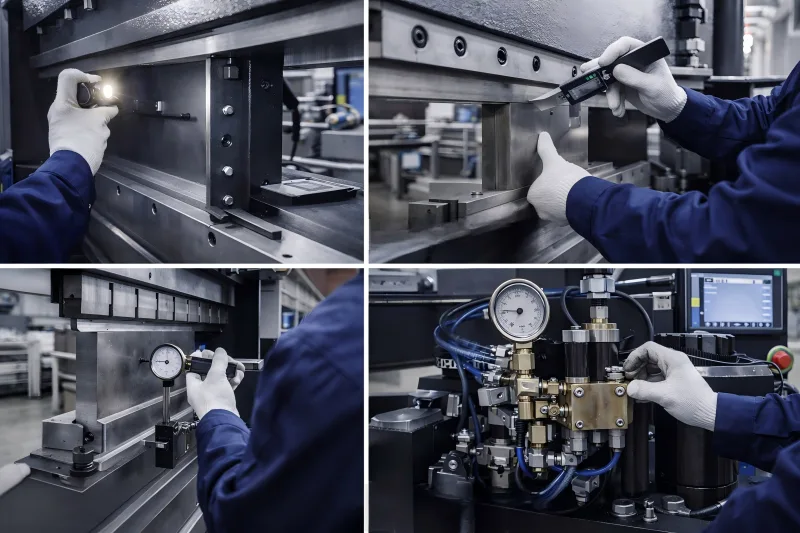
Routine inspections help detect early signs of deformation.
Maintenance checks should include:
- Frame condition
- Ram alignment
- Tooling parallelism
- Hydraulic pressure stability
Early detection allows adjustments before structural damage worsens.
FAQs
What causes Press Brake Frame Deformation most frequently?
The most common causes include overloading the machine, uneven bending loads, and long-term operation without proper maintenance.
Can Press Brake Frame Deformation affect bending accuracy?
Yes. Structural deformation can lead to inconsistent bending angles, ram misalignment, and difficulty maintaining precision.
How can I check Press Brake Frame Deformation during daily operation?
Operators can perform test bends across different machine positions and compare the angles. Significant variations may indicate structural problems.
Can the crowning system fix frame deformation problems?
Crowning systems compensate for normal deflection during bending, but severe structural deformation usually requires mechanical repair or frame inspection.
Conclusion
Identifying Press Brake Frame Deformation early is essential for maintaining bending accuracy and protecting the machine’s structural integrity. By paying attention to signs such as uneven bending angles, ram misalignment, and unusual machine behavior, operators can detect problems before they affect production quality.
Through regular inspections, proper load distribution, and adherence to machine capacity limits, it is possible to minimize the risk of structural deformation. If you suspect frame deformation or want professional guidance on press brake inspection and maintenance, contacting experienced technicians or equipment suppliers can help ensure your machine continues to operate safely and efficiently.


